Film Friday: Uncut Gems

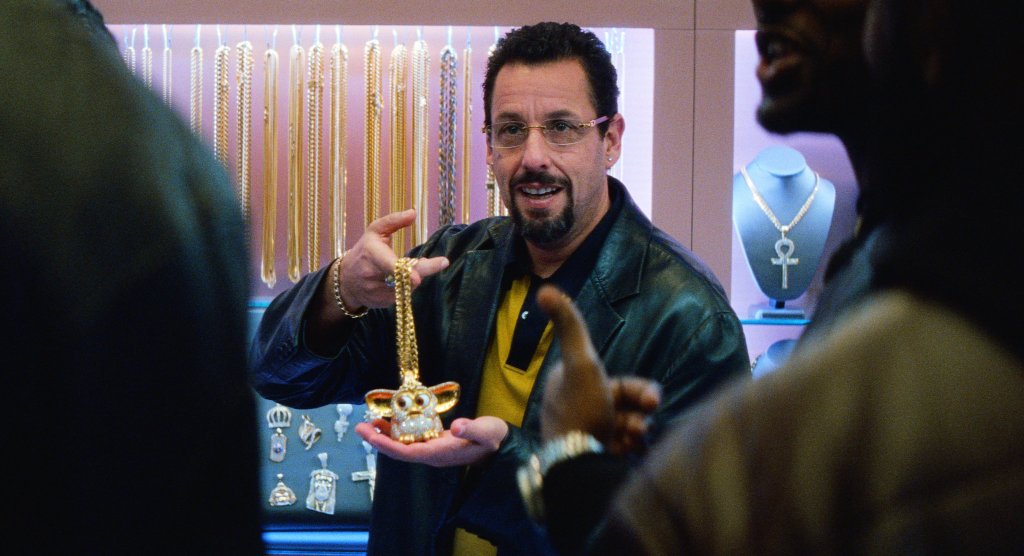
This film was rather difficult for me to watch. It took me three sessions to finish this film. Uncut Gems is classified as a crime thriller and is a rather impressive film. To me, the film finds itself in a strange new genre of unending suspense and uneasiness. Similar but different from cringe, I find unnerving material a bit unbearable as I am an incredibly anxious person.

The plot, acting, and cinematography are all excellent, so don’t let my apprehensions dissuade you from watching this film. Adam Sandler is one of the greatest actors of our time and his performance in this was incredible, irreplaceable. The pacing and writing of Uncut Gems is incredibly unique as well, taking heed to the film’s name and providing some uncomfortable and unfamiliar long exposures or cuts. Social tension is highlighted by extreme and long closeups, similar to how one would inspect a diamond.

The metaphor for value and glamour permeates even into the writing. Many key details in the plot are glossed over or taken for granted. Conversely the story or camera has a high interest in following famous celebrities and high profile events. There are a lot of unanswered questions, from origins to current standings, analogous to how diamonds are bought and sold. How does Howard have a jewelry store in the diamond district to begin with? How does he have the undying love of Julia? How long has his debt been following him? When was his last major win?

Both the writing and cinematography are rather grim. From uncomfortable color correction, camera angles, writing, and dialogue, Uncut Gems goes against many mainstream formulas in its effort to deliver a metaphoric and literal uncut gem.

This film, along with Parasite, gave me the creeps. I’m glad I pushed through and finished Uncut Gems as it is unique, artfully executed, and well casted/acted. A popular misconception is that this story was loosely based on a true story, which is an exaggeration at best. Although Uncut Gems is darker than most films I prefer, I’d easily give it two thumbs up.

Reach Two Hands Down

I used to live in Chicago for over 10 years. I moved to California because I was offered free housing by the esports organization I was working for at the time. The owner, Reynad, was a prolific gamer and was working on his own game. He invited me over for lunch to chat about his game and to see if I could provide any valuable input to his creative process. As we walked into Huntington Beach, I confessed to him how influential he was to me, as he inspired me to create my own organization in Chicago. He naturally replied to something of the effect, “No need to thank me. I know that you’ll inspire others and that it’ll continue to pay itself forward.” He admitted he began esports because of organizations bigger than him and that we were all small parts of a larger journey.

I find myself spreading this message quite naturally, as I’ve seen a part of myself in every community organizer I’ve met. The identity and journey is so relatable to me, that it is only natural for me to inspire, engage, and learn from others and to wish they do the same further on.

My casual guild has around 800 members, but very few of them are active or responsible members, making a smaller more tight knit guild much more engaging in some ways. Whenever I get asked how can we handle more responsibilities or what we should be focusing on, I always spread the message of reaching down and pulling up. The more members and the more responsibilities are present, the more imperative it is to not place responsibility on ourselves, but to enable and strengthen others so that the entire group can endure and persevere through challenges.

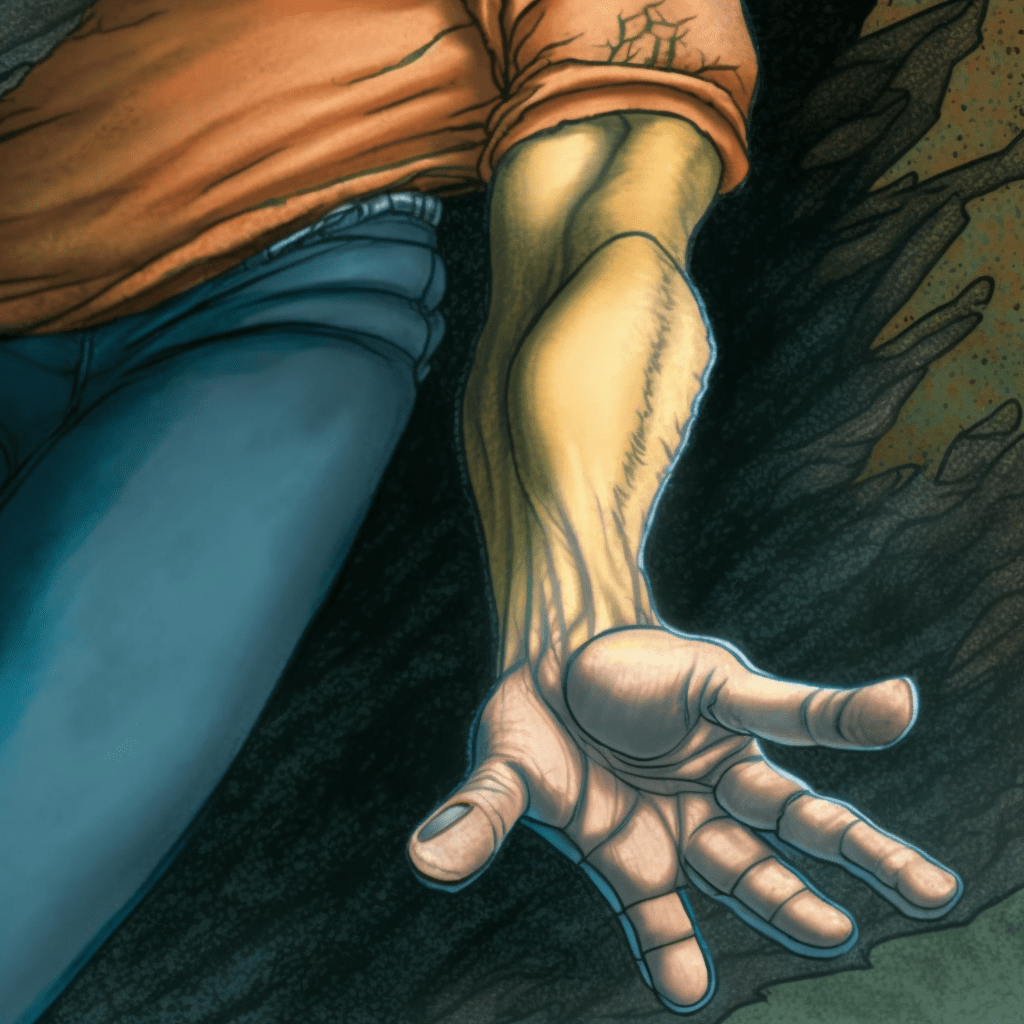
I have been led by leaders who led in the front and led by leaders who led from the back. An unspoken yet respected rule is that we are eager to lead each other side by side. It is just extremely rare for egos, agendas, and ambitions to all line up. It is why it is so easy to become rivals rather than peers, it is difficult to look at an open hand with humility and it is difficult to extend an open hand with humbleness. Find those who do either and eventually you will do the same.

Unbridled Confidence

Unable to sleep, I logged into World of Warcraft to sneak in some productive gameplay. I cleaned out the guild bank and discord while waiting on my dungeon group to fill. It took quite some time, as I crossed off a bunch of errands off of my list before the group disbanded and I had to form my own group. Typical late night struggles.

An hour into my dungeon wait, the group finally filled and we were set to start the dungeon. “123” a mage typed. I opened my map; no one was even close to the dungeon. This mage saw the group fill and typed 123 immediately. What a guy. He asked for a summon before anyone was there to do one. “Be considerate.” I replied. He checked his map and confirmed.

No one close to the dungeon and no movement on the map. I guess I’ll find a way to make it to the dungeon. To be able to fly in the continent of Northrend, one must learn Cold Weather Flying, a tome which is tradeable from character to character. I swapped over to my Alliance server and sent this tome over, one of the very few things I can trade between servers and factions. I logged back over and taught my character how to fly. I rose to the sky and pointed myself south by southwest, out of the city and onto the dungeon.

I opened my map and there has been little movement. Except, wait. Our mage has moved. I hovered over his character portrait and checked his buffs. His movement on the map seemed… indirect. As if he was following paths across the land. Sure enough, in his buff list, was a Hawkstrider, a swift ground mount. This mage had ridden across the land and met me at the dungeon’s entrance within seconds of my arrival. Without a word, we began summoning the rest of the team.

A pleasant surprise, this mage. We grabbed our quests and zoned in.

A message appears in guild chat. “when did wow add a playlist”

I replied, “what”

My guildmate went on to describe how there’s weird metal music playing in Terokkar Forest. “when did they add music?”

I’m confused. I tell them there’s always been music.

“no, there hasn’t. i haven’t played in a while but i’ve never heard it until now.”

There are a lot of new players in my casual guild. I explain to him the default keybinds to turning music on and off. I tell him that the game has had music since its initial launch. He pushes back.

“it’s never had music”

I tell him we can simply google it and another guildmate agrees with me. I ask him, “Did you really think the most popular game in the world at one point didn’t have music?” He quickly replied yes.

I didn’t quite know what to say at this point so I told him, “Wait til you get to Northrend, your mind will be blown.” The music director for this expansion was incredible, so his mind will indeed be blown.

The dungeon went on smoothly and guild chat remained silent. His conversation stuck with me until the end of the dungeon. Our tank had never ran the dungeon before and needed a little guidance. While he charged forward rather confidently into what was a mystery for him, our tank took feedback well and the run was very smooth. I shortly after went to bed.

Is confidence a horse-blinder? Allowing us to charge forward? Do we let our experiences and our confidence blind ourselves to reality? Inversely, we cannot be so skeptical and fraught that action can never be taken. Perhaps the availability of information and the veneer of social media encourages us to be bold and brazen first, subtle and skeptical last. I’ll cover generational conversation more in a future post.

Relieving Power

Recently in World of Warcraft, I’ve began leading a casual guild. I’ve always wanted to do something like this, beginning with TBC and attempting to create a giveaway guild. My ambitions with TBC didn’t last long and only attracting those who wanted free things brought in the wrong kind of crowd, mostly in the form of players who never logged in again. I guess those who work for their things tend to play longer?

Our casual guild has been growing rapidly. I joined when it was around 100 or so members? It currently is at 700+ members. One of the first guild expansions was absorbing another leveling guild. Afterwards, a few members began mass inviting, gaining us 50+ members at a day. It was startling seeing twenty people joining our guild at the same time. This inevitably led to some collateral damage.

I’ve never been in such a large guild. One of the first things that starts to fall apart is guild chat, as everyone by default has access to this. Since it’s a casual guild, it feels strange to create a timeout rank for chatters, who can see guild chat but cannot participate in it. We currently have not implemented this, so our current solution is to speak with trouble makers and then to boot them on further offenses. I suppose other guilds do this the same and it’s much easier with smaller communities and with vetted invites.

Aside from toxic chat, there’s the possibility of officer drama and vision misalignment. When we absorbed another leveling guild, we also took in their officers. I was not a part of this exchange and I did not bear witness to the transfer of power. All I can say is that from my perspective, our guild was the same but simply larger. Looking back, the people who were most eager to mass invite and mass promote were from the merging guild, making it a vision misalignment and miscommunication.

Mass inviting and mass promoting are not inherently bad. However, without limit, scope, or guidance, volume just becomes noise. As we grew more and more members, it became more and more important to weed out bad actors and to stunt undesirable growth as quickly as possible. There was one point in which officers could promote others to a rank with access to guild invitations, causing the invites to open up exponentially.

Stripping players of their power is typically not a good exchange. It relieves pressure from the guild management, but rarely does the other side take it well. With two people to talk to, both of which had been previously messaged by another officer, both did not take their punishment well. It came to them as a surprise that they would lose their powers. I’m not sure what exactly they expected. From my perspective, if undesirable behavior continued, there was only one solution for a guild. Perhaps they believed their actions were so noble that they could override our conversations. I’m not sure if those people are used to working with others or used to having restrictions.

Relieving power comes with reinstating that power somewhere else or at least another time. I am fine with having more people recruit and more people promoting. The two players response to losing their power and having a conversation about said interaction revealed to me that it was their way or the highway, as both shortly left the guild afterwards. Perhaps it wasn’t clear to them that their powers would be reinstated at a later time with some communication or compliance. Perhaps any resistance was too much for them at all.

Having both been the relieved and the reliever, it takes just a small conversation to smooth out rough edges. There are a few types of exchanges. Thank you and you’re welcome is an uneven exchange. Thank you and thank you is an even exchange. This is happening and I don’t know why is an uneven exchange. This is happening and I know why is an even exchange. Perhaps we misled those two and miscommunicated with them for too long. Or maybe they failed to understand us. Regardless, we both have moved on and power has been relieved.

How I Bullied Ricki Lake

I must have been in 1st grade. It was recess, we were on the asphalt outside our classroom. A circle of boys formed, with one boy in the middle, helplessly being pushed around. I didn’t know what was going on. I don’t remember anyone’s name. I just remember everyone shouting “Ricki Lake. Ricki Lake.” Another boy took me by the shoulder, joining me into the circle. We started chanting louder.

Who was Ricki Lake? What was I doing? Why was everyone so enthused?

A teacher came and broke up the ring. She took down all of our names and we one by one went to different adults. Over the next few days, I’d visit a special faculty member. Looking back, this was either a counselor or a conflict resolution HR type of deal. In the moment, she just treated me as a kind lady asking questions.

She asked me why I called the boy Ricki Lake. I was confused, wasn’t that his name? She replied that his name was indeed Ricki, but that his last name was not Lake. She asked me why I thought his last name was that.

“All the boys were calling him that.”

“Ricki Lake is a television host.”

“So that’s not his name?”

She replied no, explaining that the kids were making fun of him. The boys were making fun of Ricki’s size, calling him the same name as an overweight celebrity.

“So you don’t know who Ricki Lake is?”

No, I replied. I really thought that was his name. I was just joining in with the other boys.

She asked me a few more questions about my family. I told her I was the only English speaker in my family and that my parents would use a mix of Chinese and English with me. She grabbed some flashcards and sat down with me. “So you don’t have any older brothers or older friends?” I replied no. I remember this question sticking with me, because in the future I’d refer back to it whenever I had a culture lapse.

She showed me a flashcard with a pear on it. I remember looking at the card and looking at her. “I know what this is but I don’t know how to say it. I only know how to say it in Chinese.”

She was kind. “How do you say it?”

“Li”

“In English, it’s called a pear.”

I told her how much I liked them. But only the Asian kind. My mother once gave me an American pear and it was really different. She laughed and agreed.

Shortly after, I never saw her again. She must have deemed me a good kid who lost their way. I don’t think I ever saw Ricki again or the other boys. I do remember becoming a lot more aware of social bullying after that, despite not remembering any direct teaching or scolding from that woman. Maybe she asked if I knew if it was wrong to bully people. In my eyes, I never wanted to bully him. And she probably saw that.

I would go on to join Breaking Down the Walls, an anti-bullying club in my high school that focused on short, informative skits and targeting popular kids to be a part of the club. I never really saw bullying in my high school, but that really was before cyberbullying and Facebook became prominent.

I once saw some bullying on a school bus. Some guys were hassling a girl for whatever reason. I told them to stop cause they were being obnoxious. She thanked me and a few months later invited me to her birthday. I lost the invitation.

I believe I still inadvertently bully people here and there. With social awareness and a good community, we should all be able to identify and stop bullying when we see it.

Gym: Graduation or Indoctrination

The gym can be seen as a microcosm of society, with a constantly changing population and different levels of dedication and skill. My girlfriend and I had a discussion about whether the gym is more like a school, where people eventually graduate and move on, or a club, where the population grows and becomes stratified over time.

From what I’ve observed, there seems to be a mix of both. There are certain times of the week and year that are busier than others. And I do see familiar faces and a similar crowd on particular days of the week.

From a business standpoint, gyms do not differentiate between a satisfied gym goer and a satisfied gym absentee, as they rely on a subscription-based model, rather than attendance. This means that even if members stop going to the gym, as long as they continue to pay their membership fee, it’s beneficial for the gym.

The way a gym markets itself can also give insight into the type of population it attracts. LA Fitness as it’s name, Local Access, implies is an approachable and accessible environment. Slightly more advanced gyms target their power users with physical therapy/massages, more specialized classes outside of aerobics, and dieting/nutrition programs. There are also more casual gyms that indoctrinate their users with targeted activities like bouldering or CrossFit.

Gyms that target their most skilled and experienced members and offer specialized classes and services are likely to have a more experienced and dedicated population. On the other hand, gyms that prioritize accessibility and offer a variety of activities may attract a more casual and diverse population.

Personally, I prefer evergreen activities and clubs where I can continue to grow and improve over time. But, it’s also important to remember that everyone has different goals and priorities, and what works for one person may not work for another. I don’t think gyms inherently graduate its users, but I do believe many find their results and satisfactorily leave. My girlfriend’s observation about LA Fitness may be correct.

Film Friday: Entergalactic

Kid Cudi stars in an animated film as Jabari, an upcoming artist in Manhattan. The film shares colorful aesthetics in line with Spider-Man: Into the Spider-Verse and Great Pretender, capturing a whimsical and artistic New York. The film’s storytelling is well paced, allowing for a natural emotional rollercoaster filled with unique details. Covering themes of identity, modern dating, and growth, Entergalactic is a perfect fit for me.

The film has great attention to detail, exposing characters’ emotions with visual arts, music by Kid Cudi, and fantastic dialogue. The characters, especially Jabari, have incredible wardrobing by Virgil Abloh. Jabari’s imagination and the films lightly liberal interpretation of reality provide a kiss of magical realism, heightening the world immersion.

The film has beautiful transitions and animations. Sticking to a classic formula, Entergalactic‘s three act arc is well executed with beautiful art, music, and story keeping our attention every moment. The story is kept simple to allow for full exposure to the film’s world building. The voice acting and music by Kid Cudi, the beautiful animations, and the wardrobe by Virgil make this film an incredible pleasure to be immersed in and cannot be understated.

Doing light research on the film, Fletcher Moules directed it, having experience with a few animated films before this. Writers include Ian Edelman, experienced with American immigration storytelling, and Maurice Williams, multitalented entertainer with a focus on Black entertainment. As mentioned before Virgil Abloh plays a heavy stylistic role in this film, with his vision honored posthumously.

While the romantic comedy skeleton of this film is quite conservative and classic, the execution, detailing, and expression are phenomenal. I hope that Netflix continues its route of engaging talent directly and empowering artists like Kid Cudi to create special pieces like this one. There were certainly some artistic liberties and risks taken with this film and I’m sure there are dozens of Netflix films that failed to capture our attention. Don’t let this film get away, especially if you love animation, hip hop, or modern romance. A near perfect film, my only critique is to remaster the animation as some scenes have lower FPS, an understandable production cost or time save. Other than that, a classic I could enjoy again and again.

Short Term Distraction, Long Term Uncertainty

It’s easy to claim the life we live is surrounded by distractions. There’s more stimulus than ever, with technology competing for our attention day and night. It’s not unusual for us to grab our phones first and last thing each day, as we go to and get out of bed. Some argue blue light addiction is what is killing us all. I even wrote about The Digital Divide previously, and how we’ve become farther the more connected we’ve become.

There are pros and cons to everything. The benefits of technology are obvious, allowing us luxuries such as globalism, the internet, social media, smart-technology, and more. We’re on the cusp of incredible technology as well, with nascent developments in artificial intelligence, autonomous vehicles, supercomputers, and more. The obvious downsides of technology are described in aspects such as the digital divide, technology addiction, and old knowledge becoming obsolete.

There’s a much deeper issue than just the pros and cons of technology: it is our cultural behavior and acceptance towards technology. We’ve seen tech companies rise, spawn, and compete with each other for what ideas and apps are valuable and to manifest what they believe to be important to us. We’ve seen pushback from audiences asking for those who grew in prominence to hold more responsibility. As our culture adapts and accepts new avenues, new laws and regulations are placed upon them.

That’s easy to see from the conglomerates point of view. But what about the people using the technology day to day? How have we become affected outside of the direct benefits?

I’ve previously written about the change in our dialogue, and how generations before the internet have different conversation skills with those after the internet; the same goes for smartphones. Communication is just one avenue.

Another is our forecasting of the future. As technology transforms more rapidly in front of our eyes, the amount of lifetimes it requires to see dramatic change reduces. When it once took several generations to go from ocean travel to sky travel, it’s taken remarkably less time to go to space travel. The same goes for our ability to communicate. When it used to be one village, it then went to one country, and now we can speak to anyone in the world quickly.

Rapid changes to developing industries is not a new demon. There’s always been early adapters of technology and there’s always been schools or groups dedicated to honing crafts by any means, including forward-facing technology. Yet as technology grows faster and faster, these changes are harder to implement. In my college days, professors could not teach the most current material but they would at least acknowledge its existence. It was difficult for just a few professors to quickly change the pipeline of education, so no matter how fast technology grew or changed, the academics would be lagging behind, struggling to catch up.

There in lies the most uncertain future we’ve ever seen. I graduated college 10 years ago and life is only changing more quickly. It is true some things never change. Yet it is also true that what works today may not work tomorrow. We’ve seen megacompanies fall to the wayside by refusing to grow with the digital era and we’ve seen companies that are less than 10, 20 years old become the wealthiest and most powerful companies ever. It is already taking less than one generation’s lifetime to see our lives change more than our parents could expect. Soon, it’ll change faster than the current generation can expect. From there, how can we be certain of any future?

Distraction comes from the Latin roots of “dis” meaning apart, and “trahere” to drag. We are dragged apart from our duties when we are distracted. Yet what are our duties if the future is uncertain? All the stimulus we react to may not actually be such a distraction. In times of survival, when our lives were most uncertain, hyper-attention to any stimulus may be the only thing saving us from a tiger in the jungle. The anxieties was face today are boundless by society and boundless by arriving technology. Is it all a distraction? Or are we just trying to survive?

Swallowing Disappointment

I previously wrote about The Valley of Disappointment. In that post, I explored how time and accountability are often the enemies of our progress. I discussed how external factors and perspectives can shape disappointment, but I didn’t delve into the importance of navigating disappointment for our long-term potential.

Navigating disappointment can be tricky. It’s easy to get caught up in the moment and let it define our entire experience. But when it comes to long-term goals and aspirations, it’s important to remember that disappointment is just a part of the journey.

Throughout my life, I have suffered serious leg injuries both congenital and accidental, depriving me of physical joys like sports or running around. I’ve directed that energy towards gaming, becoming obsessed or competitive with any game I set my mind to. That led to my competitive Super Smash Bros. journey.

It took me over two years to win my first official tournament and there were a lot of defeats leading up to it. Sure, there were moments of hope, such as placing 3rd and earning some prize money. But, there were also tournaments where I was eliminated immediately and tied for last place.

Surprisingly, defeat stung worse the farther along I went in my journey. During my peak performance in Melee, I was earning enough to cover my rent through tournament winnings, yet I still faced defeats several nights a week. Despite this, my drive to earn an income from my passion for the game and the desire to win competitions kept me motivated.

However, that wasn’t always the case. Early into my career, after one particularly devastating tournament, I considered giving up completely. I felt overwhelmed and questioned if the game was worth the effort. I didn’t touch the game for a week. Then I watched my brother play and started watching videos on YouTube, and suddenly my passion had reignited.

My ability to swallow disappointment allowed me to have an amazing journey with Melee. My passion and desire for the game helped me to push through tough times. From the moment I decided to compete, I believed in the game’s unique magic. Through passion and perseverance, I met thousands of people, visited dozens of cities and venues, and even moved across the country. Remember, if you can envision yourself still enjoying something despite its toughest moments, it’s definitely worth pursuing.

Spirit of the Escalator

A term coined in French, L’esprit de l’escalier, is afterwit, or the witty remarks thought of after having descended stairs. The Wikipedia article does a great job of detailing the origin of the story, including a reference to “the bottom of the stairs” which indicates a guest has fully left a gathering.

Witty or remarkable, our ability to reflect upon things allows us to speak greater on that topic. It is why skilled conversationalists carry conversations with their charisma, because conversations are rhythmic and the best don’t drop a beat.

Typically writers experience this phenomenon the most, as collecting and organizing thoughts can become an instrumental task to their expression. I’ve sometimes thought of this as introversion and the extraversion, but charisma comes to both spectrums. The life of the party may not be the speaker of the party and the person least engaged may have the most to say.

The term Spirit of the Escalator resonates with us because we have been in dialogues where we couldn’t properly reply and we thought of a reply afterwards. We appreciate its French origin because we like to think of ourselves as witty and cunning. The spirit captures but one element of conversational reflection, that element being comeback.

As our conversations take shorter and shorter forms, the desire for sharper and snappier comebacks increases. With more accessible conversations that have become narrower in digital spaces, from lack of intonation to lack of context, we have allowed conversation to boil down to bullet points and sound bites, thereby increasing the need for comebacks. Nuanced conversation, with give and take, becomes less attractive to traditional broadcasts day by day.

Now there is an equilibrium, where an opposite and equal reaction manifests at a critical point. When our distaste for short form content becomes too great, we gravitate towards long form content. Of course, these long form content creators will produce smaller pieces of their own content, indicating a self-awareness and sense of ownership towards sub-content. But the major draw of long form content is the ability to reintroduce long conversation, without the conversation turning into a martial art of offense and defense, of maneuvering around sound bites.

The term Spirit of the Escalator carries a modern invention’s name in it. Sure, I could be taking the translation too literally, with any set of stairs mechanical or not considered to be “l’escalier.” I wonder if the term’s genesis comes from a different age of conversation. When conversation was once communal, it now has became guarded in ivory towers with both speakers and audience on the defensive. It is remarkable the internet has recreated these ivory towers in some ways, in the form of closed communities and echo chambers, while the internet has also opened doors by removing gatekeeping and allowing different forms of conversation to be tested in the market.

It will be truly interesting to see what terms we’ll be using to describe texting or leaving a zoom call. Hell, we can’t even slam phones anymore. Our technology shapes our responses and sometimes the responses we’ve learned become phased out entirely. What will be our next Spirit of the Escalator?