Impossible Sudoku

In 5th grade, my elementary school teacher stumbled upon a Sudoku puzzle and brought it into our class. She copied an example from her newspaper clip and posted it on the board. We worked on it together as a class and we got through the puzzle. At the end of class, our teacher drew up a custom grid herself and we transcribed it into our notebooks. Our homework was to solve this Sudoku puzzle.

As the title suggests, the puzzle was not possible. But 5th grade me didn’t believe that was a possibility. Why would an authority on knowledge, the one who introduced me to this topic, give me an impossible puzzle? It didn’t seem hard in class, in fact I copied the example in class and did my best to recreate the steps in the puzzle. I mean, it’s just process of elimination, how hard could it be?

Dinner time rolled around and my parents returned from work. They asked about my homework and I told them I needed help. My parents were only willing to help with my math homework, as English was their second language and they didn’t quite understand how to teach me any other subjects. Funny enough, I was tutored in math on the side; is tutor the right word? More like I was endlessly forced to do math assignments since I could write. So when my parents found out I needed help with numbers, they were more than eager to give me their piece of mind. I told them it wasn’t anything like what I had seen before and that I had tried for an hour or so on the problem.

My mother sat down. She asked me what the puzzle was. I showed her the example from the classroom we solved. She understood. She tried it out for a few minutes. She called in my father. I pointed to the in-classroom example, but my mother took over explaining.

They pulled my notebook from me and started jotting down numbers in small, fine print. I tried to follow their conversation in Chinese. It was the same conversation I had with myself an hour ago in English. Except, my mom was introducing a variable? She wrote down X and X-1 or X+1. I gave her a confused look. “I don’t think that’s the right way, mom. We didn’t do that in class.” She told me to hush and watch.

My father and her talked and argued for five, ten minutes. My father walked away and my mother said there was no answer. It was time for dinner.

What? That’s it?

I felt stupid despite coming to the same conclusion as my mother. Were my parents apathetic or did they just not understand the puzzle? How could there be no answer to a homework assignment?

The next day came and I felt a turn in my stomach. I had missed a homework assignment before, but when it came to numbers and math, I was expect to do well in class. I had a sort of reputation for having the best math knowledge, reciting multiplication tables with some sort of weird, militant enthusiasm and yearning for approval. I was a weird kid and I knew it, I just didn’t know what to do about it.

The afternoon rolls around and it’s time for math. My teacher puts up the grid and looks at the class. No one has an answer. She starts to get a little impatient. “Cary? Mr. Smartypants?”

I felt ashamed. I said I asked my parents and I couldn’t figure out an answer. My teacher looked at Donna, the other Asian in the class. Donna said she didn’t think she had the right answer, but tried writing one on the board anyways since no one else would volunteer. As she finished filling in her answers, she concluded, “but it’s wrong, that’s as close as my parents and I got.”

My teacher looked stunned. She double checked Donna’s work and realized Donna was indeed correct, her answer was insufficient. My teacher turned her back to the class and went up to the board. She grew silent. She picked up her marker and tried again. “No…” she trailed off.

“Huh, I guess it’s trickier making them than it is doing them.” She threw her arms up and laughed, turned around and wiped the board.

Is everyone an idiot?

A Rising Tide Lifts All Boats

There are two polar opposite views on success within a community. One is that one person’s success may bring up everyone’s success. This is summarized in the phrase: a rising tide lifts all boats. Another view is that one person’s success is the only success to be had. This is actually summarized as crabs in a bucket, where a crab pulls down any crab making its way out of a bucket, as if to spite each other’s progress.

As my guild reaches maximum capacity, we are in a pivotal position to either gain momentum and form many groups or to stagnate and slowly bleed out members. I say the latter with such pessimism because I have witnessed other guilds and have experienced pick up groups that have failed to launch or took large efforts in forming, taking away from precious raiding time. Lots of guilds and raids are competing with each other at similar time slots, allowing the free market to fully work, which will inevitably result in some collateral damage, i.e. the entrepreneur or business that fails.

What’s difficult about small communities is that while the free market is an impersonal law of economics, player bases are not rational, organized, or adherent to normal laws of economics. Some players will fantasize about being the best and will bootlick their way into any competent organization. Some players overinflate their egos and demand whatever they can out of whoever they can, regardless of equal value exchange. In many ways, opportunities, products, and services are incredibly limited in small communities which could easily cause insecurity and crab mentality. When success is scarce, any personal success feels that much more delicate.

Unlike the real world, digital communities and small communities that have yet to sunset have almost unlimited potential to grow. Prosperity and abundance are so easily practiced in the real world where things are finite, yet within small communities we become blind to this mentality. I was guilty as such when I first started hosting Super Smash Bros. tournaments. I thought I had competitors or adversaries that I had to manage or coordinate against. In reality, they had the same goals as myself and it was much better to collaborate and coordinate together with them. I experimented with many different solutions, from working together, to hiring them, to working for them, and to contracting them. All of those solutions were much more favorable than closed communication. It was difficult for me to see this at first, because I thought of compromise as a loss of integrity. But any communication and collaboration can go a long way and that potential is worth more than a lonely path with missing bridges behind you.

My top goal for my guild at this point is to create several raid leaders and organizers that can sustain the guild without my personal presence. As I reach out to other guilds and teach my own members how to raid lead, I hope to create a network of strong leaders than can organize and maintain the large social group we’ve created.

No Homers Club

Homer the Great is S6E12 of the Simpsons. It has an iconic scene in which Homer recalls a childhood memory where he is turned down entry into a treehouse. A gatekeeper eagerly accepts everyone except for Homer. When asked why, he points to a “No Homers Club” sign. In perfect comedic timing, Homer rebuts that they allowed another Homer into the treehouse. Without missing a beat, the gatekeeper says, “It says ‘No Homerssssssss. We’re allowed to have one.'”

This scene is incredibly funny because Homer sets up this story as everyone hates him and the world is against him. I think we’ve all felt that same anxiety and fear before. The extreme specificity of the example is so humorous, especially with the inclusion of an exception. I think we’ve all felt unfairly treated at one point or another in our lives and have looked at others in similar positions to only find different outcomes. It’s not easy explaining to people that life is not fair, especially if they perceive it to be unjustly or overtly unfair to themselves.

There are certainly times when life truly is unfair. But what can really be done about it? People like to believe the grass is greener on the other side, but most often the case is that everything has its pros and cons. We can seek different environments or different friends, but problems tend to follow us if we don’t resolve them. We can make changes to the things around us and we can make changes to ourselves.

It’s funny because we say the only thing we can count on is change, but there’s some things that never change. The episode Homer the Great is not only iconic with its infamous meme, but also because it ends the same way Homer recounts his childhood, with another No Homers Club created in his dishonor. The storytelling and humor are so fantastic because they relate to the human experience and because we find ourselves in the same problems we had as a child, with almost cartoonish exaggeration.

While it’s certainly possible the world is out to get you and an existential crisis can be so overwhelming, what we can do is control ourselves and our decisions, which plays out into controlling and creating our future. Don’t let patterns of the past define your future and don’t let the perceived antagonists stop you from changing yourself and your future.

Compromising Before Conflict

Something that I think is very straightforward but somehow lost upon some is that everything comes at a price, everything is a trade off. There’s nothing that is purely good and there is nothing that is purely evil. This message gets lost upon some most likely because it is difficult to see multiple perspectives and most personal experiences can be summed up wholly as good or bad.

Part of being a consumer of any product or service is that the consumer is the last person to experience the exchange and reaps only the benefits of a transactional exchange. This seems fair and logical for the buyer, as why would the buyer accept any other offer aside from one that makes sense? Unfortunately, that is not always the case with sellers, business, or services.

How is this possible? How can a business or service provide something that doesn’t make any sense? It would have to make business sense, ethical sense, moral sense, and beyond if it were to stand the test of time, would it? That is just not the case. From fast fashion brands like Zara becoming one of the wealthiest companies in our lifetime from hiding its practices in favor of profits, to tech companies emerging as arbiters of communication and advertising, all the way to small local shops that once existed and were bulldozes by superstores and Amazon, business don’t have to make sense as a whole, they just have to make sense to a customer base. The most desired thing out of a consumer, as previously mentioned, is the delivered product. That is the only thing they care about.

The same can be said of services and events. For many participants, what happens behind closed doors and after hours is none of their concern. The only concern they have is value per dollar or value per hour, measured in satisfaction or happiness. Was this a good experience? Was this a good product?

Conversely, businesses and services have to create something from essentially nothing, creating value out of something that others do not care to do. Why doesn’t everyone open a restaurant? It’s because many that do fail. Why doesn’t everyone own a business? Because business take a lot of time and energy and they always have a chance of failing.

The compromise products and services make is that the companies that provide them believe their investment will be returned and then some. There is no guarantee and each business seeks a different amount of “and then some.”

For the companies that place more emphasis on their product than their profits, it is more likely than not that the company will decline in health over time without a cash lifeline. Tech companies such as Facebook or Uber have placed incredibly large bets on their products over their profits, becoming stark exceptions to this rule. However, these exceptions are rare and businesses are constantly losing the battle between servicing consumers and staying alive. Without capital, a noble business is just volunteer work.

This is where premeditated compromise is necessary. If a business finds itself faltering or struggling, the only thing it can do to save itself is to provide a better service or product. Some companies try the opposite approach, of reorganizing finances and charging higher prices or finding lower costs. This tends to be a short term solution that only works if it buys the company enough time to create a better product or service.

How can a company compromise to create a better product or service? Some of this has to do with listening to customer feedback and honing in on what makes their company unique or special. Some times it relies on critical investigation and discovering latent reasons why clients enjoy the service or product. And most obviously it can do with changing the product or service to be more in line with customer expectations or satisfaction. Often times, negative or critical feedback will never be provided and only a new, proper solution can highlight deficits.

The largest compromise I am making with my casual guild in World of Warcraft is working with another guild to start a conjoint raid. The results are very promising, but the cost comes at fewer of our members are able to attend due to a shift in time and a stricter roster limit. The bet I am placing is that the experience and rewards from a successful conjoint raid outweighs the short term consequences at this time. There will be a deadline to shift gears or promise more from my product or service and this deadline must be beat with the strong community of players that should come to grow from this experience. The risks involved include losing guild members that are benched too often and irritating both the most casual and most hardcore players with a diluted vision. As time progresses, I’ll have more options to deal with these grievances and hopefully have more players to build a foundation with.

Keeping on Schedule

I started attending Super Smash Bros. tournaments in 2007, the beginning of my senior year of high school. There were so few tournaments that for my first or second tournament I drove 3 hours, across state borders, to play at college campus. I played for less than four hours before driving home alone. It was exhilarating. I instantly fell in love with tournaments. I somehow made it home before midnight and went to school the next day.

I remember even when I was a very casual player, less than one hundred tournaments into my career, I was always complaining about tournament schedules. I started noticing other veterans mentioning the same thing. One thing an experienced player always commented on before a tournament began was how well the organizer ran the event. The reputation of an organizer and their follow through were generally one and the same. Some of it came from the respect of the players and some of it came from the leadership of the organizer.

I’ve written previously about getting ahead of problems and how experience helps us navigate situations both in real time and with precognition. One element of live event organizing is understanding how time plays out long before the end of the event. Most events happen linearly and sequentially, relying on a previous segment to finish. There are rare occasions where there are simultaneous or concurrent processes, but these require additional bandwidth and organization. We can think of an event requiring X amount of work. There are multiple routes to solving X, but the main variables we are interested in are how much man power does the plan require and how much time will it take to execute.

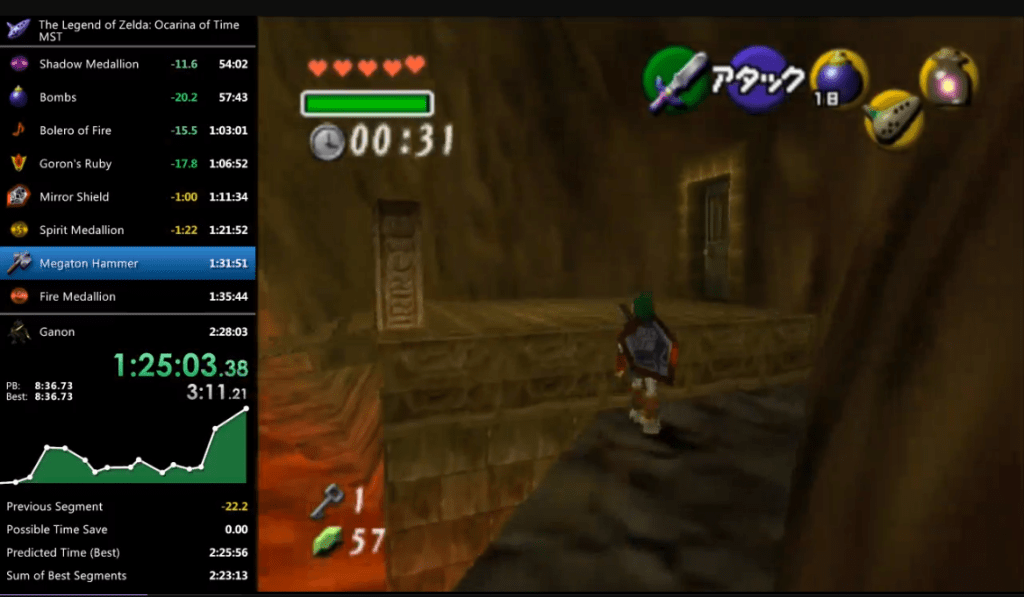
When it came to tournaments and live events, I was able to enforce, predict, and establish times throughout the day, updating players and staff of how the schedule was shaping out. Tournaments, and most events in general, have subsections where we can time split ourselves and forecast our future times. This is incredibly similar to speedrunning, where players optimize their gameplay speed and check their times against themselves or others.

A good speedrunner knows long before the end of their run what their best possible time could be. They know from experience and what the limit of speeds are, so they can make judgements on not only what is possible, but also what is most likely. For this reason, many speedrunners will reset a run long before it is done, if say one particular segment was very poor.

Unfortunately with live events, the reset button is not an option. When it comes to organizers, they are a conductor both like train and like music.

The Railroad Conductor will coordinate the daily activity of the train and train crew, ensuring the timely operation of the train and the safety of all passengers.

The conductor beats time and prepares the musicians in rehearsal, but most importantly the conductor considers every aspect of the music and how to make it as inspiring and incredible as possible. Then they work with the orchestra to make that vision come alive.

With timeliness and with liveliness, event organizers have to adapt and operate in real time, ensuring a smooth and professional experience. For some people, ending on time is the most important aspect, especially if the event lasts a long time or ends late in the evening. For some people, seeing a particular event or outcome is the most important, whether it’s in the hands of the organizer or not, like seeing a fan favorite win or a rare piece of loot. For some, just having the experience go smoothly and finishing as expected is enough.

Because there are so many different kinds of players and fans, there’s no one right answer in how to specifically run an event. However, running an event on schedule will always have its professional edge and at the very least updating players and fans of a changing schedule is a great courtesy. It takes experience to forecast times, but with a little experience an organizer can quickly see the similarities between all events. And even if an event doesn’t end on time, an accurate forecast and a positive attitude can easily save an event. In another post, I’ll share a story where I dropped out of a tournament so I could run said tournament and ensure it would end on time. Oh what I would do just to go home on time!

Decision

In high school, I had an amazing Latin teacher. He made Latin very relatable, which is a difficult thing to do, as Latin is a dead language. Nobody speaks Latin except to point their nose upwards in the air and recite some lines, it’s no longer a verbal language. And one of those reasons is because it has non-standard grammatical structure. Without going too much into it, Latin sentences can be worded in dozens of ways while retaining the same meaning.

This made studying Latin like a puzzle. I was intrigued with the subject. We went over myths, culture, history, and the language. A key element of Latin, especially in the intro course, was to teach etymology, something particularly useful for law or medicine. We’d learn the roots, the prefixes, suffixes, and more. A key lesson my teacher went over was the word “Decision.”

Decision is a combination of two words: de = ‘OFF’ + caedere = ‘CUT’

We know words like detour, defer, or defame. We know words like incision or precision. Decision means to cut something off, to pick one, but not the other. My teacher made it a strong point to include that if there isn’t something being cut off, something removed, it’s not a decision. It’s only a decision if there’s an opportunity cost.

He capped off the etymology lesson with a great legend of Gaius Mucius Scaevola. One of the bravest Roman soldiers to ever live, he literally single handedly stopped the Etruscan invasion of Rome. Sent to assassinate the Etruscan king, he killed the Etruscan messenger and was captured. When brought before the Etruscan King, he proclaimed that he and 300 other soldiers were sent to kill him.

He demonstrated his courage to his captors by thrusting his right hand into a blazing altar fire and holding it there until it was consumed. Deeply impressed and fearing another attempt on his life, Porsena ordered Mucius to be freed; he made peace with the Romans and withdrew his forces.

He held his hand in a blazing fire, staring the king in his eyes. The Etruscans knew not to mess with Romans. His decision and his follow through allowed one solider to save a kingdom. To save his kingdom, he gave up his hand. Decisions are powerful because of what we choose and what we give up.

Denying Feedback

I think we all find it difficult to take direct criticism well, especially if it’s related to one’s pride. An easy concept to understand but a difficult one to swallow is crushing one’s own ego. We like to protect our egos and inflate them to their fullest, in a strange attempt to protect ourselves. As confidence and experience grows, egos are no longer needed to protect one’s self.

It’s difficult to pass on confidence and experience. We all know it’s easier to gain these things first hand than it is internalize something that begins externally. There are innumerable self help books, videos on YouTube, stories and reels. There’s nothing like burning your hand on a stove to teach you it is hot.

In college, a friend of mine taught me this analogy. He said, “Some times you just have to let your friend burn themselves on the stove. In fact, if you tell them not to do it, not only will they do it, they’ll resent you.”

This was tough for me to swallow. I grew up with Asian immigrant parents. I got an ear-full for everything. Leaving the lights on, talking on the phone for too long, not finishing my meal, not getting good enough grades. I’m 32 years old and I don’t think it really ended, I just moved away and stopped talking to them as much. What they instilled in me was the never ending thought that there was something wrong, that there was something to be done about it. This is kind of a great thing for a problem solver. It’s not so great in that humans are naturally inclined to find patterns, even when one doesn’t exist. Oops, I’ll just solve a problem that isn’t really a problem…

It’s easy to think of feedback for others, but conversely it is terribly difficult to think of feedback for ourselves. Many times we take it to the wrong degree, persecuting ourselves for our most self-hated traits while not addressing the true underlying pain points. I wrote previously that we are able to see the world so clearly yet we are unable to see ourselves. This remains true with feedback and becomes ever so more important in that the feedback we receive from others is the only social mirror we truly have.

This makes feedback such a conundrum. We don’t like hearing things from others if we are insecure about something, so we place our ego in front of it to shield ourselves. Our ego blinds us from not only the feedback people are attempting to give us, but also to our own experiences, causing us to trust our ego over our experiences. Until we gain enough experience that our ego may subside, we cannot perceive our experiences unfiltered. Combine that with the fact that most people, a vast majority of people, are too polite or unconcerned about others that they will never offer feedback in the first place. It takes time, energy, and thoughtfulness to provide feedback to someone. Why would someone take that time, energy, and thoughtfulness only to have it rejected instantly by someone’s ego?

We don’t like taking feedback. People don’t like giving feedback. What is all the point?

As someone who has been and is still terrible at taking feedback, what I’ve learned is that not every point of feedback needs to be addressed, but more-so heard. When we get a lot of information it comes to us as static and the important parts require parsing. It is easy to become overwhelmed by static, it is easy to have emotional responses to unpleasant news, and it’s easy to dismiss information that is not easily registerable.

People who are good at taking feedback know that not everything may be addressed and not every solution presented is appropriate. They know that the people who bother to leave any feedback at all are fans of it enough that they want to see it improve. A big mistake I made when taking feedback was believing that people were antagonizing or positioning themselves against my beliefs or ideas. The best way to see it is by seeing it as a multi-pronged attack together on the same goal. Not everyone has the same experiences or knowledge, so of course there are different approaches. The important thing to ask one’s self when hearing feedback is what is the goal of the feedback? Even if the feedback makes no sense at all, the goal is almost always to make it better. Take the kind sentiment and place it kindly wherever it belongs, at the forefront of priorities or on the backburner.

The easiest thing a person receiving feedback can say is, “I’ll think about it.”

The hardest thing a person giving feedback can say is, “I know what it’s like.”

Changing Sleep Schedules

I mentioned in my previous dating post that I am skilled in the art of changing sleep schedules. Seems like a strange skill to have, but it is a curious one to have if you’re traveling a lot or need to change obligations. I am by no means the best sleep expert in the world, but I have a lot of experience with changing time zones or changing schedules and have found that waking up is a good key to setting the day’s pace.

There are a couple tricks that people really don’t seem to pay attention to but understand intuitively. The easiest trick to explain is to simply listen to your alarm clock. It is extremely difficult for a lot of people to do this, as I’ve dated a few people who let their snooze button go on and on. That is probably the most annoying thing in the world to others who are trying to sleep. Simply listening to the alarm and waking up with the alarm is the first line of discipline when it comes to waking up. It’s the first confrontation between your night self and your morning self. The version of you in the evening says, “I’ll wake up at this time.” Then the person in the morning should respond, “This is the time we agreed to wake up at.” Unfortunately for many people this is not the case, as the morning version of many individuals tells themselves that they are tired, that what is happening right now is not what was agreed upon in the evening. This can only be settled between yourself and reality. Whatever time you set on the alarm clock should be the agreed upon time. If your morning self truly can’t do the time you’re requesting, simply change the time.

For some people, this doesn’t seem like an option. People say things like, “I hate waking up” or “I have to wake up early but I don’t want to” or “I’m just a night owl.” However the hard truth of the matter is that people can change given time and habit. What people are afraid to admit is that their current sleep pattern is a development of a habit. If you habitually wake up late, you’re allowing yourself to rest later into the day, which allows you to work later into the evening. What a lot of people don’t understand is that the time you wake up cascades into the rest of your day. There is very little chance that a person can wake up every single day at 6am and not be tired by midnight. For some people, staying up late isn’t a choice but a requirement. Each individual will be different and have different needs. What’s the same with all people is that we all need rest. When we choose to get our rest is how our sleep schedule is determined.

The first point is listening to your alarm. The second point is to go to sleep when you’re tired. Listen to these two rules, and you’ll start your day at the time you want.

But it’s not easy for me to get out of bed! I unconsciously hit the snooze button. I need to put my alarm across the room.

I’ve heard every excuse. What I rarely hear are strong responses to alarms. Yes, there’s alarms that require a math puzzle or require you to stand up to disable them. But these alarms don’t really work on a primary response; they work the same way a barking dog in the morning does, it annoys you. I don’t want an alarm that annoys me. I want an alarm that works. One may argue any alarm that stirs the user up works. I’d like to argue the user makes any alarm work if the user complies. What does this mean? It goes back to not snoozing but it also goes further.

The craziest and best trick I have ever learned for changing sleep schedules, nay, waking up in general is simply practicing getting out of bed. It sounds stupid or ridiculous. But there is such a thing as practicing getting out of bed. I did this for one single afternoon in college and I have never unlearned this habit.

Practice is all about cue and response. A happens, we do B. Alarm goes off, we get out of bed. It’s a simple as that. What’s crazy to people is the idea of actually practicing getting out of bed. The guide I read and what I’ll repeat seems strange, but as I said, I never forgot it with one afternoon’s practice.

Close your blinds, turn off the lights, get under your covers. Do everything that would make it as if the room was the same condition it is when waking up. Set an alarm for 1 minute, 2 minutes, or 5 minutes ahead. Whatever number you’d like. And then just rest. Act as if you’re sleeping. Close your eyes and pretend it’s the morning.

When your alarm goes off, GET OUT OF BED. Put one foot down, then the other. Take your covers off. And get dressed. Start the motions of your morning routine. Head to the bathroom? Make some coffee? You don’t actually have to do anything more than get your body used to these motions.

Then do it again. Lie under your covers, close your eyes, and respond to your alarm when it comes. Get out of bed. Take the covers off. Get your feet on the ground.

Do this three times. Hear the alarm. Get out of bed.

I have never unlearned this habit. There are still days where I imagine snoozing or the rare occasion where I didn’t go to bed at the right time and I need to sleep in. The sound of my alarm, no matter how gentle of a sound it is, stirs me to action. My brain starts working and my body starts moving. Soldiers train in total darkness, under extreme stress. You can train your body to get out of bed.

In a future post, I’ll cover sustaining the body throughout the day on altered sleep schedules, like jetlag or performance days.

Hosting Duties

A wonderful thing about World of Warcraft is that it is a social game. There are times where I’ve talked to a hundred different people by noon. As my social guild grows larger and larger, there’s a lot of opportunity for clashes to happen, drama to occur, just over chat. Some players invite themselves to this by being inflammatory and insensitive, riling up others with every comment they make.

Last night I was in such a raid. There was one particular red flag that I should have noticed when I was invited to the group. The player that extended the invitation asked me to promise not to rage quit, as he’s had other players do so. I assured him I would stay the whole time. I’ve hosted a lot of groups and I’ve had players leave before, it gets frustrating so I understand. What I failed to realize is that this is telling sign of how a raid is going, not only in terms of success, but in terms of attitude.

The first two bosses of Ulduar are easy. I’ve written a post about Ignis, the third boss, which is a difficult boss for many pick up groups. The apathy of the leadership was apparent from the formation of the group to the execution of the first two bosses. Very little chatter or organization came from leadership, with all of the communications being social banter. We arrived at Ignis and the group began to fall apart. Despite this being 15+ members of the same guild, there were attitude problems amongst a majority of the players. One leader asked a player to swap from a damage role to a healing role, which the player reluctantly accepted. As said player was switching roles, a comment came into raid chat. This player took the comment to heart, got on the mic and said, “You know what? I’d rather not deal with any of this shit right now.” He logged off. We were down a player, a healer at that.

Confusion struck the raid. We recruited a few more members, taking up lots of downtime. Players impatiently waited in front of Ignis. the chat was boiling. We attempt Ignis a second time and wipe. As we return to the boss and prepare for our third attempt, dissent began to brew in the raid chat. A player mentioned it would be their last attempt. Another player asked to skip this boss. Members of the organizing raid came at them with all kinds of attitudes. “I’d rather you leave now then after two more bosses.” “If you’re not going to stay then you can just leave.” Did these players not just start a raid an hour late? Did they not recruit these players over the last two hours in need to fill half of their raid? There was a clear dissonance. A few players left. We tried the boss again and wiped. A few more players left.

One of the hosting members began insulting those who left. I checked my damage meters to see the top contributors leaving. What was this guy’s problem? At this point I had concluded that these guys were assholes, so I tried to salvage the night by asking everyone to have a good attitude for the remainder of the evening. We looked for more players and waited at the next boss. I whispered the best healer in the group to gauge what was going on. He told me that the guild was talking about it. I could tell from the silence in Discord and the lack of progress with replacing lost raid members. I politely asked in Discord if we should continue by doing the trash before the boss. The group eagerly jumped forward. We wiped on the trash. The group fell apart.

The disconnect between the pick up members and the hosting group was stark. There was a clear lack of hospitality and gratitude from the hosting group. Impatience and poor communication led to weak execution and retention. The group had a limited loot set available for pick up members, which is normal for a strong group. But the product the organizers offered was not up to par with others on the server. A big blunder made by the organizers was assuming every bit of the raid would go off without a hitch. From recruiting players, to starting an hour late, to poor attitudes leaking from the guild members, it was obvious the leadership had very little control over their ship. I know I’ve had a history of overcontrolling things, which I why I wrote about handing over keys. There’s a balance and that balance is what I’ll be instilling into our guild as we grow forward and have more leaders.

Bad Dating Stories in California

I was ecstatic to move to California for a number of reasons. One of them was for the women. Dating was tough for me in Chicago and I found the most success dating Asian women. I knew California had a strong Asian foundation and with a new dating pool of women to select from, my luck would come in no time.

At first, I did experience a new pool of women to select from, but my quality of dates was not very good. A couple of my matches did not match their pictures or used somewhat deceiving photos, or the girls were dull and uninteresting. The most upsetting one was with a girl who could not stop texting during our drive or dinner. She was insistent upon going to Universal Studios as well, something I was not interested in. She was polite enough to buy me lunch, as she offered to take me out as my birthday gift. That was our second date and I never saw her again. Thinking back, I gave her a second chance because my luck with dates was so bad, I couldn’t turn down a lunch date with a girl. Now I know better.

A confusing girl I went on a few lunch dates with was obsessed with Uni, the Japanese name for sea urchin. She was a young working professional who met for for three or so lunch dates. She was very strange, as she never engaged in any conversation beyond food. I remember listening to her talk and talk, then suddenly I asked her, “What are looking for from your dates? Why are you dating?” She looked puzzled and said, “That’s really deep,” before carrying on about the food. She made a big deal about how she chose this placed based on their delivery route, getting the best and freshest fish. I tried to order a bowl of udon, a comfort food of mine, and she told me we should go to a different restaurant to get noodles and that I should get what she’s having. I paid for another date afterwards. What a waste of time.

Some girls took artsy photos of themselves or had weird angles. I wasn’t getting a lot of matches and I found these types of girls were more likely to match with me. Turns out, if you don’t have a normal good looking photo of yourself, you’re probably not that good looking. I tried overlooking the discrepancies between her profile and her self, but it was difficult in the nicest sushi restaurant in town. To my left and to my right were guys on dates with beautiful girls. I realized if my peripherals were more attractive than my focus, I was in a lost battle. I never saw her again.

I took a lot of lessons I learned from these girls and applied them to my dating profile. I was way more mysterious and aloof, I took much better pictures of myself, which required the aid of friends and the strategic use of backdrops, and I focused on my life experiences and charisma over “connecting” or being too similar to my date. One thing I had mistaken in Chicago was believing that my dating pool or my environment were holding me back. But really it was myself with my lack of experience, my lack of worldliness, and my lack of status. As I grew into myself and became more confident, my luck with girls came very naturally. It sounds cliché to say this because I wished for this confidence when I was 18. But as a young male adult, we don’t have any experience, worldliness, status, charisma, strength… it goes on.

I started getting more and more dates. Some were good, some were not. I learned a lot about women and how they saw men. I find that with just a little bit of sexual trust, women will tell you everything they think about men whether they consciously or subconsciously understand it themselves. Some women gave me chances based on my charisma, some based on my height and race, some on the pictures I had. Many rejected a second date with me because of laundry list of reasons: from status, to lifestyle, to income, to appearance, to my charisma, and more. I went on a date with a cardiac surgeon who spent her free time working on a board of health directors. She said it was hard to find tall Chinese men. I tried to play up my humor and my personal character. She asked if I spoke Chinese, so I joked and told her, “Only enough to disappoint my grandmother.” She looked disappointed. I tried to laugh about it and I asked her. She said yes without interest. I playfully asked, “Mandarin or Cantonese?” She said both. I glowed with excitement and said that’s amazing. She said, “No, it’s easy.” She did not want to be friends.

I went on a date with a girl who wore a sports suit and a large fake watch. She was the manager of her optometry store and worked a couple hustles on the side. She wasn’t my usual type, but I thought why not, it could be interesting. She controlled most of the conversation and asked a lot about my job and status. I did my best to match her energy and ask her the same questions back. I was interested in her position because I was learning managing as well, from an independent and remote type of work environment. My inexperience showed with the questions I had. Our chemistry had subdued pretty quickly and our meal had yet to come. I attempted to transition the conversation to a more friendly and professional tone. I asked her about dating in general and adulthood in general. She was quite open minded. She spoke about her dating experience and how it was difficult for her to date as well. I asked if she wanted to see each other more and she firmly declined. It felt like a bad interview.

Two dates in with a different girl and I had decided in the back of my mind that we should probably only be friends, I wasn’t very attracted to this woman. She had started taking a fond liking to me for my conversation and problem solving. She had difficulty changing her sleep schedule, which was something I had a lot of experience with and worked with in professional gaming. The more objective and knowledgeable I was about a subject, the more interested she was in my attention. She asked for more dates and I made it clear I only wanted to be friends. We would hang out and she would ask to take me out for dinner. She was persistent and I began to flirt back with her. We had casual sex and I agreed to go on a dinner date with her. She drove and paid for the date and I felt nauseous the whole time. I tried being friends with her, but she kept seeking sexual attention. The dinner was the last time I saw her.

I was with a younger girl, a freshman in college. It was a cute date, I was having some light-hearted fun. She was nice but a bit reserved. I asked to kiss her before I dropped her off. We made out a bit and she stayed in my car and chatted. I asked her about dating and sex. She laughed. She said she doesn’t go on many dates and that this was a cute experience. I laughed and agreed. I casually brought up when was the last time she had sex and she said recently. I like having honest conversations and she opened very naturally. She asked me about sex and I said it’s been a little while. She laughed again. I asked her, if she doesn’t go on dates a lot but is sexually active, if she had a recent boyfriend or something along those lines. She laughed. Her openness and honesty trailed off there. I tried to be playful about it and asked if she went out and looked for guys or if guys just hitted on her all the time. She took out her phone and gave me her number. “Why don’t you text me the next time you’re in the area?” She smiled and got out of the car. I texted her and she never replied.

I have a few bad dating stories that preclude this in Chicago. I’ll include those and how my good dates in California went in a future post.