Hosting Duties

A wonderful thing about World of Warcraft is that it is a social game. There are times where I’ve talked to a hundred different people by noon. As my social guild grows larger and larger, there’s a lot of opportunity for clashes to happen, drama to occur, just over chat. Some players invite themselves to this by being inflammatory and insensitive, riling up others with every comment they make.

Last night I was in such a raid. There was one particular red flag that I should have noticed when I was invited to the group. The player that extended the invitation asked me to promise not to rage quit, as he’s had other players do so. I assured him I would stay the whole time. I’ve hosted a lot of groups and I’ve had players leave before, it gets frustrating so I understand. What I failed to realize is that this is telling sign of how a raid is going, not only in terms of success, but in terms of attitude.

The first two bosses of Ulduar are easy. I’ve written a post about Ignis, the third boss, which is a difficult boss for many pick up groups. The apathy of the leadership was apparent from the formation of the group to the execution of the first two bosses. Very little chatter or organization came from leadership, with all of the communications being social banter. We arrived at Ignis and the group began to fall apart. Despite this being 15+ members of the same guild, there were attitude problems amongst a majority of the players. One leader asked a player to swap from a damage role to a healing role, which the player reluctantly accepted. As said player was switching roles, a comment came into raid chat. This player took the comment to heart, got on the mic and said, “You know what? I’d rather not deal with any of this shit right now.” He logged off. We were down a player, a healer at that.

Confusion struck the raid. We recruited a few more members, taking up lots of downtime. Players impatiently waited in front of Ignis. the chat was boiling. We attempt Ignis a second time and wipe. As we return to the boss and prepare for our third attempt, dissent began to brew in the raid chat. A player mentioned it would be their last attempt. Another player asked to skip this boss. Members of the organizing raid came at them with all kinds of attitudes. “I’d rather you leave now then after two more bosses.” “If you’re not going to stay then you can just leave.” Did these players not just start a raid an hour late? Did they not recruit these players over the last two hours in need to fill half of their raid? There was a clear dissonance. A few players left. We tried the boss again and wiped. A few more players left.

One of the hosting members began insulting those who left. I checked my damage meters to see the top contributors leaving. What was this guy’s problem? At this point I had concluded that these guys were assholes, so I tried to salvage the night by asking everyone to have a good attitude for the remainder of the evening. We looked for more players and waited at the next boss. I whispered the best healer in the group to gauge what was going on. He told me that the guild was talking about it. I could tell from the silence in Discord and the lack of progress with replacing lost raid members. I politely asked in Discord if we should continue by doing the trash before the boss. The group eagerly jumped forward. We wiped on the trash. The group fell apart.

The disconnect between the pick up members and the hosting group was stark. There was a clear lack of hospitality and gratitude from the hosting group. Impatience and poor communication led to weak execution and retention. The group had a limited loot set available for pick up members, which is normal for a strong group. But the product the organizers offered was not up to par with others on the server. A big blunder made by the organizers was assuming every bit of the raid would go off without a hitch. From recruiting players, to starting an hour late, to poor attitudes leaking from the guild members, it was obvious the leadership had very little control over their ship. I know I’ve had a history of overcontrolling things, which I why I wrote about handing over keys. There’s a balance and that balance is what I’ll be instilling into our guild as we grow forward and have more leaders.


Handing Over Keys

Raiding is when 10 or 25 players come together to fight challenging encounters and bosses. It used to be 40 people, but with the most recent expansions, it’s come down in size. I’ve equated raiding to my girlfriend as a song and dance. It’s funny to think of PC gamers as choreographed dancers, but it is true. Every boss requires some sort of positioning or timing. Add in the inherent variety from RPGs and you get classic role division, making the group choreography that much more dynamic or varied.

Insert Video

Each raid may only be done once a week, making the rewards from the raid that much more interesting and the experience gained so much more valuable. While it is possible to practice and study these raids, most players gain their only experience first hand. This makes each experience a learning lesson and an on-the-fly experiment. Not every boss is the same and not every solution is applicable to each group. As I wrote in a previous post, an experienced leader is able to recreate the same types of groups or is able to identify the unique features and capabilities of each group. This means each song and dance may be different even when approaching the same boss week to week.

This makes handing over the reigns a bit difficult. It takes experience and game knowledge to understand not only what is happening during a fight, but what could be happening during a fight. As my groups become more accustomed to encounters, I am able to pass over leadership and control because I know the base skill floor is high enough that everyone can handle the fights smoothly. I have begun doing this not only by encouraging others to host without me whenever they can, but also by handing over the driver’s seat even when I’m participating in the raid. It’s been slightly difficult to hold my tongue, allowing my group and myself to sink or swim. But after many years of being a control freak, it’s nice to see the other side of letting loose and allowing people to make their own mistakes first hand.

I’ve been very stubborn in my life about learning from mistakes, especially from others. I’ve had a strong desire to learn things first hand, which I’m sure many others relate to. Whoever we learn from, I think the most important thing is that the lesson was effective and came to us in time. It’s a pleasure to experience so many different journeys from gaming.

Silence in Numbers

One of the challenges I’ve been encountering in World of Warcraft is engaging players directly. My guild has been steadily gaining players both by recruitment and by referral. With such a large sized guild, one assumes there would be a lot of engagement. While there is some engagement within the game, any barrier above what is experienced in a solo play is far too much of a barrier for many of our players.

One metric we can take is the number of players in guild and the number of players in the guild Discord. Since opening Discord links incurs friction, we already lose a percentage of our population in the first step. World of Warcraft does not natively allow players to copy and paste messages or open hyperlinks, which by nature is an appropriate tool. However, because voice chat and offline organization is incredibly difficult without a third party app like Discord, the World of Warcraft experience is incredibly limited within game. For many of our casual players, the experience of Discord is a foreign one, one that is extraneous or superfluous to the core of the game. Why should I use a third party app when I get what I want out of the game natively?

This is where a large miscommunication comes from the guild organization to the guild members. Because our guild targets casual players, many players find themselves in a strange position. Why is my casual guild asking so much out of me? Therein lies the first miscommunication. Perhaps it is the assumption of a loaded trade. But the only thing the organization seeks out of its members joining Discord is to offer its members tools the game does not natively offer. Do members think that joining Discord incurs them a cost? Or is it just too much hassle for what seems like an insignificant reward?

Yesterday I was able to organize a group of all guildmates to go onto a tour of dungeons, a world tour. It took a lot of individual whispering to organize this group. No matter how many messages I put out in guild chat, the most effective method was reaching out to people individually and asking them about their individuals needs before guiding them to the scheduled tour I mentioned in guild chat. After taking a small break to prepare for the tour, I attempted to invite the four individuals I spoke to through guild chat. None of them responded. I once again had to reach out to all four of them individually before the group was assembled. I asked all of them to join Discord, which they all surprisingly did. Once in Discord, less than 20 words were exchanged amongst the four of them, despite me bringing up casual conversations and topics in game and out of game. I get that some people are shy, but these people wanted help and could not bother to socialize with people along their journey. To me that is both sad and telling of what kind of population we have.

What I believe is happening is a silent majority is growing within the guild and the guild most respond to the silent majority instead of waiting for the guild to engage with what the organization has to offer. Meeting members halfway is a guaranteed beginning, but certainly not an end. Our guild is in a special place compared to other guilds which recruit specifically for a designated raid time and raid experience, while our guild is made our social members growing together. Other guilds will face the problem of their silent majority in different ways, in the form of inactivity outside of raid night. Our guild faces the problem of organization within game, despite player activity. Even with a large number of players, our engagement can improve. This can be done both by recruiting engaging players and by lifting up members organically so they are indoctrinated to engage others.

My goal for February is to empower members to have a voice, especially when asking for help or the next horizon. Members should be able to work together and form their own ambitions, with or without management. Finding officers and creating schedules will provide the necessary framework for scalable self-reliance.

Striking While the Iron is Hot

Ignis the Furnace Master is one of the harder bosses in Ulduar, the current raid tier available in Wrath of the Lich King. A couple of things make this fight tricky. If you’d like to see a detailed guide on all his abilities, the wowhead article does a great job of listing everything. Without getting into too much of the finer details, there are a lot of moving parts in this fight and a lot of raid damage. One beautiful thing about gaming is that challenges are tuned specifically with players in mind, meaning challenges can vary from difficult to easy depending on players’ approaches, attitudes, and experiences.

As my casual guild progresses along, many of our lower level players have hit the end game and are beginning to enjoy raiding content. We brought a few players into their very first raids this week and we still have to convince a lot of members that raiding is approachable for them. It takes preparation and patience to help our players along, and luckily the past few months I have slowly been gathering knowledge and experience to help us overcome these challenges.

One thing I have learned from leading many groups is how to handle the momentum of a group or how to plan ahead. For many raid leaders, it is difficult to not only assess what is going on or what is going wrong in a particular fight, it’s another level to be able to predict which parts are susceptible to failure. As leaders become more experienced with fights, it’s possible to fall into a comforting fallacy that all fights have similar experiences and outcomes. This is deceiving because many leaders lack the opportunity or awareness to appreciate different players and compositions. What happens if the few strong links that were holding things together suddenly disappear? There are additional skills like recruiting and roster management that can alleviate the problem of encounter variance. It nonetheless requires effort either inside or outside of the raid to produce reliable outcomes.

For many leaders, learning one particular strategy, building a roster around it, and sticking to that plan is their best chance for survival. One reason is because it is easier to be selective than it is to compensate for player inexperience or output. Many players do not like being given feedback nor do many like to be told what to do.

Whenever I lead, I tend to be a lot less selective and a lot more encouraging of players of all skill levels. This immediately alienates elite players who subscribe for a particular experience, one that is swift and painless. I myself enjoy swift and effortless runs as well, but get rather disheartened by turning people away. There are times where I have to remind myself that all business are not public services and not everyone is your target customer. Still, I try to be as welcoming as I can. This has led to circumstances where I’ve had to have difficult conversations or cuts and times where I’ve lost stronger members who lost their patience.

My casual guild encounters Ignis last night. Half of the raid is well experienced in this fight, the other needs to learn. After three failures, I hear clamors that we should table this boss and see more of the instance. I stand firm. “Everyone here is gaining experience and making the correct adjustments. We are on track for a kill. We must strike while the iron is hot. The time is now.” We engage for our fourth attempt and everyone survives. We down the boss.

I was confident in our ability to make progress. I can’t say I was 100% certain the fight was an inevitable victory. But what I can say with certainty is that the progress and momentum we had at the moment would be incredibly difficult to replicate the following or a different night. Teaching players and having them coordinate with each other takes not only instructions but first hand experience. I knew that to reestablish and rebuild what we had in that moment would be much more costly than fighting on. “Persist,” I said. And the raid did.

Competency vs Power

I don’t know where along my journey I discovered this, because it wasn’t from myself. Some how as I grew older, people around me began joking about “the man” and how there was an invisible force that was always winning, always taking advantage of others. It was not a difficult concept to understand, even as a teenager, as you’re either winning and selling, or losing and buying, in some way, shape, or form. I didn’t need an answer to who “the man” represented or what he meant, but rather that he was a placeholder for all things horrible, all the things working against us.

I’m not sure how strongly I ever believed in this concept. To this day, sure there will always be someone winning somewhere off of something. But do I believe that there is one “the man” or that “the man” finds himself in every corner of the room, a manifestation or embodiment of all power structures? No, in fact the more I grow older the more ridiculous this concept becomes.

People use terms like the institution, the people in power, the matrix. These concepts exists, don’t get me wrong. The people with the most amount of power in the world certainly have an agenda, as even the the most poor and lazy have some sort of agenda.

Then who is “the man”? Does he matter?

Ren? Magritte, The Son of Man, 1964, Restored by Shimon D. Yanowitz, 2009 øðä îàâøéè, áðå ùì àãí, 1964, øñèåøöéä ò”é ùîòåï éðåáéõ, 2009

To me, the metaphor of the man is a scarecrow for the weak and oppressed to target. Because the entire concept of “better” is so amorphous and even offensive to some people, it is more desirable to create a character to attack than it is to address the character in their mind. As usual, people are more interested in protecting their ideas and attacking others than they are at understanding or exchanging values.

When you point a finger, three fingers point back.

What an interesting phrase, as it acknowledges that the ability to observe in others comes from the inability to see the very same thing in ourselves.

I write this post because I was casually called the “unofficial GM of the guild” in a bit of a sly way. I have been coordinating and organizing more events for the guild and the co-GM has been handling other responsibilities, including real life ones.

This isn’t the first time something like this has happened, where the more involved I become and the more naturally I get elected to higher positions of responsibility and power, the more criticism and doubt I receive. Some of that is for good reason, as people should be skeptical of those in power, keeping them in check and keeping them beholden to their responsibilities.

But I find that to seldom be the case. The people most critical of those in power use a veil of nobility, guising themselves as just causes for the oppressed. A true representative of the people would take down a list of grievances, create a list of solutions, propose solutions, and implement the said solutions. But is that the case?

Typically, any amount of friction or effort stops an idealist dead in their tracks. Oh, it would be nice if everyone could be happy. Now how are we going to make that happen? How are you going to contribute?

With both hands in the air, people will dismiss personal responsibility and accountability while bringing up problems. Who is it then to solve these problems? Is it the mysterious enemy figure that people have created in their minds? Is that why they can never see themselves in that position?

With great power, comes great responsibility.

Do people ever see themselves becoming powerful, becoming responsible? Or is power a dynamic that is always being controlled, exploited, and abused? A large percentage of the richest companies in the world are young, new, bright companies that did not take advantage of 100 years of oppression, but rather the current environment everyone has access to today. It is always easier to say that something is wrong rather than to personally address something. And that’s an inherent problem of reality, we can observe and detect things going wrong but it is incredibly difficult to be able to assess and respond to those exact things.

I believe that if people took more time and effort to shoulder responsibility in the faults they see, they will not only help out more first hand, but they will also complain or criticize a lot less. It is easy to point and say, “that person has the power.” It’s a completely different thing to say, “that person has the responsibility.”

Reach Two Hands Down

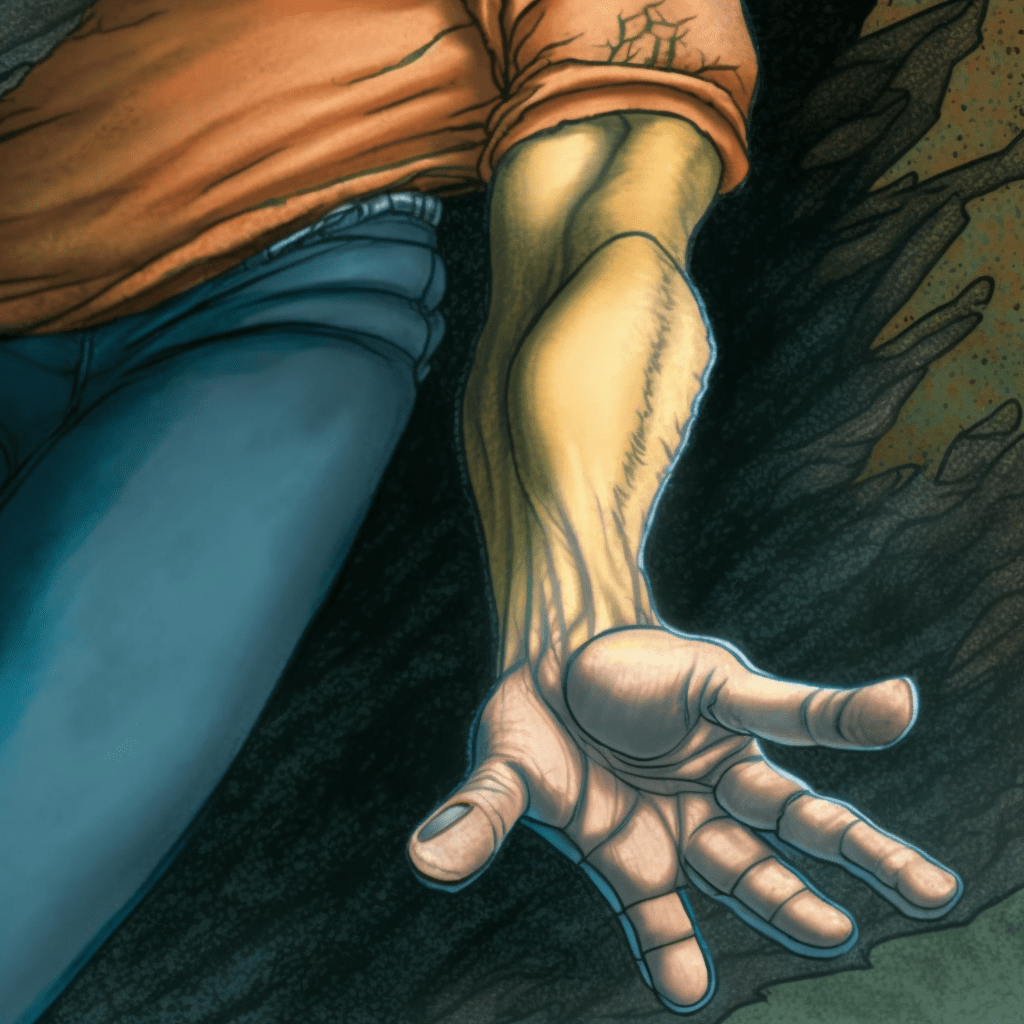
I used to live in Chicago for over 10 years. I moved to California because I was offered free housing by the esports organization I was working for at the time. The owner, Reynad, was a prolific gamer and was working on his own game. He invited me over for lunch to chat about his game and to see if I could provide any valuable input to his creative process. As we walked into Huntington Beach, I confessed to him how influential he was to me, as he inspired me to create my own organization in Chicago. He naturally replied to something of the effect, “No need to thank me. I know that you’ll inspire others and that it’ll continue to pay itself forward.” He admitted he began esports because of organizations bigger than him and that we were all small parts of a larger journey.

I find myself spreading this message quite naturally, as I’ve seen a part of myself in every community organizer I’ve met. The identity and journey is so relatable to me, that it is only natural for me to inspire, engage, and learn from others and to wish they do the same further on.

My casual guild has around 800 members, but very few of them are active or responsible members, making a smaller more tight knit guild much more engaging in some ways. Whenever I get asked how can we handle more responsibilities or what we should be focusing on, I always spread the message of reaching down and pulling up. The more members and the more responsibilities are present, the more imperative it is to not place responsibility on ourselves, but to enable and strengthen others so that the entire group can endure and persevere through challenges.

I have been led by leaders who led in the front and led by leaders who led from the back. An unspoken yet respected rule is that we are eager to lead each other side by side. It is just extremely rare for egos, agendas, and ambitions to all line up. It is why it is so easy to become rivals rather than peers, it is difficult to look at an open hand with humility and it is difficult to extend an open hand with humbleness. Find those who do either and eventually you will do the same.

Relieving Power

Recently in World of Warcraft, I’ve began leading a casual guild. I’ve always wanted to do something like this, beginning with TBC and attempting to create a giveaway guild. My ambitions with TBC didn’t last long and only attracting those who wanted free things brought in the wrong kind of crowd, mostly in the form of players who never logged in again. I guess those who work for their things tend to play longer?

Our casual guild has been growing rapidly. I joined when it was around 100 or so members? It currently is at 700+ members. One of the first guild expansions was absorbing another leveling guild. Afterwards, a few members began mass inviting, gaining us 50+ members at a day. It was startling seeing twenty people joining our guild at the same time. This inevitably led to some collateral damage.

I’ve never been in such a large guild. One of the first things that starts to fall apart is guild chat, as everyone by default has access to this. Since it’s a casual guild, it feels strange to create a timeout rank for chatters, who can see guild chat but cannot participate in it. We currently have not implemented this, so our current solution is to speak with trouble makers and then to boot them on further offenses. I suppose other guilds do this the same and it’s much easier with smaller communities and with vetted invites.

Aside from toxic chat, there’s the possibility of officer drama and vision misalignment. When we absorbed another leveling guild, we also took in their officers. I was not a part of this exchange and I did not bear witness to the transfer of power. All I can say is that from my perspective, our guild was the same but simply larger. Looking back, the people who were most eager to mass invite and mass promote were from the merging guild, making it a vision misalignment and miscommunication.

Mass inviting and mass promoting are not inherently bad. However, without limit, scope, or guidance, volume just becomes noise. As we grew more and more members, it became more and more important to weed out bad actors and to stunt undesirable growth as quickly as possible. There was one point in which officers could promote others to a rank with access to guild invitations, causing the invites to open up exponentially.

Stripping players of their power is typically not a good exchange. It relieves pressure from the guild management, but rarely does the other side take it well. With two people to talk to, both of which had been previously messaged by another officer, both did not take their punishment well. It came to them as a surprise that they would lose their powers. I’m not sure what exactly they expected. From my perspective, if undesirable behavior continued, there was only one solution for a guild. Perhaps they believed their actions were so noble that they could override our conversations. I’m not sure if those people are used to working with others or used to having restrictions.

Relieving power comes with reinstating that power somewhere else or at least another time. I am fine with having more people recruit and more people promoting. The two players response to losing their power and having a conversation about said interaction revealed to me that it was their way or the highway, as both shortly left the guild afterwards. Perhaps it wasn’t clear to them that their powers would be reinstated at a later time with some communication or compliance. Perhaps any resistance was too much for them at all.

Having both been the relieved and the reliever, it takes just a small conversation to smooth out rough edges. There are a few types of exchanges. Thank you and you’re welcome is an uneven exchange. Thank you and thank you is an even exchange. This is happening and I don’t know why is an uneven exchange. This is happening and I know why is an even exchange. Perhaps we misled those two and miscommunicated with them for too long. Or maybe they failed to understand us. Regardless, we both have moved on and power has been relieved.