Advice and Context

Advice and information are essential components of decision-making, problem-solving, and personal growth. However, they can be of limited use when one lacks context or experience. In this post, we will explore why advice and information become most practical once there is context and experience.

Context is critical because it helps us understand the circumstances surrounding a situation, event, or decision. Without context, we lack the necessary background information to make informed decisions. For example, if someone gives us advice on how to negotiate a salary increase, it may not be practical if we do not have the context of the industry standards, company culture, and performance metrics. However, if we have a clear understanding of the context, the advice becomes more applicable and useful.

Experience is also essential because it helps us understand the practical implications of advice and information. Experience enables us to recognize patterns, anticipate outcomes, and adjust our approach accordingly. For example, if we receive advice on how to manage a difficult employee, it may not be practical if we lack the experience of handling similar situations. However, if we have experience, we can draw upon our past successes and failures to apply the advice more effectively.

Furthermore, experience allows us to personalize advice and information to our unique situation. No two situations are identical, and advice that works in one context may not be practical in another. However, with experience and wisdom, we can adapt and tailor advice to fit our specific circumstances.

In conclusion, advice and information are valuable resources, but they become most practical when there is context and experience. Context helps us understand the circumstances surrounding a situation, while experience allows us to understand the practical implications of advice and information. By combining context and experience, we can make informed decisions, solve problems, and grow personally and professionally. So, the next time you receive advice or information, take a moment to consider the context and draw upon your experience to apply it more effectively.

Presenting a United Front

In any group or organization, whether it be a family, a team, a company, or even a World of Warcraft guild, presenting a united front is key to success. When everyone is on the same page and working towards the same goal, it’s much easier to achieve success and overcome challenges. In this post, we’ll discuss why presenting a united front is so important, and offer some tips for achieving it.

First and foremost, presenting a united front builds trust and credibility. When everyone is working towards the same goal, and communicating clearly and honestly, it builds trust between team members, and with external stakeholders as well. When people see that everyone is on the same page, they’re more likely to believe in the group’s mission and vision, and more likely to support them.

In addition to building trust, presenting a united front also helps to avoid confusion and miscommunication. When everyone is working together and communicating effectively, it’s much less likely that messages will get lost or misunderstood. This can be especially important in high-stakes or sensitive situations, where miscommunication can lead to disastrous or escalating consequences.

Furthermore, presenting a united front helps to build a sense of community and camaraderie. When everyone is working towards a common goal, it fosters a sense of belonging and pride in the group. This can lead to increased motivation and commitment, as people feel like they’re part of something bigger than themselves.

So, how can you achieve a united front in your own group or organization? Here are a few tips:

  • Define your goals and mission: Make sure everyone is clear on what you’re trying to achieve, and what your values and mission are.
  • Communicate regularly and openly: Encourage everyone to communicate openly and honestly, and make sure everyone is kept up-to-date on progress and challenges.
  • Address conflicts head-on: If there are disagreements or conflicts, address them openly and honestly, and work together to find a resolution.
  • Lead by example: Leaders should model the behavior they want to see in others, and set the tone for the group.
  • Celebrate successes together: When you achieve a goal or overcome a challenge, make sure everyone is recognized for their contributions, and celebrate together as a team.

In conclusion, presenting a united front is crucial for any group or organization that wants to achieve success. It builds trust, avoids confusion and miscommunication, fosters community and camaraderie, and more. By defining your goals and mission, communicating openly, addressing conflicts head-on, leading by example, and celebrating successes together, you can create a united front that will lead to success and fulfillment for everyone involved.

Inspiring Attendance

I’ve been leading a lot of raids in World of Warcraft, what else is new?

When I first started playing this expansion, I was in a much smaller, more serious guild. We were able to kill the content quickly and people were very competent. We weren’t the best of the best, but we were improving steadily. Before Ulduar came out, it almost seemed too easy. We weren’t the only ones who experienced this, I saw many players quit the game as soon as they got their achievements.

Logging in to the game to find players leaving, communities becoming smaller, is not a good feeling. There were times where I felt alone when I logged in, especially when playing an Alliance character, away from my Horde counterparts I had invested in years before. Raid nights were different and attendance would jump up to nearly a full raid. The numbers began to dwindle and I lost focus on that server, preferring to return to my old Horde characters.

On my Horde server, I’ve found an amazing community of casual gamers. The guild is so large that one players absence is not as detrimental. It’s nice befriending people and checking in on them when they’re unable to play, but it’s not so fun to try to replace these people and have them feel like they’re obligated to join. It’s a nice feeling being able to support an open raiding system with players freely coming in or out based on their schedule, with more serious players coming each week and more casual ones dipping their toes in and out of the water.

For many casual players, this is their first raiding experience or at least first in a long time. It’s a bit jarring for new players to work together in groups of 10 or 25 in real time, but once expectations are understood and the environment becomes more settled in, new players find themselves enjoying it just as much as veterans.

The most rewarding experience in these casual raids is not the RPG elements of the game, as killing the bosses could be done with a much more serious group and loot could be much more seriously focused on. The most rewarding experience is the MMO aspect, logging into a large guild and forming a large group with only guild members, working on content together, and most of all, coming together after the raid to chat about a bright future. I’ve began hosting optional town hall meetings after raids and almost all of the raiders stick around to chat and listen, only a few must sign off early. It inspires me to do a better job of leading the players in raid and a better job organizing the guild in general. Seeing everyone’s willingness to stay, improve, and socialize is truly beautiful.

A Business is Not a Public Service

From a Guardian article written over 8 years ago:

a public service and a business are inherently different beasts and asking one to behave as the other is like asking a fish to ride a bicycle.

The base reason is quite simple. Business survive on cash; money is their bloodline. Public service’s survive based on the people’s will; the governments or communities sponsor public services.

By nature, businesses have to attract more profits; failing to do so means the business dies. By nature, services have to please most members; losing majority popularity means the service loses funding, the only thing supporting it.

While it’s easy to blur the line between the two and believe that servicing the community is part of the business or that doing business is just a part of doing public service, they should not be mixed so easily.

Businesses are hierarchical, not democratic, and wages, terms and conditions are set by the executive and subject to the market.

Although there is some form of hierarchy in all forms of organization, businesses intentionally partition decision making away from portions of the business in order to meet market demands and unequal distribution of responsibilities and reward. This translates to the leader making the most decisions and being rewarded the most while the actors who hold the least responsibility get rewarded the least. Contrast this to public service where the entire organization is beholden to the wants of a community, leading a majority of the decision making, creativity, and responsibilities away from an executive branch to more of a community bulletin board.

When everyone is more similar than dissimilar and the incentive is pleasure not profit, why you’ve created a small communist society. But don’t take that word so negatively in its connotation. In many small groups, communism is a very preferred method of governing. For instance, within a small family or a house full of roommates, treating everyone as equal despite their output can be a very rewarding experience, full of love and understanding. This is not dissimilar from a service, whose goals are never to profit outside of its vision but rather to sustain and maintain what it was set out to do.

Contrast this with businesses, which also benefit from focus, sustenance, and maintenance, but also are willing to make decisions outside of its original vision in order to sustain profits, growth, and the company’s life. While the will of the people make a public service live, a business cannot survive on appreciation alone. Businesses, for the most part, live in a capitalist world in which the market decides what survives and what dies. So not only should businesses strive for more, in terms of profits and growth, they must always strive just to survive, because there is no base of taxpayer money or community goodwill (for the most part).

If public services are communal or communist and businesses are hierarchical or capitalist, how do we so easily blur the lines between the two?

This is because when operating or experiencing a public service or business, there will always be pros and cons unique to each side. Without realizing everything comes at a cost, people imagine the best of both worlds, particularly just for their personal experience. What many fail to realize is that the best of all things comes at a major cost, most of the time in the form of impossibility.

I want to make a business that doesn’t turn away anyone! I have a product or sale for EVERYONE.

This attitude alone drives away a lot of clients. Some clients like exclusion, some like to conform. Not every restaurant can be the Cheesecake Factory and support a menu of 500 items; most restaurants end up going out of business from a lack of focus or finances. The expensive places cannot cater to the lower income population and the affordable places cannot cater to the high income populations. From income, to background, to culture, to belief, there’s always a reason for people to prefer one thing over another.

I want to run our public service like a business! Let’s not settle for zero-sum and let’s grow this operation!

This attitude often upsets governments or communities that began as sponsors of something they wanted to becoming customers of something being held hostage from them. Despite understanding that everything costs something, public services are meant to be inclusive to such a degree in which a normal business may not be able to function, public taxes or community donations are required to keep services alive. Examples include art and music programs, which may not produce an immediate profit but are desired by communities. Other examples include college sponsorships, which are very different from college loans, and waste management services which are very different from junk collectors. Services are meant to be for all, with very little cost or commitment from the benefiters.

There are times in which a business will perform a public service and there are times in which a public service will contract out a business. A difference in philosophy should not stop these two parties from working together, it should actually encourage them to work together and focus on their strengths and weaknesses.

In a future post, I’ll cover how World of Warcraft guilds are actually a business, not a public service.


Think in Prosperity

It’s easy to catch yourself in a rut or to experience a rainy day or two. There’s steps to take beforehand to make these times easier on ourselves. There’s also steps to take in those moments to let optimism and prosperity in.

Think big. Bigger and better.

This relates to our environment. For many people, it’s not easy to change their environment or their headspace. It’s much easier to become complacent or comfortable in a familiar surrounding.

But did you know it’s easier to change your environment than it is to change your habits?

Some people are shocked when they hear this, while others connect with it very quickly. Ever gone on a diet and removed all of those foods from your home? You have to leave the house to cheat on your diet! Ever put yourself in a library to get some peace and quiet and to focus? Have you ever turned off your phone or deleted an app?

Environments and headspaces inform us of the likely outcomes ahead of us. We can have the best attitudes and intentions, but our limited choices may lead us to the same result over and over.

So why do I keep equating environments and headspaces? It’s certainly possible to purely change one’s environment, placing themselves in better locations with better friends. But it’s also much more easily possible to change the landscape within your own mind. People do this by reading books or listening to self help tapes. People do this with the free time they have, watching television or playing video games. A powerful saying is:

A man is what he thinks about all day long.

Ralph Waldo Emerson

No matter what the activity or the setting is, the space our mind is in plays a part in how we navigate the world. Similar to attitude, similar to environment, shaping our mind allows us to reach beyond what is simply around us or before us. With creativity and entrepreneurship, something must appear from essentially nothing. So with every endeavor, we have the choice to simply make what is around us or the choice to make what we can imagine. So, think in prosperity. Imagine bigger. Because I cannot see a bright future in which we do not choose to do this. How can there be a best version of the world if we don’t imagine and believe in one? It’s not to say we shouldn’t prepare for the worst, as this post began. But it is to say that what we make is a combination of what is around us and what we believe in. So believe in the best. Believe in yourself.

Maneuvering with Inexperience

Yesterday I hosted Naxxramas 25 for entry level raiders. The content is about four or five months old, in terms of the rerelease. In terms of first release, the content was released in 2008, 15 years ago. I give this game context because players have a large expectation of experience or knowledge when it comes to a rereleased game. I have yet to watch the following video, but it will be a great watch given its view count and production.

While I’ll have to watch the details of this film more closely, the title and the comments suggest that information is readily available to make the experience more playable or more fun, but players choose to ignore this information.

That’s something that’s tough to swallow, especially for the type of gamer who enjoys excelling at their craft. Not every player falls into this category and not all players will follow the same M.O.. The way to solve Rubik’s cubes is posted online, with tutorials and walkthroughs. Does everyone know how to solve one? No, because most people just don’t care for this puzzle.

How is a Rubik’s cube similar to World of Warcraft? With such a large, immersive world, WoW has the ability to engage players with multiple systems and games, not just one front. While a Rubik’s cube’s only enjoyment or fulfillment comes from solving a random or more challenging puzzle, World of Warcraft offers thousands of different puzzles and games, many of which are optional. For some players, the world alone is beautiful enough to engage with.

If anyone can be new or inexperienced at a game, no matter how much information is available, how should we go about our expectations? This is a difficult one especially without communication. I brought up my Naxxramas run from yesterday because it was an arduous and long run. One of the pain points I had was an assumption of knowledge or understanding of communication. There were many times when I relayed boss fights or instructions with open ended assignments or as passing notes. Until I was very specific, with player names and exact positions, did we achieve our best results. This comes at some costs. There are times where I rehearse fights before they happen and there are times when I explain things beforehand and players fail to manage what I had mentioned. As an instructor, the only true measurement of success is the passing of knowledge and a fulfillment of a test. Unfortunately with a real time game, there’s also the expectation of fun and the expectation of scheduling.

There is balance between over-explaining and taking too long and underexplaining and having poor execution. Two conclusions I reached after failing to reach my goals within the three hour raid window I had set aside were: with inexperienced tanks, the players in front of the raid taking damage, it is in my best interest to preview the run with them in some way so they can visually see everything before hearing an explanation and it is in my best interest to ask specific players if they understand their assignment or role in a fight regardless of my explanation. There is a statistic I heard from one of my teachers, sharing with us how difficult it is being a teacher and engaging with students. She said the average teacher waits 3 seconds after asking a question, before feeling defeated without a response. In the teacher’s mind, 3 seconds is a long time. For a student, it is a brief moment. Difference in knowledge and experience creates different shared experiences. Patience and understanding are key to any student-teacher relationship and the only true measurement of success is improvement and delivered results.

A Rising Tide Lifts All Boats

There are two polar opposite views on success within a community. One is that one person’s success may bring up everyone’s success. This is summarized in the phrase: a rising tide lifts all boats. Another view is that one person’s success is the only success to be had. This is actually summarized as crabs in a bucket, where a crab pulls down any crab making its way out of a bucket, as if to spite each other’s progress.

As my guild reaches maximum capacity, we are in a pivotal position to either gain momentum and form many groups or to stagnate and slowly bleed out members. I say the latter with such pessimism because I have witnessed other guilds and have experienced pick up groups that have failed to launch or took large efforts in forming, taking away from precious raiding time. Lots of guilds and raids are competing with each other at similar time slots, allowing the free market to fully work, which will inevitably result in some collateral damage, i.e. the entrepreneur or business that fails.

What’s difficult about small communities is that while the free market is an impersonal law of economics, player bases are not rational, organized, or adherent to normal laws of economics. Some players will fantasize about being the best and will bootlick their way into any competent organization. Some players overinflate their egos and demand whatever they can out of whoever they can, regardless of equal value exchange. In many ways, opportunities, products, and services are incredibly limited in small communities which could easily cause insecurity and crab mentality. When success is scarce, any personal success feels that much more delicate.

Unlike the real world, digital communities and small communities that have yet to sunset have almost unlimited potential to grow. Prosperity and abundance are so easily practiced in the real world where things are finite, yet within small communities we become blind to this mentality. I was guilty as such when I first started hosting Super Smash Bros. tournaments. I thought I had competitors or adversaries that I had to manage or coordinate against. In reality, they had the same goals as myself and it was much better to collaborate and coordinate together with them. I experimented with many different solutions, from working together, to hiring them, to working for them, and to contracting them. All of those solutions were much more favorable than closed communication. It was difficult for me to see this at first, because I thought of compromise as a loss of integrity. But any communication and collaboration can go a long way and that potential is worth more than a lonely path with missing bridges behind you.

My top goal for my guild at this point is to create several raid leaders and organizers that can sustain the guild without my personal presence. As I reach out to other guilds and teach my own members how to raid lead, I hope to create a network of strong leaders than can organize and maintain the large social group we’ve created.

Compromising Before Conflict

Something that I think is very straightforward but somehow lost upon some is that everything comes at a price, everything is a trade off. There’s nothing that is purely good and there is nothing that is purely evil. This message gets lost upon some most likely because it is difficult to see multiple perspectives and most personal experiences can be summed up wholly as good or bad.

Part of being a consumer of any product or service is that the consumer is the last person to experience the exchange and reaps only the benefits of a transactional exchange. This seems fair and logical for the buyer, as why would the buyer accept any other offer aside from one that makes sense? Unfortunately, that is not always the case with sellers, business, or services.

How is this possible? How can a business or service provide something that doesn’t make any sense? It would have to make business sense, ethical sense, moral sense, and beyond if it were to stand the test of time, would it? That is just not the case. From fast fashion brands like Zara becoming one of the wealthiest companies in our lifetime from hiding its practices in favor of profits, to tech companies emerging as arbiters of communication and advertising, all the way to small local shops that once existed and were bulldozes by superstores and Amazon, business don’t have to make sense as a whole, they just have to make sense to a customer base. The most desired thing out of a consumer, as previously mentioned, is the delivered product. That is the only thing they care about.

The same can be said of services and events. For many participants, what happens behind closed doors and after hours is none of their concern. The only concern they have is value per dollar or value per hour, measured in satisfaction or happiness. Was this a good experience? Was this a good product?

Conversely, businesses and services have to create something from essentially nothing, creating value out of something that others do not care to do. Why doesn’t everyone open a restaurant? It’s because many that do fail. Why doesn’t everyone own a business? Because business take a lot of time and energy and they always have a chance of failing.

The compromise products and services make is that the companies that provide them believe their investment will be returned and then some. There is no guarantee and each business seeks a different amount of “and then some.”

For the companies that place more emphasis on their product than their profits, it is more likely than not that the company will decline in health over time without a cash lifeline. Tech companies such as Facebook or Uber have placed incredibly large bets on their products over their profits, becoming stark exceptions to this rule. However, these exceptions are rare and businesses are constantly losing the battle between servicing consumers and staying alive. Without capital, a noble business is just volunteer work.

This is where premeditated compromise is necessary. If a business finds itself faltering or struggling, the only thing it can do to save itself is to provide a better service or product. Some companies try the opposite approach, of reorganizing finances and charging higher prices or finding lower costs. This tends to be a short term solution that only works if it buys the company enough time to create a better product or service.

How can a company compromise to create a better product or service? Some of this has to do with listening to customer feedback and honing in on what makes their company unique or special. Some times it relies on critical investigation and discovering latent reasons why clients enjoy the service or product. And most obviously it can do with changing the product or service to be more in line with customer expectations or satisfaction. Often times, negative or critical feedback will never be provided and only a new, proper solution can highlight deficits.

The largest compromise I am making with my casual guild in World of Warcraft is working with another guild to start a conjoint raid. The results are very promising, but the cost comes at fewer of our members are able to attend due to a shift in time and a stricter roster limit. The bet I am placing is that the experience and rewards from a successful conjoint raid outweighs the short term consequences at this time. There will be a deadline to shift gears or promise more from my product or service and this deadline must be beat with the strong community of players that should come to grow from this experience. The risks involved include losing guild members that are benched too often and irritating both the most casual and most hardcore players with a diluted vision. As time progresses, I’ll have more options to deal with these grievances and hopefully have more players to build a foundation with.

Keeping on Schedule

I started attending Super Smash Bros. tournaments in 2007, the beginning of my senior year of high school. There were so few tournaments that for my first or second tournament I drove 3 hours, across state borders, to play at college campus. I played for less than four hours before driving home alone. It was exhilarating. I instantly fell in love with tournaments. I somehow made it home before midnight and went to school the next day.

I remember even when I was a very casual player, less than one hundred tournaments into my career, I was always complaining about tournament schedules. I started noticing other veterans mentioning the same thing. One thing an experienced player always commented on before a tournament began was how well the organizer ran the event. The reputation of an organizer and their follow through were generally one and the same. Some of it came from the respect of the players and some of it came from the leadership of the organizer.

I’ve written previously about getting ahead of problems and how experience helps us navigate situations both in real time and with precognition. One element of live event organizing is understanding how time plays out long before the end of the event. Most events happen linearly and sequentially, relying on a previous segment to finish. There are rare occasions where there are simultaneous or concurrent processes, but these require additional bandwidth and organization. We can think of an event requiring X amount of work. There are multiple routes to solving X, but the main variables we are interested in are how much man power does the plan require and how much time will it take to execute.

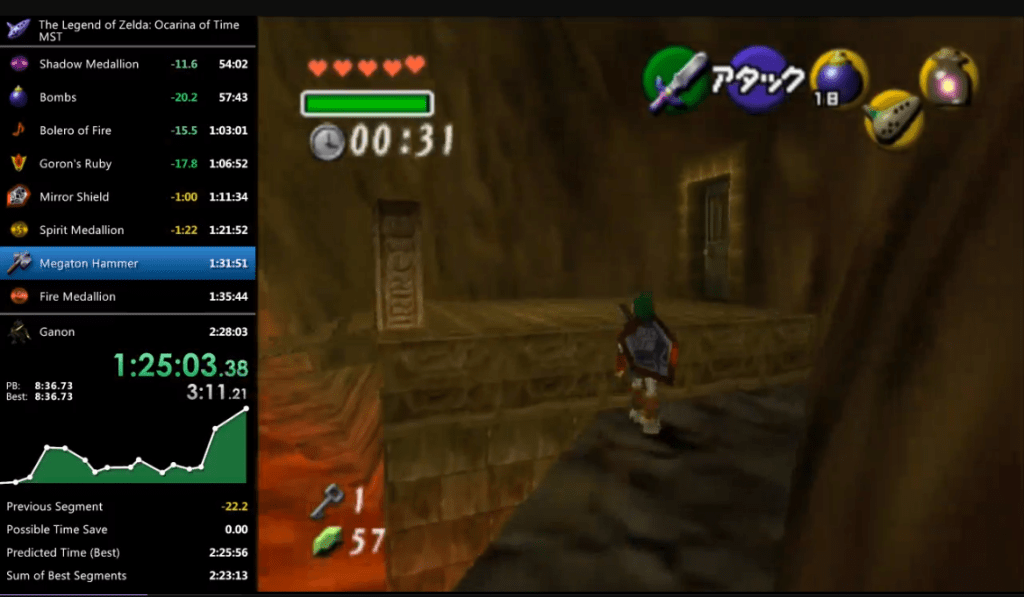
When it came to tournaments and live events, I was able to enforce, predict, and establish times throughout the day, updating players and staff of how the schedule was shaping out. Tournaments, and most events in general, have subsections where we can time split ourselves and forecast our future times. This is incredibly similar to speedrunning, where players optimize their gameplay speed and check their times against themselves or others.

A good speedrunner knows long before the end of their run what their best possible time could be. They know from experience and what the limit of speeds are, so they can make judgements on not only what is possible, but also what is most likely. For this reason, many speedrunners will reset a run long before it is done, if say one particular segment was very poor.

Unfortunately with live events, the reset button is not an option. When it comes to organizers, they are a conductor both like train and like music.

The Railroad Conductor will coordinate the daily activity of the train and train crew, ensuring the timely operation of the train and the safety of all passengers.

The conductor beats time and prepares the musicians in rehearsal, but most importantly the conductor considers every aspect of the music and how to make it as inspiring and incredible as possible. Then they work with the orchestra to make that vision come alive.

With timeliness and with liveliness, event organizers have to adapt and operate in real time, ensuring a smooth and professional experience. For some people, ending on time is the most important aspect, especially if the event lasts a long time or ends late in the evening. For some people, seeing a particular event or outcome is the most important, whether it’s in the hands of the organizer or not, like seeing a fan favorite win or a rare piece of loot. For some, just having the experience go smoothly and finishing as expected is enough.

Because there are so many different kinds of players and fans, there’s no one right answer in how to specifically run an event. However, running an event on schedule will always have its professional edge and at the very least updating players and fans of a changing schedule is a great courtesy. It takes experience to forecast times, but with a little experience an organizer can quickly see the similarities between all events. And even if an event doesn’t end on time, an accurate forecast and a positive attitude can easily save an event. In another post, I’ll share a story where I dropped out of a tournament so I could run said tournament and ensure it would end on time. Oh what I would do just to go home on time!

Denying Feedback

I think we all find it difficult to take direct criticism well, especially if it’s related to one’s pride. An easy concept to understand but a difficult one to swallow is crushing one’s own ego. We like to protect our egos and inflate them to their fullest, in a strange attempt to protect ourselves. As confidence and experience grows, egos are no longer needed to protect one’s self.

It’s difficult to pass on confidence and experience. We all know it’s easier to gain these things first hand than it is internalize something that begins externally. There are innumerable self help books, videos on YouTube, stories and reels. There’s nothing like burning your hand on a stove to teach you it is hot.

In college, a friend of mine taught me this analogy. He said, “Some times you just have to let your friend burn themselves on the stove. In fact, if you tell them not to do it, not only will they do it, they’ll resent you.”

This was tough for me to swallow. I grew up with Asian immigrant parents. I got an ear-full for everything. Leaving the lights on, talking on the phone for too long, not finishing my meal, not getting good enough grades. I’m 32 years old and I don’t think it really ended, I just moved away and stopped talking to them as much. What they instilled in me was the never ending thought that there was something wrong, that there was something to be done about it. This is kind of a great thing for a problem solver. It’s not so great in that humans are naturally inclined to find patterns, even when one doesn’t exist. Oops, I’ll just solve a problem that isn’t really a problem…

It’s easy to think of feedback for others, but conversely it is terribly difficult to think of feedback for ourselves. Many times we take it to the wrong degree, persecuting ourselves for our most self-hated traits while not addressing the true underlying pain points. I wrote previously that we are able to see the world so clearly yet we are unable to see ourselves. This remains true with feedback and becomes ever so more important in that the feedback we receive from others is the only social mirror we truly have.

This makes feedback such a conundrum. We don’t like hearing things from others if we are insecure about something, so we place our ego in front of it to shield ourselves. Our ego blinds us from not only the feedback people are attempting to give us, but also to our own experiences, causing us to trust our ego over our experiences. Until we gain enough experience that our ego may subside, we cannot perceive our experiences unfiltered. Combine that with the fact that most people, a vast majority of people, are too polite or unconcerned about others that they will never offer feedback in the first place. It takes time, energy, and thoughtfulness to provide feedback to someone. Why would someone take that time, energy, and thoughtfulness only to have it rejected instantly by someone’s ego?

We don’t like taking feedback. People don’t like giving feedback. What is all the point?

As someone who has been and is still terrible at taking feedback, what I’ve learned is that not every point of feedback needs to be addressed, but more-so heard. When we get a lot of information it comes to us as static and the important parts require parsing. It is easy to become overwhelmed by static, it is easy to have emotional responses to unpleasant news, and it’s easy to dismiss information that is not easily registerable.

People who are good at taking feedback know that not everything may be addressed and not every solution presented is appropriate. They know that the people who bother to leave any feedback at all are fans of it enough that they want to see it improve. A big mistake I made when taking feedback was believing that people were antagonizing or positioning themselves against my beliefs or ideas. The best way to see it is by seeing it as a multi-pronged attack together on the same goal. Not everyone has the same experiences or knowledge, so of course there are different approaches. The important thing to ask one’s self when hearing feedback is what is the goal of the feedback? Even if the feedback makes no sense at all, the goal is almost always to make it better. Take the kind sentiment and place it kindly wherever it belongs, at the forefront of priorities or on the backburner.

The easiest thing a person receiving feedback can say is, “I’ll think about it.”

The hardest thing a person giving feedback can say is, “I know what it’s like.”