Leadership is simple at its core: strong leaders consistently deliver results, guiding their teams with clear expectations and steady hands. Weak leaders, by contrast, struggle to manage their teams and fail to course correct when things go wrong. This difference is crucial—a strong leader attracts strong players, while a weak leader draws weaker ones. The strength of a leader defines the strength of their team.
In World of Warcraft, the consequences of weak leadership are evident. Leaders who form raids but rely on generic, catch-all rules like “MUST KNOW ALL THE FIGHTS” often reveal more than just frustration. This phrase signals a leader who struggles to identify or nurture talent, who cannot guide a team to success. As a result, weak leaders attract weak players—those with unclear expectations and uninformed optimism.
In contrast, strong leaders set clear expectations, carefully vet their teams, and lead with a steady hand. They don’t need to spell out the obvious because their teams already understand the standard. Strong players are drawn to this certainty, bringing informed diligence and readiness to meet challenges. Once the group is formed, a strong leader’s role is to elevate it, ensuring the whole becomes greater than the sum of its parts.
It may seem unfair that the best leaders attract the best talent, while those who need help the most are left with the least. But this is the reality of leadership: the strong attract the strong. For a weak leader to attract better players, they must evolve, growing stronger and addressing the root causes of their struggles.
Leadership, then, is a journey of growth and transformation. It’s about stepping up, learning from every experience, and becoming the kind of leader who naturally draws the best. Strong leaders aren’t just made—they’re constantly being remade, shaped by the teams they attract and the challenges they overcome.
When I was a young college student, I spent a winter break selling Cutco knives. It was one of my first sales experiences working for someone outside of my family, as a young adult. I was asked to reach out to my network of friends and family to try to solicit knives. At that age, most of my friends and family were people I knew not by choice but by proximity. It was strange calling high school friends, especially since many declined and that may have been my last interaction with them.
There was one particular day I won’t forget. We typically had training and meetings once a week after the initial onboarding. Our sales director asked a few of us to come in on Saturday to try to get ahead. I was interested in seeing what additional effort and work would yield, so I decided to come early that Saturday.
We went into a small room, not our usual conference room. There were maybe a dozen other people in the room. Danny was our sales director’s name. Danny said that Cutco needed more sales members and that we would help him find them. He passed around a notepad and pen to each person around the room and went back to the front. He pulled out a $20 bill and said the person who produced the largest list of potential Cutco employees got the $20. He said, “Go” and everyone started writing down names and numbers and scrolling through their phone.
I recalled Biel, the person’s name I was told when I was first called by Danny a few months ago. I was told Biel recommended me and thought I would do well in this program. Biel was a student a year above me who I had met casually through another club. Since he was older, at the time of Danny calling I thought Biel was doing me a favor. After working with Cutco for over a month, I realized where I was sitting. I was sitting where Biel was sitting months ago. Except I had stopped seeing Biel around the office. When I first did training, I saw him here and there. As the weeks passed, I didn’t. What was going on?
I had a friend who got really sucked into the program. Every time we met, he was talking about sales. Looking back, it’s kind of cute seeing his entrepreneurial spirit. At the time, it seemed like any other indoctrination I had seen him face, from Jehovah’s Witness to environmentalism. It was extremely annoying, especially since I had known him before sales. His enthusiasm for Cutco began to become off putting. He would later be pressured to open an office in central Illinois by Danny, only to have it fail months later.
Back in the class sized room on this Saturday morning, I looked at my phone and all around the room. Danny was busy looking at his phone, smiling at the prospects about to roll in. I put my pen up the paper and then gave up. I couldn’t write down a single name or number. I couldn’t do it. I couldn’t get myself to fork over my contact list. When Danny’s phone timer went off, he asked us to finish our lists and turn them in. I turned in a blank sheet and ended up doing my last Cutco appointment that week.
Cutco primarily worked off of first hand recommendations. It taught me a lot of valuable sales skills, from scheduling tactics to navigating a close. While the products were good and the pay acceptable, it preyed on inexperienced college students and young adults to perform sales and to leverage young adults for their social networks, mostly of neighborhood families. The worst parts of Cutco were the assertiveness of their sales tactics and the indoctrination of naive salesmen. I am glad I was able to gather some practical advice from the little time I spent there and I’m glad I was able to keep my integrity when reflecting upon my situation and its inception. First hand recommendation is an incredibly strong sales tactic but a chance at $20 was not a worthwhile exchange with my adolescent phone book and it was a great lesson to learn early on.
In a previous post, we went over the differences between a business and a public service. In this post, we’ll cover how a World of Warcraft guild is not a public service, but rather a business.
While building a World of Warcraft guild may seem like a hobby or a public service, it is much more akin to running a business. Because there are so many competing guilds in WoW, a successful guild requires leadership, management, resources, and exclusiveness.
Leadership is Key
Just like any business, a successful WoW guild requires strong leadership. A guild leader must be able to set a vision, establish goals, and motivate their team to achieve success. Guild leaders must be able to communicate their vision and goals clearly to all members of the guild. They must also be able to listen to feedback and respond to concerns from members of the guild. Guild leaders must also be able to manage conflict and make difficult decisions that may not be popular with all members of the guild. They must be able to coordinate schedules and ensure that all members are working towards the same objectives. Guild leaders must also be able to identify areas where coordination is lacking and take steps to address these issues. While leadership is necessary in both businesses and public services, leadership is more often necessary in a business due to the need to adapt, takes risks, and compete with the others in the marketplace.
Management is Critical
A WoW guild is not just a group of players who come together to play the game. It requires careful management to ensure that all members are working together towards a common goal. Guild leaders must manage player schedules, organize raids, assign tasks, and monitor performance to ensure that the guild is progressing and achieving success. In contract, public services may be organized into different departments or divisions, but tend to be flatter structures with less hierarchy compared to businesses. Businesses are often empowered to make decisions quickly and independently, as the success of the business often depends on quick decision-making. These types of decisions cannot be easily reached through public and bureaucratic consensus, as their decisions often have broader implications for the public. Without central leadership, management becomes more self-delegated and results become more selfish or microscopic rather than for a greater good.
Resources are Limited
In a business, managers are focused on increasing revenue, managing costs, and generating profits for shareholders, while public service managers are focused on delivering high-quality services to the public, often within a set budget. Public services are funded by taxes from the government or local community, while WoW guilds, on the other hand, must rely on their own resources and fundraising efforts to support their activities. This means that guilds must be self-sufficient and manage their resources carefully to ensure that they can continue to operate. Just like a business, a WoW guild has limited resources. These resources include the player pool, player time, gold, and other in-game resources. Guild leaders must manage these resources carefully to ensure that they are being used effectively. This means making decisions about how to allocate resources, whether it be investing in new raid times, new gear, or purchasing more materials for the guild bank. Several factors such as funding, allocation, accountability, and risk tolerance vary greatly from businesses and public services.
Membership is a privilege, not a right
Membership has both rewards and responsibilities. In terms of rewards, unlike a public service, joining a WoW guild is not a right or entitlement. Members must meet certain criteria and be approved by the guild leadership before being admitted. This means that guilds can be selective about who they admit and can choose to exclude players who do not meet their standards. In terms of responsibilities, public servants are often expected to serve for a certain period of time, while WoW guild members are free to leave at any time. This means that guilds must work hard to keep their members engaged and motivated, and must continually recruit new members to replace those who leave. Businesses must compete with other companies in the same industry for customers, market share, and profits. This requires strong leadership that can develop competitive strategies, differentiate products and services, and build strong brands. Public services, on the other hand, often have a monopoly on the services they provide and do not face the same level of competition. As a guild, attaining and retaining members is never guaranteed and is a tremendous sign of positive growth.
In summary, building a World of Warcraft guild is more like running a business than a public service. A successful guild requires leadership, management, resources, and exclusiveness. Leadership is necessary for both businesses and public services, but more often necessary in a business due to the need to adapt, take risks, and compete with others in the marketplace. Management is critical for a guild to ensure all members are working together towards a common goal, something most easily accomplished in a hierarchical business structure. A WoW guild has limited resources that must be managed carefully, unlike public services funded by taxes. Membership in a WoW guild is a privilege, not a right, and members must meet certain criteria and be approved by the guild leadership before being admitted.
Public services are beholden to a general population, not a privileged subsection, are funded by taxes, not business revenue, are regulated and controlled, as opposed to free and creative, are owned by government or public organizations, not groups or individuals, and face little to no competition, unlike the free market. The only way a WoW guild could be a public service is if Blizzard provided a default community guild with no guild master or hierarchy and with no agenda or leadership.
a public service and a business are inherently different beasts and asking one to behave as the other is like asking a fish to ride a bicycle.
The base reason is quite simple. Business survive on cash; money is their bloodline. Public service’s survive based on the people’s will; the governments or communities sponsor public services.
By nature, businesses have to attract more profits; failing to do so means the business dies. By nature, services have to please most members; losing majority popularity means the service loses funding, the only thing supporting it.
While it’s easy to blur the line between the two and believe that servicing the community is part of the business or that doing business is just a part of doing public service, they should not be mixed so easily.
Businesses are hierarchical, not democratic, and wages, terms and conditions are set by the executive and subject to the market.
Although there is some form of hierarchy in all forms of organization, businesses intentionally partition decision making away from portions of the business in order to meet market demands and unequal distribution of responsibilities and reward. This translates to the leader making the most decisions and being rewarded the most while the actors who hold the least responsibility get rewarded the least. Contrast this to public service where the entire organization is beholden to the wants of a community, leading a majority of the decision making, creativity, and responsibilities away from an executive branch to more of a community bulletin board.
When everyone is more similar than dissimilar and the incentive is pleasure not profit, why you’ve created a small communist society. But don’t take that word so negatively in its connotation. In many small groups, communism is a very preferred method of governing. For instance, within a small family or a house full of roommates, treating everyone as equal despite their output can be a very rewarding experience, full of love and understanding. This is not dissimilar from a service, whose goals are never to profit outside of its vision but rather to sustain and maintain what it was set out to do.
Contrast this with businesses, which also benefit from focus, sustenance, and maintenance, but also are willing to make decisions outside of its original vision in order to sustain profits, growth, and the company’s life. While the will of the people make a public service live, a business cannot survive on appreciation alone. Businesses, for the most part, live in a capitalist world in which the market decides what survives and what dies. So not only should businesses strive for more, in terms of profits and growth, they must always strive just to survive, because there is no base of taxpayer money or community goodwill (for the most part).
If public services are communal or communist and businesses are hierarchical or capitalist, how do we so easily blur the lines between the two?
This is because when operating or experiencing a public service or business, there will always be pros and cons unique to each side. Without realizing everything comes at a cost, people imagine the best of both worlds, particularly just for their personal experience. What many fail to realize is that the best of all things comes at a major cost, most of the time in the form of impossibility.
I want to make a business that doesn’t turn away anyone! I have a product or sale for EVERYONE.
This attitude alone drives away a lot of clients. Some clients like exclusion, some like to conform. Not every restaurant can be the Cheesecake Factory and support a menu of 500 items; most restaurants end up going out of business from a lack of focus or finances. The expensive places cannot cater to the lower income population and the affordable places cannot cater to the high income populations. From income, to background, to culture, to belief, there’s always a reason for people to prefer one thing over another.
I want to run our public service like a business! Let’s not settle for zero-sum and let’s grow this operation!
This attitude often upsets governments or communities that began as sponsors of something they wanted to becoming customers of something being held hostage from them. Despite understanding that everything costs something, public services are meant to be inclusive to such a degree in which a normal business may not be able to function, public taxes or community donations are required to keep services alive. Examples include art and music programs, which may not produce an immediate profit but are desired by communities. Other examples include college sponsorships, which are very different from college loans, and waste management services which are very different from junk collectors. Services are meant to be for all, with very little cost or commitment from the benefiters.
There are times in which a business will perform a public service and there are times in which a public service will contract out a business. A difference in philosophy should not stop these two parties from working together, it should actually encourage them to work together and focus on their strengths and weaknesses.
In a future post, I’ll cover how World of Warcraft guilds are actually a business, not a public service.
The gym can be seen as a microcosm of society, with a constantly changing population and different levels of dedication and skill. My girlfriend and I had a discussion about whether the gym is more like a school, where people eventually graduate and move on, or a club, where the population grows and becomes stratified over time.
From what I’ve observed, there seems to be a mix of both. There are certain times of the week and year that are busier than others. And I do see familiar faces and a similar crowd on particular days of the week.
From a business standpoint, gyms do not differentiate between a satisfied gym goer and a satisfied gym absentee, as they rely on a subscription-based model, rather than attendance. This means that even if members stop going to the gym, as long as they continue to pay their membership fee, it’s beneficial for the gym.
The way a gym markets itself can also give insight into the type of population it attracts. LA Fitness as it’s name, Local Access, implies is an approachable and accessible environment. Slightly more advanced gyms target their power users with physical therapy/massages, more specialized classes outside of aerobics, and dieting/nutrition programs. There are also more casual gyms that indoctrinate their users with targeted activities like bouldering or CrossFit.
Gyms that target their most skilled and experienced members and offer specialized classes and services are likely to have a more experienced and dedicated population. On the other hand, gyms that prioritize accessibility and offer a variety of activities may attract a more casual and diverse population.
Personally, I prefer evergreen activities and clubs where I can continue to grow and improve over time. But, it’s also important to remember that everyone has different goals and priorities, and what works for one person may not work for another. I don’t think gyms inherently graduate its users, but I do believe many find their results and satisfactorily leave. My girlfriend’s observation about LA Fitness may be correct.
Experiments with money are becoming more common with social media. I remember doing small experiments myself whenever I had some pocket money in college. It’s interesting to see people’s reactions to resources and their attitudes towards them. I once took a taxi and paid the driver at the end with a $20 bill. He asked how much change I’d like and I gave him a range. “Oh, I dunno. Four, five, six dollars?” They always gave me the least dollars back. But that’s to be expected from those who work hard and those who are loose with their money, is it not?
The short is well composed with the setup, the antithesis, and the thesis at the end.
The viewer expectation is for the money to go towards those who really need it. And this assumption isn’t a terrible one, as his sign does say “Take what you need.”
Unfortunately this man’s experiment is a great analogy to our world around us. Resources are not distributed based on need, but rather based on want. Wealthy individuals become wealthy by having a hunger for resources. Poor individuals, conversely, become poorer by having apathy towards resources.
Opportunities, business, resources, etc. all come to those who desire it first, ultimately being sold or distributed to those who need it later.
I didn’t intend this post to be an analogy for all opportunity and resources in life, but rather a reflection on attitudes on actions carried out by them. It may seem obvious, but the setup of the video is meant to tug on emotional strings and beckon the viewer to a more charitable and fair world, and that’s just not how the world works. The world works as the video portrays, with the setup inviting failure. Those who take advantage of resources remain wealthy. Those who do not remain poor.
It is a mistake to believe that all people share the same attitudes or viewpoints as others, especially ourselves. It’s also a mistake to believe that what is received in life is fair or needed, when really it is opportunistic and wanted.
This Devin Nash video is from 4 months ago, long before the Logan Paul cryptozoo scandal came under light. Devin Nash is a fantastic content creator that teaches his audience how to grow their following with marketing and branding techniques.
Not in this specific video, but a few times before, Devin has mentioned the concept of 1,000 true fans. Searching for it on Google, you can find this essay.
The premise of 1,000 true fans is that over the course of a year, if you can get a true fan to spend $100 a year, you’d make $100,000 a year. For reference, $100 a year is about $8-9 a month or about 28 cents a day.
If you think about how easy it is for us to spend money, you can imagine it in reverse, which is thinking about all the ways you can ask for money. It’s not possible to take advantage of every single opportunity. But it is possible to examine the world around us and see what is succeeding at taking $100 a year from us.
I like asking a silly trivia question which is, who is the most subscribed to person in the world? I hint that I bet that they are currently subscribed to this person. Who has the most subscribers? Jeff Bezos. Amazon. From individuals, to families, to business, there are tons of Amazon Prime subscriptions. And each of those subscriptions is $14.99, or $139 a year. Granted, Amazon’s combination of service, products, and portfolio is second to none, which is why they are the most subscribed to service.
That is merely the ceiling. Examining the problem from the ground up, we can see that to establish a true fan, we simply need to create enough value for them to contribute $100 a year. Breaking these numbers down and up can expand our optimism for what is required from us to build a niche career. If I can get 10,000 fans to contribute $10 a year, I’d make the same $100,000. If I can get 100 fans to spend $1,000 a year, I’d make the same $100,000.
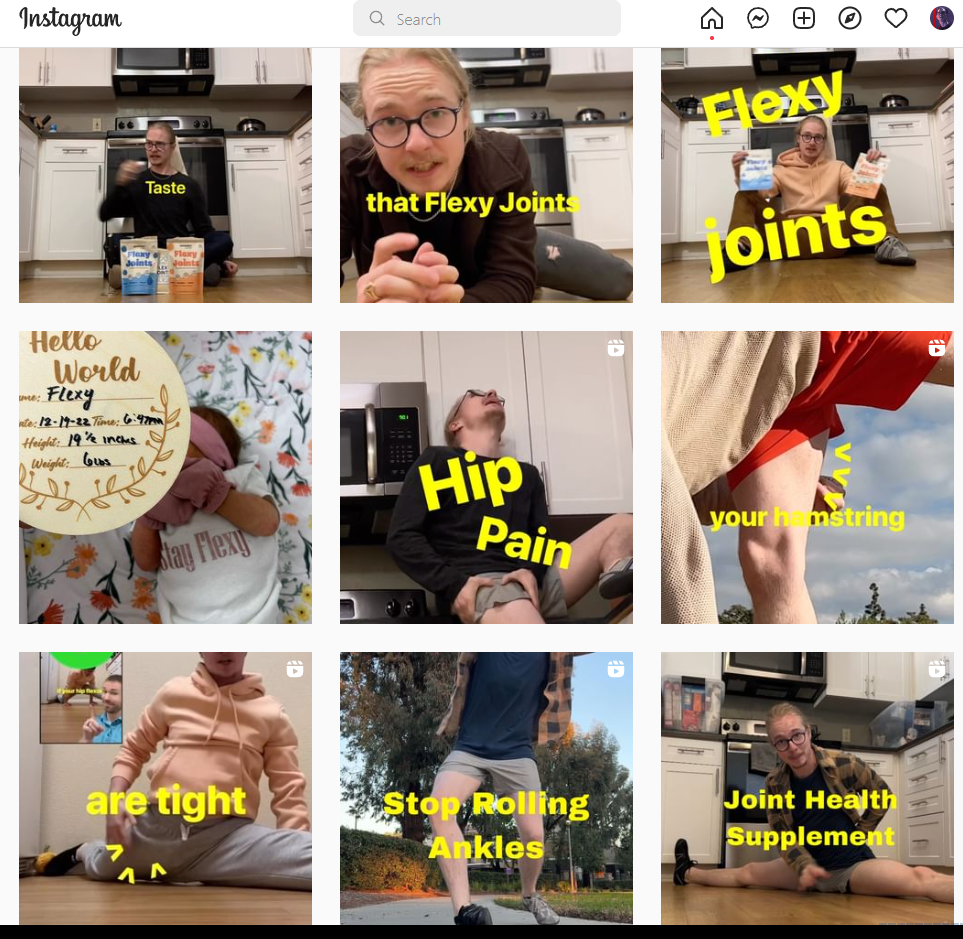
While scrolling YouTube shorts the past month, someone new came into my feed. I know him as “stay flexy” which is his signature sign off. Googling his catchphrase links me to his Instagram, movementbydavid. David is a flexibility coach and fitness trainer, a niche I didn’t really think about before seeing his videos. David now boasts 1.2M Instagram followers and has me scrolling through all of his short form content. His niche is incredibly narrow, yet applicable to so many different kinds of people in life. He targets young, old, flexible, and inflexible with his informative videos. His low budget, low angle camera setup grounds him as a relatable friend. And his content is supreme proof to me that the only thing you need to succeed as a content creator is great content and a great drive.
Aside from content creation, David has a free e-book and is formulating supplements with other professionals. His route for monetization is a genius one, focusing on free educational content to build up his audience and credibility, before moving forward and taking on a business risk that is building a supplement brand.
The post is primarily about the possibility of finding a niche audience and making a sustainable living by capitalizing off of that fandom. The techniques involved, while briefly touched on, can vary broadly and require individual examination. In general, dedication to the craft and incremental improvement are the basis to growing fans. More technically speaking, engaging fans uniquely, offering knowledge or experience from a personal level, and providing long term value can separate someone from someone with 1,000 fans and someone with 1,000 true fans willing to spend $100 a year on them.
Two years ago, this YouTube exposé revealed that Vince and his V Shred fitness business were all a scam. Full of misinformation, selling people on what they want to hear, and shilling out overpriced run-of-the-mill supplements, this business preys on the individuals who have low fitness experience and are naive enough to fall victim to their marketing. Unlike other fitness businesses, V Shred specifically targets Facebook ads, Instagram reels, TikTok Feeds, YouTube ads, etc. They specifically do not target those with enough experience or knowledge that could see through their elementary training and fitness advice. The YouTube video is 13 minutes long and is fantastically produced, I definitely recommend watching it.
Despite this video having over 5.5M views at the time of writing this and despite the mass disapproval from other internet fitness personalities, V Shred remains in business and remains relevant.
A company has a lot of choices on what it can focus on and for V Shred, it’s all about its forward facing branding. Vince is insanely good looking, which makes everything he says believable to a degree. The YouTube video above goes in great detail about how Vince is a great model and actor, but even he can barely believe what he’s saying and selling.
While scrolling YouTube shorts, one of his ads came up. I had seen this ad more than once, but it really rubbed me the wrong way after I saw it again and again.
TikTok videos or short form content of any form have been bombarded with clips from the Joe Rogan Experience. Of course the world’s most popular podcast has clips posted regularly. The animated subtitles and red curtain background are a common sight when scrolling, coupled with typical short form song anthems.
The way V Shred frames this advertisement is so disingenuous, make no mistake. The way his headphones look, the position of the mic, the angle of the camera, the background, the direction he’s facing, all of it mirrors what a guest on the Joe Rogan Experience looks like.
Short form content is so ingenious because it removes the labor of reading a title and thumbnail and choosing what to watch, instead being a constant feed of stimulus. To match that, the first thing you see when scrolling upon this ad is the impression that Vince is on Joe’s show and, “Wow, when did Vince get on his show?” and “Joe’s talking to Vince about fitness?”
If anyone else were to frame themselves as a guest of the Joe Rogan Experience, they would lose their credibility. What is this, some kind of joke? Some kind of wishful delusion? Why don’t you just say what you want to say without making it look as if you’re on the most popular podcast on the world, something very easy to verify if you’re not on? Wouldn’t you look silly?
Well that’s the length of shamelessness V Shred has. It’s okay if they very intentionally made their ad look like they were on Joe’s podcast, because hey they just like the look of it!
Do not take any advice in this video.
This video truly is a meme. You have a fitness model scarfing down carbs, selling the dream to many dieters. He poses in a selfie and addresses all the failed dieting trends, even making a funny face and pose addressing CrossFit. And then he goes into a jumble of information which has some truth in it, but is cherry picked for what people want to hear. “Cardio burns fat? No. Cardio actually burns calories, usually in the form of carbs in the bloodstream, that are then replaced with the very next meal that you eat, stored as more fat.” The grain of truth in his statement is that the body typically burns through simple sugars before burning fat, as fat is more easily stored in the bodies and carbs are more quickly consumed. If your body is extremely low on simple sugars, it will begin burning fat for caloric output.
Googling “hierarchy of fat loss” can reveal what everyone agrees on when it comes to weight loss: first is what you put into your body. And it really should be that simple, if your body was a car and you only put low quality fuel into it, it wouldn’t be at its best. You can point to a dozen other things that affect a car’s performance, but it’s disingenuous and even a bit shameless to sell people the idea they can put any kind of fuel into their body.
“Hollywood’s elite actors…” A few years ago, V Shred did do some videos on how to unlock the secret of Hollywood bodies. He’s still selling different bits and different secrets the actors do to get their incredible bodies. Two years ago, the steroid use in Hollywood was much more under wraps and the general population could be fooled into thinking chicken and broccoli and insane trainers could really make it work. Nowadays, V Shred addresses the steroid culture by saying that there’s “a secret that’s been used for generations.” Come on man, how many keywords can you fit into an ad before people just throw their wallet at you?
The very best part of this ad? The Joe Rogan like set to draw you in? It’s actually the closer to the ad. It’s not selling you anything directly. Instead it’s providing a free product internet users LOVE. It’s a personality test. Find out what makes YOU so unique and what YOU should do instead of just any generic routine. V Shred doesn’t have to sell a novice user anything if it can lead them along this convoluted path long enough and gain their trust. Once a naive individual goes down this path, it’s only a matter of time before one of the selling pitches, one of the magical keywords, one of the solutions lines up with what their wallet can afford and what their greed can stomach.
I truly hate V Shred. But game recognizes game. V Shred spent the marketing money and are without a doubt going to gain a lot of customers from this ad. There’s a lot to dissect and appreciate from such a shameless company. The real lesson, aside from the business and media examples listed, is that there will always be some version, some X product, that is so shameless in its business or practice, that it will go to any length to succeed. So what does that tell you about your ideas? Your values? What if your ideas or values were any good, weren’t so shameful? And what if you had the same attitude nefarious companies have when it comes to pursuing their dreams? Wouldn’t the world be better if the quality products and ideas were the ones shamelessly doing anything to get their brand out there? Instead we have companies that knowingly have shitty products do whatever it takes to sell.
So to that I say, if you’re gonna sell out in any way, do it in a way that’s true to yourself. Because you can be true to yourself and lose. You can be a liar and win. But only a few, and what we truly desire, is to have the honest win.



 Leadership, Design, Writing