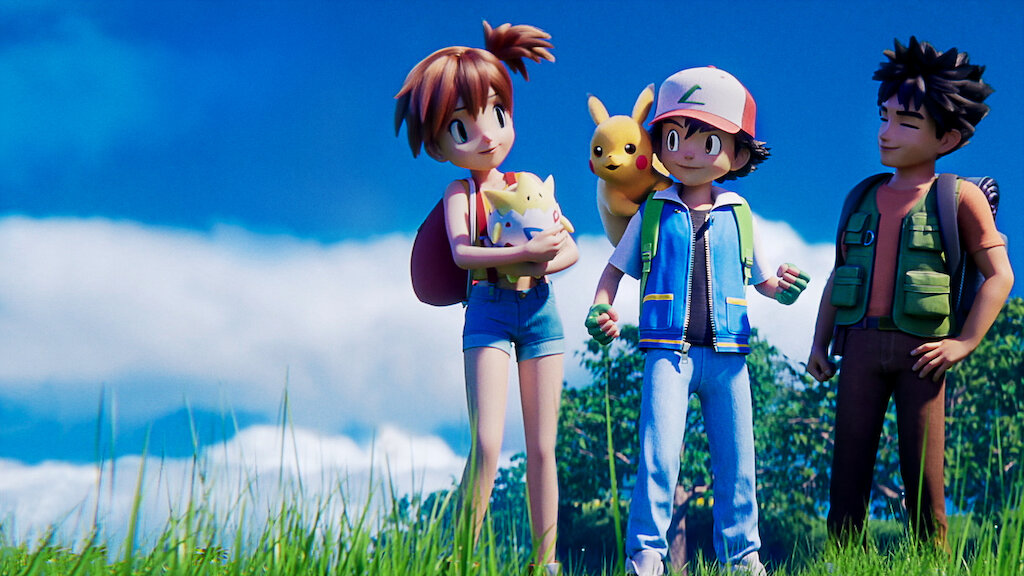
This movie is a classic to me, recreated faithfully. I first watched the original in theaters as a child, watching it again and again as an adult. There was a period of time in which Twitch played the original animated movie and together with other internet fans I watched the movie over and over again. Mewtwo Strikes back is the first Pokémon film brought to theaters and it is my favorite of the Pokémon films. There’s a good chance my nostalgia glasses have overtaken me and I need to give the other films a better shot.
Transforming beloved characters from 2D representations to 3D ones is a precarious one, one that must be executed well. Over the many iterations of 3D Pokémon representations, this one seems to be on the more passable side, keeping the animations playful, charming, and without compromise. There are cases in which animators attempt to make the world look too real, which draws us out of the magical realism.
Outside of the animation, the only difference I can detect in this film from the original is the voice acting, which has also been recreated faithfully. Just as close as the 3D animation can get to its original counterpart, I feel similarly to the voice acting. Sure, it’s not the exact same audio from years ago, but the acting and voices feel familiar. I can’t tell if the music is the same or not, it feels fitting either way.
The familiar story, scenes, and narrative make this movie such a heartfelt pleasure to watch. It’s one of the few animated movies that gets a tear from me each time. I highly recommend this movie to any animated film or Pokémon lovers. It hits all the right notes with nostalgia, the hero’s journey, and tales of friendship.
Early one morning in 2020, deep in the pandemic, I rode out from town and headed towards the mountain. I was engrossed in an excel sheet, double checking attendance. They can only bring two of us. One hasn’t confirmed. Fingers crossed.
I set my attention back to the valley in front of me. To my surprise, I saw a face I recognized. I approached him and started a conversation. “I don’t think the other guy is coming.”
He was friendly. “I’m not sure. Doesn’t look like it.”
“Do these usually start on time?”
“It’s actually my first one,” he replied.
We set off to the mountain together. I joined in on the call and saw him join in as well. We rode in silence.
A warm voice crackled over the line. Invites were starting. Chatter slowly filled the call.
“Is that everyone?” Silence. “Okay let’s start doing fills.”
I turned to my neighbor, “I think I’m in.” He nodded. I asked him a few questions. I was starting to get nervous. He reassured me and reminded me it was his first time as well. I asked if he had any tips and we chatted some more. Then it came to our class.
I unmuted myself and answered the call. “You’re in,” he said.
I entered the mountain alongside my friend. The rest was a wild ride.
It turns out Mizzourah had a couple of characters. I ended up having a couple of characters as well. We played many mornings together after that day. He taught me the ropes of Druid and I began leading morning raids. He was my first GDKP friend, a loot system used for pick up groups. It was lucky I met him that morning and lucky I got into a raid due to an absence. There was a good chance I would have had a completely different experience had I not met him that day. Who knows?
Ignis the Furnace Master is one of the harder bosses in Ulduar, the current raid tier available in Wrath of the Lich King. A couple of things make this fight tricky. If you’d like to see a detailed guide on all his abilities, the wowhead article does a great job of listing everything. Without getting into too much of the finer details, there are a lot of moving parts in this fight and a lot of raid damage. One beautiful thing about gaming is that challenges are tuned specifically with players in mind, meaning challenges can vary from difficult to easy depending on players’ approaches, attitudes, and experiences.
As my casual guild progresses along, many of our lower level players have hit the end game and are beginning to enjoy raiding content. We brought a few players into their very first raids this week and we still have to convince a lot of members that raiding is approachable for them. It takes preparation and patience to help our players along, and luckily the past few months I have slowly been gathering knowledge and experience to help us overcome these challenges.
One thing I have learned from leading many groups is how to handle the momentum of a group or how to plan ahead. For many raid leaders, it is difficult to not only assess what is going on or what is going wrong in a particular fight, it’s another level to be able to predict which parts are susceptible to failure. As leaders become more experienced with fights, it’s possible to fall into a comforting fallacy that all fights have similar experiences and outcomes. This is deceiving because many leaders lack the opportunity or awareness to appreciate different players and compositions. What happens if the few strong links that were holding things together suddenly disappear? There are additional skills like recruiting and roster management that can alleviate the problem of encounter variance. It nonetheless requires effort either inside or outside of the raid to produce reliable outcomes.
For many leaders, learning one particular strategy, building a roster around it, and sticking to that plan is their best chance for survival. One reason is because it is easier to be selective than it is to compensate for player inexperience or output. Many players do not like being given feedback nor do many like to be told what to do.
Whenever I lead, I tend to be a lot less selective and a lot more encouraging of players of all skill levels. This immediately alienates elite players who subscribe for a particular experience, one that is swift and painless. I myself enjoy swift and effortless runs as well, but get rather disheartened by turning people away. There are times where I have to remind myself that all business are not public services and not everyone is your target customer. Still, I try to be as welcoming as I can. This has led to circumstances where I’ve had to have difficult conversations or cuts and times where I’ve lost stronger members who lost their patience.
My casual guild encounters Ignis last night. Half of the raid is well experienced in this fight, the other needs to learn. After three failures, I hear clamors that we should table this boss and see more of the instance. I stand firm. “Everyone here is gaining experience and making the correct adjustments. We are on track for a kill. We must strike while the iron is hot. The time is now.” We engage for our fourth attempt and everyone survives. We down the boss.
I was confident in our ability to make progress. I can’t say I was 100% certain the fight was an inevitable victory. But what I can say with certainty is that the progress and momentum we had at the moment would be incredibly difficult to replicate the following or a different night. Teaching players and having them coordinate with each other takes not only instructions but first hand experience. I knew that to reestablish and rebuild what we had in that moment would be much more costly than fighting on. “Persist,” I said. And the raid did.
Previously I wrote about Loneliness and Individualism, briefly touching upon the topics of collectivism and individualism. The duality and polarity of these two topics is actually quite foreign to many. From a Western perspective, the idea of being unique and standing out is such an ingrained cultural identity that it seems backwards to even discuss the idea of collectivism. The only thing separating one man from another was his name and his stories, after all. Famous explorers, scientists, and inventors all ventured out into the world to become different from one another, finding their own path through life.
I unjustly and abstractly summarize Western history this way as it is difficult to pinpoint and isolate how these two schools of thoughts separated from each other and so starkly divided the world geographically. There is not one particular reason that Western civilizations find themselves to be more individualistic. Rather, over time their politics, proximity of neighbors, and multilingual discourse led to a focus on individuals rather than a focus on the collective.
Interestingly enough, as I write this I have wild speculations of specific division in Europe’s development, ranging from mythic stories like the Tower of Babel cursing the population to having a thousand different languages to the Mediterranean Sea being just a large enough body of water to separate two civilizations by culture but not by conflict. Additionally, books like Guns, Germs, and Steel challenge the premise that Western civilization’s dominance was founded on superiority, but rather on geographic feedback loops. Conversely, researching conflicts between large nations like China and India brings up a curious but ultimately short lived conflict between the two, despite their long history and sizeable populations. While there are several different nations in Asia, many of them find themselves to be isolated from one another by ocean or mountains. An infamous example is China’s close border’s policy, which for some reason is not listed in Wikipedia, despite having an article on the Open Door Policy which was an economic and “diplomatic” policy forcing China to open its doors. You can tell by China’s modern day response how much they’ve enjoyed the Western invitation.
While this post took a deep turn into the history of diverging thoughts, I wanted to more closely focus on the practices and values that are similar and different from collectivist and individualist cultures. I’ll save that post for another time, as this post alone could have more examples and details that deserve more research and attention.
Neon Genesis Evangelion does a great episode on the concept of The Hedgehog’s Dilemma, a phenomenon in which bristle-backed creatures are unable cuddle for warmth without hurting each other in the process.
This concept terrified me as a teenager, who lacked opportunities for intimacy and partner building. In many aspects of my own life, I’ve found myself to be destructive to not only myself unintentionally, but also towards those close to me. It’s a very difficult thing to swallow, as the results of absence are easier to detect than the faults of intimacy. With each practicing moment of engagement comes another opportunity for failure.
This dilemma subsided to the backburner of my mind in my college years. Teenage me was much more hormonally conflicted, less experienced, and more lonely. Despite this neuroticism subsiding, my social life did not pick up dramatically. In fact, it was rather the opposite, in which the neuroticism that protected my brash and socially unaware self became less of an armor and more of a cloak of hiding.
The only thing that brought me out of hiding was my purpose, or my dharma. I would ignore all of my fears and intuitions about social interaction and I would charge forward with discrete action in mind. A lot of this charging was coupled with logical research and experience, of understanding and navigating social situations, but it was still overconfidently charged nonetheless.
In a much broader topic I’ll discuss in the future, my ability to connect with others was linked with me finding my adult male identity, coming of age from an adolescent teenage male with very little status or accomplishment. It took a lot of external circumstance and experience for me to not only be comfortable around others, but to have them take a likewise interest in me. A misconception I had about the hedgehog’s dilemma is that human personality is not malleable to circumstance and that physical arbitrators stand in place of emotional or personal desires. Humans are capable of relaxing their quills and of connecting with others, despite what our social anxiety and neuroticism tells us.
I don’t know where along my journey I discovered this, because it wasn’t from myself. Some how as I grew older, people around me began joking about “the man” and how there was an invisible force that was always winning, always taking advantage of others. It was not a difficult concept to understand, even as a teenager, as you’re either winning and selling, or losing and buying, in some way, shape, or form. I didn’t need an answer to who “the man” represented or what he meant, but rather that he was a placeholder for all things horrible, all the things working against us.
I’m not sure how strongly I ever believed in this concept. To this day, sure there will always be someone winning somewhere off of something. But do I believe that there is one “the man” or that “the man” finds himself in every corner of the room, a manifestation or embodiment of all power structures? No, in fact the more I grow older the more ridiculous this concept becomes.
People use terms like the institution, the people in power, the matrix. These concepts exists, don’t get me wrong. The people with the most amount of power in the world certainly have an agenda, as even the the most poor and lazy have some sort of agenda.
Then who is “the man”? Does he matter?
Ren? Magritte, The Son of Man, 1964, Restored by Shimon D. Yanowitz, 2009
øðä îàâøéè, áðå ùì àãí, 1964, øñèåøöéä ò”é ùîòåï éðåáéõ, 2009
To me, the metaphor of the man is a scarecrow for the weak and oppressed to target. Because the entire concept of “better” is so amorphous and even offensive to some people, it is more desirable to create a character to attack than it is to address the character in their mind. As usual, people are more interested in protecting their ideas and attacking others than they are at understanding or exchanging values.
When you point a finger, three fingers point back.
What an interesting phrase, as it acknowledges that the ability to observe in others comes from the inability to see the very same thing in ourselves.
I write this post because I was casually called the “unofficial GM of the guild” in a bit of a sly way. I have been coordinating and organizing more events for the guild and the co-GM has been handling other responsibilities, including real life ones.
This isn’t the first time something like this has happened, where the more involved I become and the more naturally I get elected to higher positions of responsibility and power, the more criticism and doubt I receive. Some of that is for good reason, as people should be skeptical of those in power, keeping them in check and keeping them beholden to their responsibilities.
But I find that to seldom be the case. The people most critical of those in power use a veil of nobility, guising themselves as just causes for the oppressed. A true representative of the people would take down a list of grievances, create a list of solutions, propose solutions, and implement the said solutions. But is that the case?
Typically, any amount of friction or effort stops an idealist dead in their tracks. Oh, it would be nice if everyone could be happy. Now how are we going to make that happen? How are you going to contribute?
With both hands in the air, people will dismiss personal responsibility and accountability while bringing up problems. Who is it then to solve these problems? Is it the mysterious enemy figure that people have created in their minds? Is that why they can never see themselves in that position?
With great power, comes great responsibility.
Do people ever see themselves becoming powerful, becoming responsible? Or is power a dynamic that is always being controlled, exploited, and abused? A large percentage of the richest companies in the world are young, new, bright companies that did not take advantage of 100 years of oppression, but rather the current environment everyone has access to today. It is always easier to say that something is wrong rather than to personally address something. And that’s an inherent problem of reality, we can observe and detect things going wrong but it is incredibly difficult to be able to assess and respond to those exact things.
I believe that if people took more time and effort to shoulder responsibility in the faults they see, they will not only help out more first hand, but they will also complain or criticize a lot less. It is easy to point and say, “that person has the power.” It’s a completely different thing to say, “that person has the responsibility.”
When I was in the 1st or 2nd grade, I remember something called the gifted program. Students were pulled aside from class and sent into a separate class room, for all the gifted students. Schools have this by varying names, but the idea was all the same. I remember doing random lessons or exercises and one stuck with me in particular. The teacher laid out a thought experiment and drew a ladle on the board with a large hole in it. She asked the class that if we were presented with this spoon, how would we go about eating a bowl of soup if presented to us.
Keep in mind we were young students. Kids to my left would say find a different spoon. Kids to my right would say fix the hole. I remember being so dubious of their solutions as a young child. How are you fixing this hole? Where are we finding other spoons? Is the point of this thought experiment to see how creative we are or how realistic we are?
After a couple of the raised hands had responded, I put my hand in the air and hesitantly responded. “Well, I know Americans don’t really do this. But you can just drink straight from the bowl.” There was audible disgust from some children. Ewwwww.
The teacher didn’t bat an eye. She welcomed my solution just as she did with all the other ones she had heard before. I felt a bit embarrassed by my classmate’s responses. I defended myself with, “I’m not saying I do this. I heard it’s the Japanese way.” Kids are kids, they didn’t really understand.
When class ended, a boy came up to me and looked me in the eye. “That’s disgusting. I don’t care if you’re Chinese or Japanese, you don’t do that at the dinner table.” I was shocked. I was embarrassed before and he had the patience to tell me in private after class. I was speechless. I tried repeating that I don’t drink straight from the bowl. But he walked away.
In hindsight, this story is a bit of a tragedy on the white boy who told me this, as I can only imagine he was mirroring behavior once directed at him. At the time, I saw it as a tragedy of revealing a part of Asian identity to the classroom. I couldn’t distance myself from what I had explained, whether I was Chinese or Japanese. At that age, kids ask what kind of Asian you are and luckily I could respond Chinese, as it was at least a large enough country on the map we could point it out and their parents could recognize us as a distinct Asian race.
But compromising my Chinese identity with my American identity was a complete loss for me. I remember, growing up, specifically keeping things to myself about my family and their culture, as if it were some kind of secret. In reality, Chinese people, or maybe just my parents, are some of the most boring people you could ever find. They like to work and stay at home. They were the first in their families to come to America and now they’re living the American dream.
Until my high school years, my parents did have small gatherings and dinners and I would play with other Chinese children. That world was some kind of dream subculture, where we were clearly American children living under Chinese cultures. We spoke English to each other, had varying skill levels of Chinese, and varying commitments to traditions and foods. We never were really able to express to each other our Chinese American journey, besides relaying stories of Chinese school, a typical Saturday tradition for Chinese Americans, and the rare story of American integration in school, like being asked about Chinese food.
It’s shocking how ingrained it was in me as a child and in the other children to be so silent about our assimilation into American culture. I don’t say this with defeat or pity either, because I love being American and growing up in America. I’ve visited China and seen how children grow up there and I’m not envious. I say it rather as a silent sadness, as an adult sorrowfully feels nostalgia, that we were not able to understand or communicate to each other that we were suppressing a part of our identity. Now that globalism and culture permeation has spread much further, things I once had difficulty explaining to my white friends, such as foods or customs, are now much more approachable and sometimes even asked by them without prompt.
Just like other aspects that have become more main stream, such as anime stickers on cars or Pokemon merch on young and old, expressing and embracing our unique identities becomes easier as the generations go by. I’m thankful for the progress, like seeing Asian role models in media, and I’m grateful for the future ahead of us. May there be more integration and may we celebrate what makes us unique. Cheers.
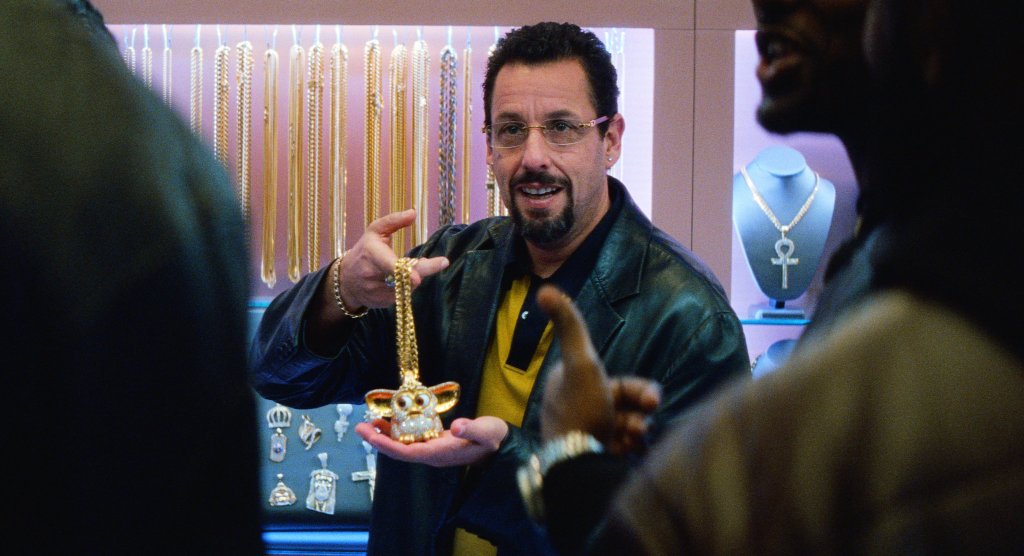
This film was rather difficult for me to watch. It took me three sessions to finish this film. Uncut Gems is classified as a crime thriller and is a rather impressive film. To me, the film finds itself in a strange new genre of unending suspense and uneasiness. Similar but different from cringe, I find unnerving material a bit unbearable as I am an incredibly anxious person.
The plot, acting, and cinematography are all excellent, so don’t let my apprehensions dissuade you from watching this film. Adam Sandler is one of the greatest actors of our time and his performance in this was incredible, irreplaceable. The pacing and writing of Uncut Gems is incredibly unique as well, taking heed to the film’s name and providing some uncomfortable and unfamiliar long exposures or cuts. Social tension is highlighted by extreme and long closeups, similar to how one would inspect a diamond.
The metaphor for value and glamour permeates even into the writing. Many key details in the plot are glossed over or taken for granted. Conversely the story or camera has a high interest in following famous celebrities and high profile events. There are a lot of unanswered questions, from origins to current standings, analogous to how diamonds are bought and sold. How does Howard have a jewelry store in the diamond district to begin with? How does he have the undying love of Julia? How long has his debt been following him? When was his last major win?
Both the writing and cinematography are rather grim. From uncomfortable color correction, camera angles, writing, and dialogue, Uncut Gems goes against many mainstream formulas in its effort to deliver a metaphoric and literal uncut gem.
This film, along with Parasite, gave me the creeps. I’m glad I pushed through and finished Uncut Gems as it is unique, artfully executed, and well casted/acted. A popular misconception is that this story was loosely based on a true story, which is an exaggeration at best. Although Uncut Gems is darker than most films I prefer, I’d easily give it two thumbs up.
I used to live in Chicago for over 10 years. I moved to California because I was offered free housing by the esports organization I was working for at the time. The owner, Reynad, was a prolific gamer and was working on his own game. He invited me over for lunch to chat about his game and to see if I could provide any valuable input to his creative process. As we walked into Huntington Beach, I confessed to him how influential he was to me, as he inspired me to create my own organization in Chicago. He naturally replied to something of the effect, “No need to thank me. I know that you’ll inspire others and that it’ll continue to pay itself forward.” He admitted he began esports because of organizations bigger than him and that we were all small parts of a larger journey.
I find myself spreading this message quite naturally, as I’ve seen a part of myself in every community organizer I’ve met. The identity and journey is so relatable to me, that it is only natural for me to inspire, engage, and learn from others and to wish they do the same further on.
My casual guild has around 800 members, but very few of them are active or responsible members, making a smaller more tight knit guild much more engaging in some ways. Whenever I get asked how can we handle more responsibilities or what we should be focusing on, I always spread the message of reaching down and pulling up. The more members and the more responsibilities are present, the more imperative it is to not place responsibility on ourselves, but to enable and strengthen others so that the entire group can endure and persevere through challenges.
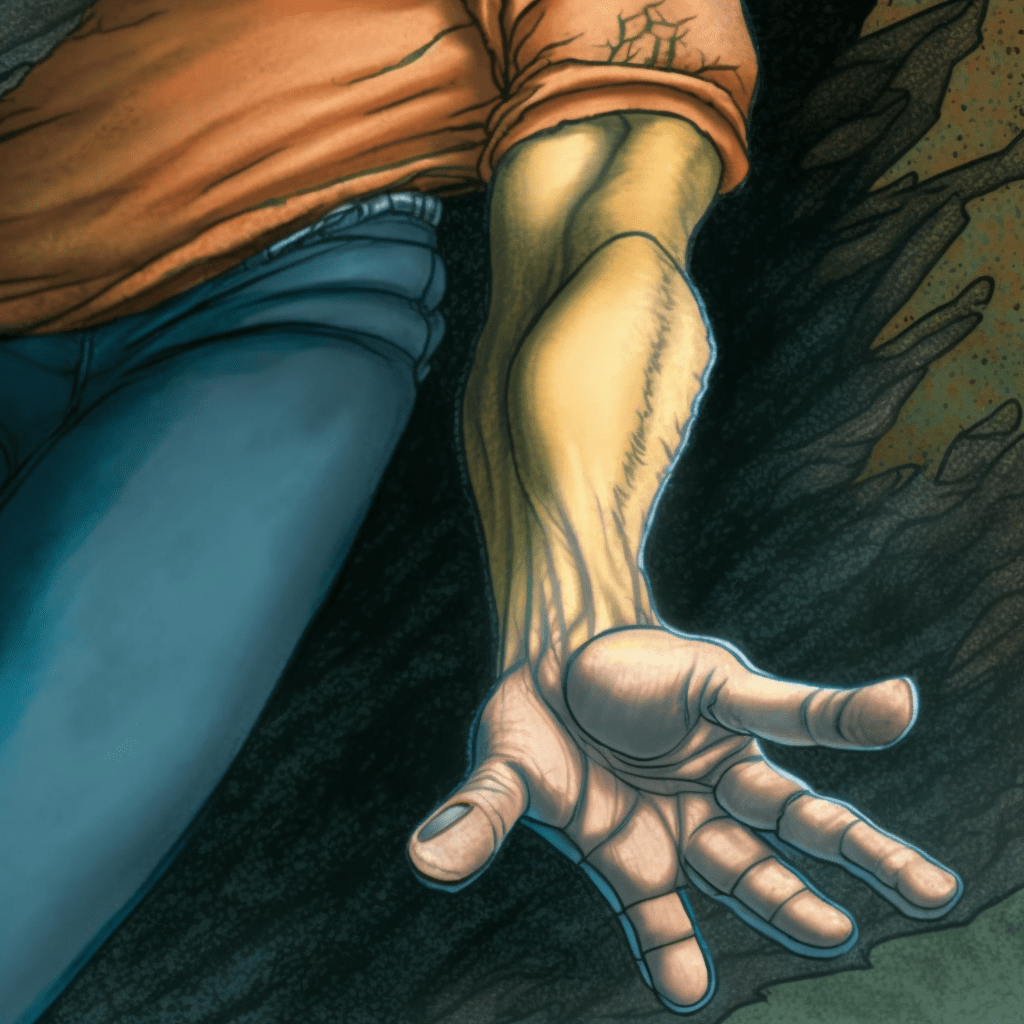
I have been led by leaders who led in the front and led by leaders who led from the back. An unspoken yet respected rule is that we are eager to lead each other side by side. It is just extremely rare for egos, agendas, and ambitions to all line up. It is why it is so easy to become rivals rather than peers, it is difficult to look at an open hand with humility and it is difficult to extend an open hand with humbleness. Find those who do either and eventually you will do the same.
Unable to sleep, I logged into World of Warcraft to sneak in some productive gameplay. I cleaned out the guild bank and discord while waiting on my dungeon group to fill. It took quite some time, as I crossed off a bunch of errands off of my list before the group disbanded and I had to form my own group. Typical late night struggles.
An hour into my dungeon wait, the group finally filled and we were set to start the dungeon. “123” a mage typed. I opened my map; no one was even close to the dungeon. This mage saw the group fill and typed 123 immediately. What a guy. He asked for a summon before anyone was there to do one. “Be considerate.” I replied. He checked his map and confirmed.
No one close to the dungeon and no movement on the map. I guess I’ll find a way to make it to the dungeon. To be able to fly in the continent of Northrend, one must learn Cold Weather Flying, a tome which is tradeable from character to character. I swapped over to my Alliance server and sent this tome over, one of the very few things I can trade between servers and factions. I logged back over and taught my character how to fly. I rose to the sky and pointed myself south by southwest, out of the city and onto the dungeon.
I opened my map and there has been little movement. Except, wait. Our mage has moved. I hovered over his character portrait and checked his buffs. His movement on the map seemed… indirect. As if he was following paths across the land. Sure enough, in his buff list, was a Hawkstrider, a swift ground mount. This mage had ridden across the land and met me at the dungeon’s entrance within seconds of my arrival. Without a word, we began summoning the rest of the team.
A pleasant surprise, this mage. We grabbed our quests and zoned in.
A message appears in guild chat. “when did wow add a playlist”
I replied, “what”
My guildmate went on to describe how there’s weird metal music playing in Terokkar Forest. “when did they add music?”
I’m confused. I tell them there’s always been music.
“no, there hasn’t. i haven’t played in a while but i’ve never heard it until now.”
There are a lot of new players in my casual guild. I explain to him the default keybinds to turning music on and off. I tell him that the game has had music since its initial launch. He pushes back.
“it’s never had music”
I tell him we can simply google it and another guildmate agrees with me. I ask him, “Did you really think the most popular game in the world at one point didn’t have music?” He quickly replied yes.
I didn’t quite know what to say at this point so I told him, “Wait til you get to Northrend, your mind will be blown.” The music director for this expansion was incredible, so his mind will indeed be blown.
The dungeon went on smoothly and guild chat remained silent. His conversation stuck with me until the end of the dungeon. Our tank had never ran the dungeon before and needed a little guidance. While he charged forward rather confidently into what was a mystery for him, our tank took feedback well and the run was very smooth. I shortly after went to bed.
Is confidence a horse-blinder? Allowing us to charge forward? Do we let our experiences and our confidence blind ourselves to reality? Inversely, we cannot be so skeptical and fraught that action can never be taken. Perhaps the availability of information and the veneer of social media encourages us to be bold and brazen first, subtle and skeptical last. I’ll cover generational conversation more in a future post.








 Leadership, Design, Writing