Endings and Beginnings

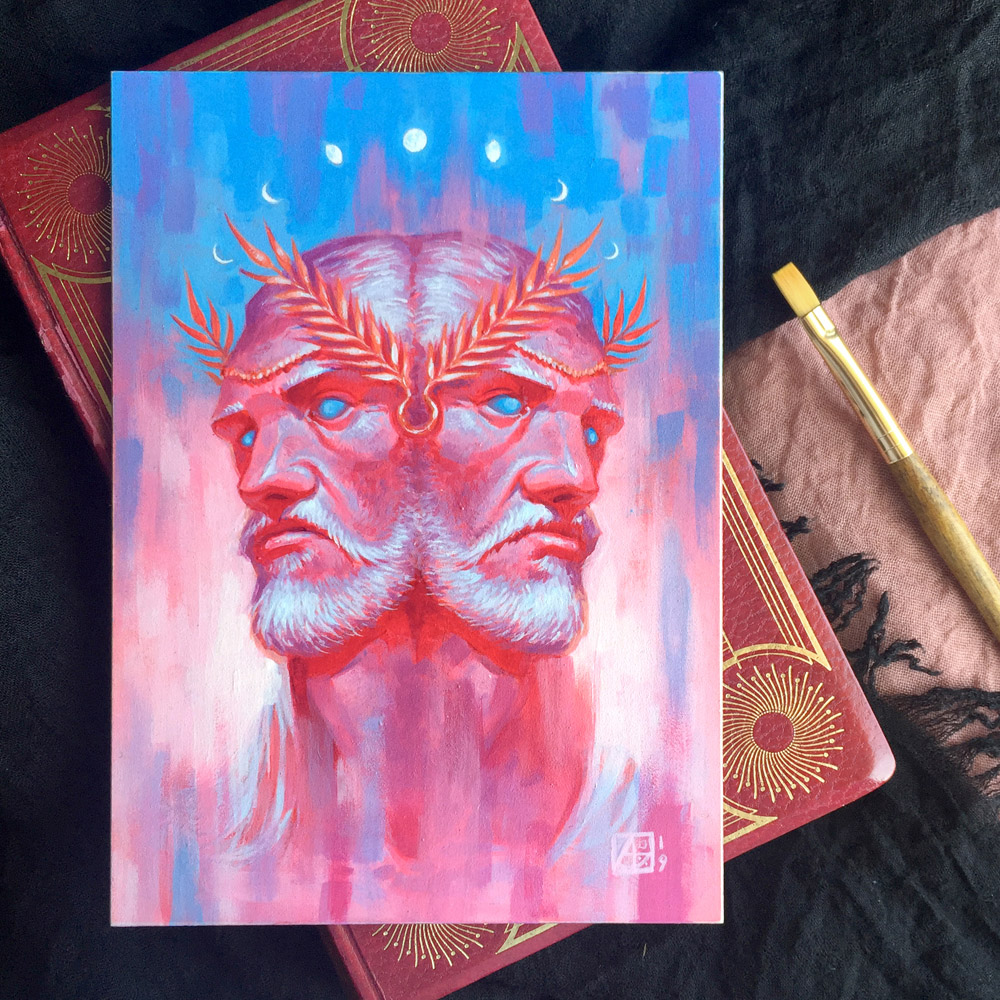
Art by Alex Stone

January didn’t always mark the beginning of our calendars. In Roman culture, March represented the beginning of the year due to it’s great weather for planting season and marching for wars, hence the name. The Gregorian calendar we are familiar with changed the start of the year from March to January.

Janus is the Roman deity of beginnings, gates, thresholds, doorways, endings, etc. He was invoked and honored in all beginnings. We can see his ceremony and practice today with ribbon cuttings, proposals, baby showers, and New Year’s resolutions. Our shared celebration of beginnings is an important shared one, for we can all experience a passage and transition together.

Janus is represented with two faces, one looking into the past and one looking into the future. When we reflect upon the past, we use the term ruminate. When we learn about the future, we use the term illuminate. Janus was responsible for the beginning of wars and also the beginning of peace, the end of good times and the end of bad times.

He represented spatial changes as well, representing thresholds and barriers between worlds. Janus is with us when we are inviting guests into our homes, entering the thresholds of businesses, and saying goodbye for the last time. He is with us when we start a long journey, start a new endeavor, or meet someone for the first time.

There are retirement celebrations, funerals, sweet and bitter endings. It is romantic to dream about a different tomorrow and it is what gives us hope. But it is just as beautiful to get wrapped up in nostalgia and to appreciate all the journeys before us and before now. It’s beautiful we can document our lives so well, whether we mean to or not, with videos, images, stories. Sometimes you don’t know when the last time you’ll do something is: the last time you hang out with a friend, the last time you log into your once favorite game, the last time you see this particular town.

When I was raid leading everyday in World of Warcraft Vanilla Classic, I had a discord server with several hundred members. I had 3 rules.

Rules
1. Be kind to one another
2. Enjoy your time in Azeroth; it will be over before you know it
3. Invite your friends & have fun!

These were rules for a virtual community in an online game, but they really do apply to our real world as well.

I hope you all enjoyed 2022 and are looking forward to 2023!

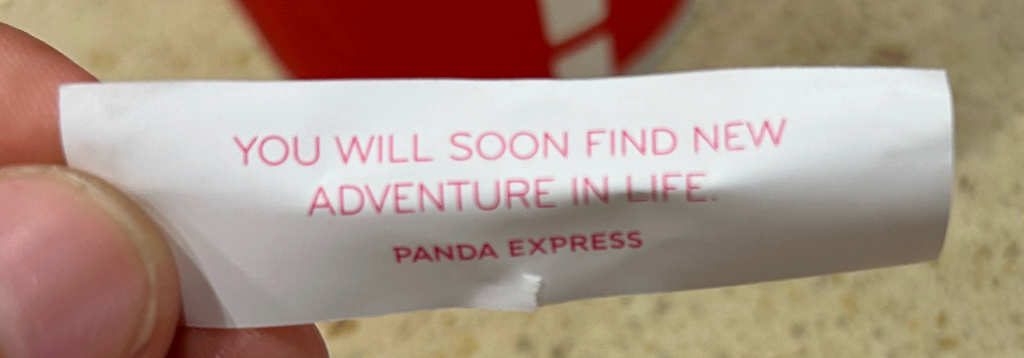
I’ll end with the fortune I received yesterday from Panda Express.

Virtual Worlds as Theme Parks

The more I play World of Warcraft and the more videos I watch on the topic, the more I realize the design of the games and the worlds are no different from the designs of theme parks. I thought about what new games and old are doing to attract players, what players can do while they stay in their world, and what the relationship between the designer and player is like. Funny enough, as soon as I thought of theme parks and MMOs, I remembered I watched a youtube video not too long ago about the design of MMOs as theme parks.

It turns out this video is over a year old now. I didn’t quite think of this video when I began this post, but it certainly captures important elements of online world design. The author describes differences in game design attitudes when shaping the worlds and how players interact with them. Some designers build set experiences like rides in a theme park, some designers build sandboxes in which players choose to create their experiences. There’s a lot more risk and instability when it comes to designing sandbox games. It is that difference which sparks the divide between online worlds being mostly set experiences, as set experiences are easier to design and forecast.

We know set experiences are easier to design because we see them so commonly in the gaming genre. Very few games give players a majority of the tools and let players build the majority of experiences. By nature, creating numerous possibilities takes numerous tools, and the most fun possibilities are the surprising ones, which are difficult to design or manage.

Bringing this idea back to the real world, entertainment in large spaces can be seen as sandboxes or theme parks, and should more heavily lean into their own identities. Music gatherings become music festivals, social gatherings become bars and clubs, etc.

I’m not exactly sure what the closest parallels are, which can be commercialized or organized, for sandbox entertainment. The closest I can currently think of are fairs, markets, or holidays in general. But I do know that theme park rides, cinema, and festivals deeply parallel online experiences we enjoy at home, but in public mass settings.

There are a couple of internet to reality based gatherings, such as anime conventions or gaming tournaments. In these micro-environments, people can hold different identities and status compared to their normal lives. It is this very essence which prompts this post, the essence of further identity and engagement that videos games and virtual worlds accomplish, but few real world events do.

The best real world example of identity and subculture contextualized in an event is a sporting event. Fans of one team sit opposite of fans of the opposing team, cheering for their respective teams on a field. As successful as sporting entertainment is, it is a passive hobby which the user best enjoys live, a tiny timing window in the grand scheme of things. What if there were virtual words or real world places for fans to gather and interact? Well, there are. There are fantasy leagues, there are sports bars, there are stadiums and merchandise. But it still differs drastically from a gaming experience.

Fans can separate themselves from others with knowledge and time investment or with rare or expensive collections. How can that be reflected in reality? When a character in an RPG enters a dungeon, it is similar to a person in a theme park going on a ride. The dungeon never changes, as does the ride. But in RPGs, the character entering the dungeon is different (hopefully) each time. While it is true a man can never step into the same river twice, how can fans see or feel a feedback system which responds to their participation in real life?

It’s easy to think of merchandising options or NFT wallets or some marker to identify our super fan and to grant some kind of exclusive access. This type of thinking is too basic, relying on cosmetics or video game features to override reality. We can point to current examples like court side seats, ticket availability in general, limited whatever. There are numerous ways for our fan to invest into the game, but so far the only feedback I’ve been able to list is seating or merchandise availability. Maybe that is the best feedback a fan can receive. A better view and something to take home.

Dungeons get easier the more geared and experienced a player or the group is. The rewards from the dungeon are static, but the experience becomes smoother, and the joy comes from within. Now, most players stop doing a dungeon once they have received a particular piece of loot they have been looking for, waiting for random chance to go in their favor. Still, the fun of the dungeon comes from a sense of progress internally, as the player builds themselves up against a set experience.

Is there a theme park or an environment, where shared-world users can slowly increase their agency and status, independent of the real world? Am I just describing high school?

Tracing Outlines and Finding Character

In the beginning of 2022, I read a delightful book by one of my favorite authors, Malcolm Gladwell. The book was Talking to Strangers and details all the conceptions and misconceptions we have when communicating with others. I do need to revisit this book again, because this blog post isn’t necessarily about this book, but rather what I’ve come to find is true when speaking with others and becoming close with them.

I have an extremely varied history of hanging out with people of all walks of life. I’ve made friends with people in all sorts of settings, from hospital wards to hotel conventions, and homeless shelters to millionaire residences. An intriguing thing about meeting so many people is what it is like to become close to them and what our initial impressions of them inform us about them. Was that thing I noticed at first a red flag? Or was I just being far too judgmental?

A friend once told me, “What you see in the first ten seconds of meeting someone typically tells you all you need to know.” I was shocked by their statement and asked if they really meant it. “Yeah, what they say, how they act…”

I’ve heard more than one great quote about first impressions.

“You never get a second chance to make a first impression.” -Will Rogers

“Two things remain irretrievable: time and a first impression.” -Cynthia Ozick

“You only have one first chance to make one first impression that lasts a lifetime.” -Nas

But to what merit do first impressions really hold? Don’t people typically move with their best foot forward? Do we not live in a digital age in which any manner of thing can be manipulated, highlighted, omitted, etc.? I certainly wouldn’t base my entire outlook on another person simply from their handshake. But as humans it really is impossible for us to not to judge or catalog in any sort of manner. Some may do it less than others and not all perceptions are enacted as judgments. The real question is: which things can we see in others that remain true over time? What are true red flags? What are true green flags?

There are dozens of personality tests online and several axis in which I could measure personality and actions. Some may ascribe to astrology or typing to describe actions and follow through. Others use personal experience and sands in the line to determine who they think they are dealing with. Here are some things that I believe traverse culture, gender, religion, and identity.

  • How does this person see themselves in relationship with the world?

This relationship typically changes very slowly over time. When you meet someone, there is relative certainty your snapshot of their relationship with the world is accurate unless there is drastic change, change that is probably easy to document or observe. What do I mean by relationship with the world? Well it extends into many things. How does this person handle responsibility? Are all things one on person’s shoulders? Whose? Are things equally divided? Under what circumstance? It’s easy to see this getting quite political, but I’d argue these ideas inform us of a person’s politics rather than the other way around. This question can also get quite abstract and what I found most helpful was to see people with similar positions handle different situations and people with different positions handle similar situations. Isolating situation vs position can help us determine personality.

  • How does this person interact with others?

This questions get very tricky, very quickly because of the way to interpret this question. Typically we ask ourselves this question, with ourselves as the object. How does this person interact with me? And, it is just as easy to observe someone interact with another and confuse this interaction or misjudge them. Typically, people are quite conscious of their actions when they are interacting with someone they feel is important. The less important or serious someone thinks of the situation, the less conscious they are. This is how we get stories of people observing how others treat service staff but this is also how we get social media videos of gift giving to the homeless. It’s important to note with this question and with all other questions that this blog post is about getting to know people over time, and with that comes multiple observation points. It is extremely easy to judge or misjudge someone off of one interaction, such as getting cut off in traffic or someone passing on the last slice. Look for interactions that seem genuine or personal and see in which situations does this person act differently.

  • How does this person respond to change?

“Change is the only constant in life” -Heraclitus

Our response to change and our observation in others informs us about how we feel about our current situation and our ability to navigate life. Simply put, those who dislike change are those we feel most comfortable in the current situation and do not wish to navigate to any other situation. It’s easy to hand-wave off those who dislike change with the previous sentence, so we have to remember change is often extremely difficult for anyone to handle. Despite that, change is persistently occurring, so it is an important quality to observe in others. This question colloquially comes out as, “Oh he’s just a pessimist,” or “Wow, you’re such an optimist.” Yet the question of how people handle change can vary dramatically from subject to subject. An extremely open minded person could be a stickler for plain foods. I find this question informs me of what values are immutable and which situations are inconsequential, and that can tell you a lot about someone.

  • How has this person changed in the last year?

We do ourselves injustices by judging others off of snapshots. These judgments exist because they work in some fashion, some where and in some time, they have helped us avoid working with or dealing with bad situations. We call these red flags. We’ve heard of people counting red flags and either having them whiz by an oblivious person or enacted on and ended by a firm believer. But what I rarely hear is the nuance and the change in judgments about someone. Typically this is because walking back an opinion is not only unsexy, it’s hardly worth sharing. Most opinions people share are face-value, instant reactions, in the heat of the moment, when the conversation was current. Unless people see a strong consequence or result by publicly changing an opinion, there rarely is public display of change of opinion. So to that I say, withhold an opinion if possible until you find it difficult to change your opinion. Easier said than done, as most people have a hard time understanding to what degree they could change their mind on something. But none look more foolish than those who jump from bandwagon to bandwagon with such little conviction of their own. Instead, hold an opinion of someone and have charitable interpretations, opportunities for change, and remove eggshells/landmines in their path before you close the door on your opinion of them. It is highly likely you or I have made a bad impression or snapshot, but quickly made up for it moments or situations later. With all that said, two is a coincidence and three is a pattern, so unless the person is oblivious, it is a conscious behavior and pattern.

These four questions encapsulate all I have to ask about someone after knowing them month after month, from knowing hundreds of acquaintances to making just a few dozen close connections. They are not as punchline or sexy as “Does this person talk behind other’s backs?” or “Is this person a hypocrite criticizing others but not themselves?” Witty and petty remarks can all fall back into these questions.

Remember that all time and effort is finite, so we can understand a lot about someone based on how they spend their time and effort. Spend your time and effort effectively by figuring out what’s important to you and sticking to a positive and constructive mindset. Meet others and find those whose characters match yours. Be the change you wish to see. Answer the questions above with yourself in mind.

Vertical and Horizontal Design: WoW

I’ve been spending a lot of time in Northrend, playing the latest expansion of World of Warcraft. Wrath of the Lich King has been a new experience for me, since I missed out on it during my college years. Instead I was focused on Super Smash Bros. Melee. After spending thousands of hours in WoW since Classic’s revisit, I still so much of World of Warcraft to explore.

Vertical design, similar to telescoping, gives players the ability to look forward or ahead in their gameplay and find a path of continued enjoyment. As a real life analogue, players always desire more. When games give clear objectives and vertical paths towards achieving them, players quickly game the system to find the rewards as quickly and as easily as possible. This is incredibly apparent with the Classic revisits of World of Warcraft. Since the content has been fully explored, the mystery of the game is lost upon the majority of the player base. The joy is not in the mystery, it is instead the process of climbing up ladders of design to experience accomplishment and to reach the next challenge.

World of Warcraft has faced a complex relationship balancing the difficulty of the game for newcomers and casual gamers against the hardcore players and streamers who make up the face of the game. For many players, the revisited designs of WoW are more approachable in that the vertical steps of game design are so well documented and understood that there is no mystery whether a player is making progress or what there is to do next, and those goals are more achievable than ever.

When players finish vertical paths or disengage with them, horizontal or exploratory design reigns in. A physical symptom of a player disengaging with vertical design and horizontal design is that a player no longer plays aka raid logging. Until there is new content, vertical or horizontal, a player who has disengaged with both designs no longer engages with the game. There are rare exceptions, like social constructs and community building. But these are the exceptions, not the rule. This is the importance of horizontal design. Because vertical design and branching paths will always take immense production power, horizontal design offloads the pressure for game designers to deliver the next shiny stepping stone. Because gamers are chasing a metaphorical dragon, the arms race between designers and gamers pressures designers into prioritizing external metrics. To avoid this, exploration and horizontal design allows breathing room and life for the game and game designers, which in turn benefits the player.

Is horizontal design simply placing a second vertical design alongside? Yes and no. Wrath of the Lich King introduces dual specialization, allowing players to quickly switch playstyles in raid. Having players experience multiple roles, gaining gear and experience in these roles, and identifying their character in multiple ways is how one simple change broadens the role playing game experience. While players previously had the ability to switch between specialization at a cost, it could only be done in cities which limited the role play. In previous expansions, I myself rarely explored talent switching despite being able to afford the cost. Perhaps due to interface friction or a weak desire to explore, I simply did not enjoy multiple specializations in previous expansions of WoW. To play a different role, I played a different character.

Joyous Journeys is an experience buff which started yesterday and lasts throughout the holidays, to encourage players to return to the game and to level up additional characters. With the introduction of heirlooms, gear which end game characters can mail to their starting alternate characters, WoW introduces a bridge between two vertical designs. Other introductions include allowing reputation rewards to be passed from within the account, freeing players from grinding reputation on multiple characters, a challenge in previous expansions.

Limitations such as characters only being allowed two professions at a time cause profession based players to play more characters. More and more designs have been introduced which let professions interact with each other, which encourages players to explore a separate vertical design, one after another.

Symbiotic and bridging mechanics between vertical and horizontal systems encourages players to stay beyond the minimum play time required. The combination of design is a cornerstone of World of Warcraft and why it is so addicting by nature. While some players remain vigilant on one vertical design with end goals such as parsing or speed running, a majority of players stick around Azeroth to explore and enjoy both the vertical and horizontal designs.

Hiking Sycamore Canyon

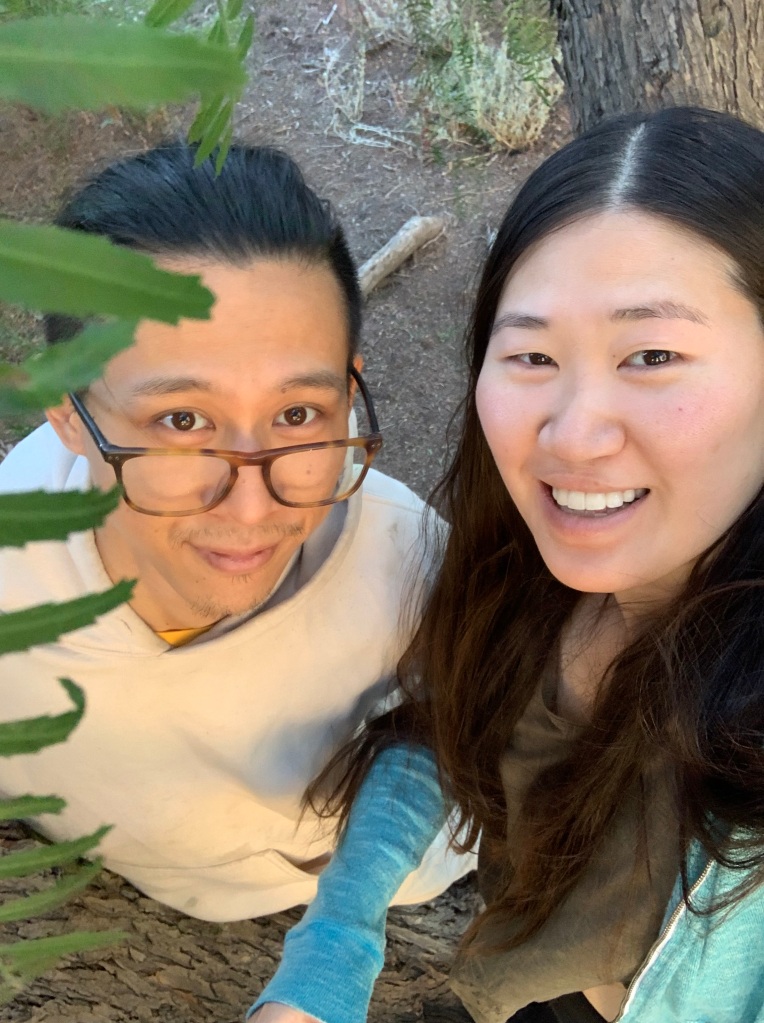
My girlfriend and I just went hiking along one of the easier paths in Sycamore Canyon.

It was an easy trail for casual hikers like ourselves. Round trip it took us a little over an hour. The trail featured minor elevation and a few changes in biodiversity. Aside from the wonderful conversation and the fresh air, the plant life and the trail design captured my attention.

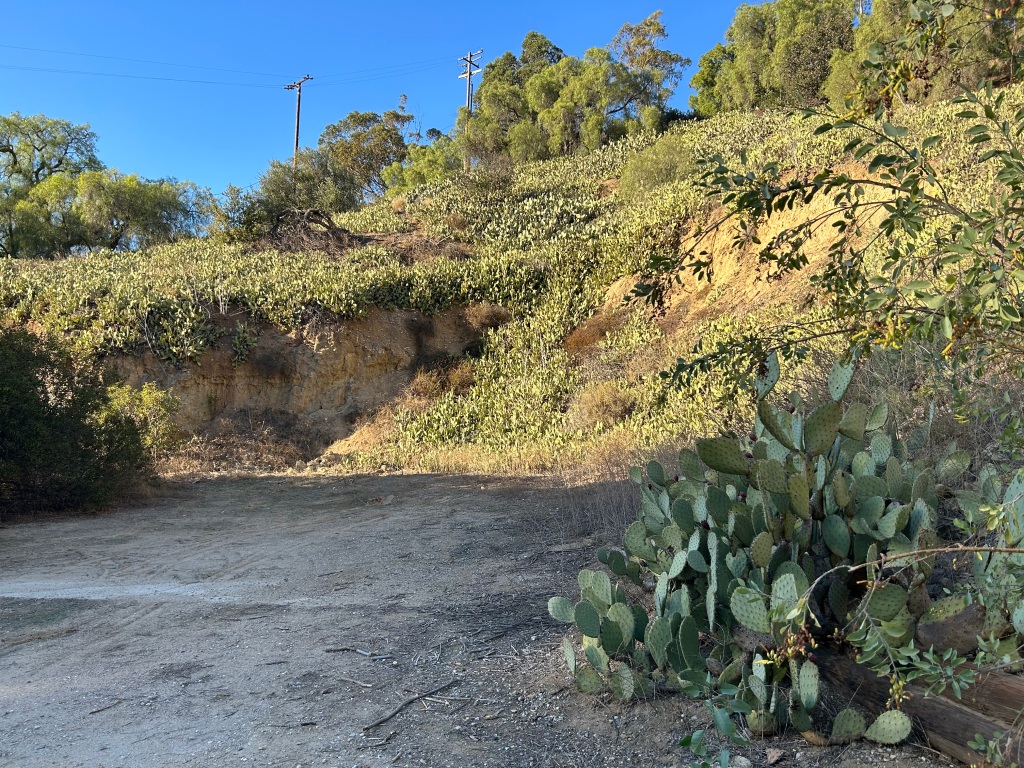
The beginning part of the trail featured a lot of cactus life. It surprised me how they grew in little patches along the hill. I’m sure the little moisture in the area was being drained in groups. As we walked further along the path, we saw large vines of golden leaves entangling all the trees. We had seen a warning about poison oak and suspected that it had infested a large region of the forest. Several trees were completely covered by the vines, losing out on any sun or water that might have once supported it.

Just a month ago, Vox released a video on trail design on how well made trails are invisibly designed for its users. As a designer, this fascinated me way more than an average person could be. I noticed the changes in elevation, the bumps and angles, the curves of the paths, and the surrounding markers. The ease of the path and the small changes made for a pleasant walk.

Without a video deep diving the design of trails, someone like me wouldn’t appreciate the simplicity and the undertaking in designing the trail I undertook. The first image in this post seems little more than a meandering line through terrain. And for many people, that is all hiking needs to be. In the relationship between designers and users, the best intercourse is often none at all. Thank you to Vox for highlighting such a simple, yet beautiful design topic. Thank you to my girlfriend for dragging me out from my computer desk. And thank you to California and America for supporting our access to nature and leisure. I love appreciating good design as a user, but more so I love understanding good design as a designer. I recommend sharing the video and sharing a hike. We could all use great simplicity.

Buffet Floor Plan Design: Golden Corral

Yesterday Amanda and I went to Golden Corral for the first time. It is a nation-wide $$ American buffet chain. Buffets have a special place in my heart. Growing up, my immigrant family was not in the best financial shape. My elementary school awarded coupons to a local American buffet restaurant called Old Country Buffet for each quarter of perfect attendance. As a child who didn’t know much about helping out around the house, I knew that attending school everyday was a simple way I could contribute to something special. The memories of exploring and eating all the Western foods my parents didn’t serve at home as well as the rare moments of an ABC child making their parents proud far outweighed the quality of the food. In hindsight, the buffet was nothing special. But the memories were.

This is my crude paint image of the floor plan of Golden Corral. I’m sure by locations this plan could vary. But this plan in itself is the reason I came to write today. The food? Fine at best, nothing inedible.

Upon walking into the corral of gold, I noticed the most fascinating thing. Not labeled but filled in blue, this square represents the first upsell GC presents to us: the fountain machine. I have never seen a restaurant with a fountain machine in a queue, at the very front of a restaurant, before even being seated. Man, I thought, they must really want you to be refreshed… maybe from a long hot day or when waiting in line. No, the real premise is $3.49 for a fountain drink. Sure, you can get water. But with dozens of choices and free refills, can you really resist turning down some liquid sugar on this special meal? Yes, we do. Amanda gets us two waters.

The grey block is the host stand with a small waiting area behind it. Servers seat parties to the side, in my poorly aligned square field. Most parties were either small groups of 3-4 or individuals, making the average table size 2-3 people. As my younger memory served and from the people we saw that day, the general demographic is a random scattering of families and older, single individuals.

Seating is nested to the sides of the restaurant, leaving patrons near the bakery and salad bar. As the economics of buffets entails, getting patrons to “fill up” on “empty calories” is how the restaurant wins and patrons gunning down premium items repeatedly is how the patrons get the best value.

The grill is placed in a genius way. It represents the maximum value, the real reason people come to eat here. Fresh, hot food with great aromatics placed front and center. While waiting in line, you can see and smell meat. You can feel the value. Your server greets you at the host stand and walks you further and further away from the only thing golden about this place. In only a matter of ten steps, your view of the grill has disappeared and only its scent follows.

I avoid the salad bar and bakery until last. I want to get my value. I make a trip over to the grill and notice there are several chicken and pork dishes. That’s to be expected, I thought. But where was the steak? Where was the beef? Since Amanda and I came for lunch and the lunch price is less than the dinner, I assume the good stuff comes out for dinner. The only beef served on the premise was grounded, either as a half-burger slider or as meatloaf. Well played. The only seafood I spotted were thin, fried fish fillets which I avoided and a seafood salad with imitation crab, which I had a bite of.

As with all buffets, the meat was scattered along the grill with vegetable and carb-heavy sides neighboring each meat dish. I managed to grab two plates of mostly meat, grabbing a few sides I couldn’t pass up. Like I mentioned before, the food quality was not bad, but certainly not something memorable. Like the gaming meme I’ve heard before, the real prize was the friends we met along the journey.

Would I go again to Golden Corral? Maybe once a year. There are much better AYCE places. But the childhood memory of American buffets and it’s wild accessibility means that the nostalgia will take over me here and there and the corral’s beautiful design will draw me back in. Next time, I’ll spend a few extra dollars to get steak on the menu.

Design is meant to serve both the restaurant and the patron. In the all-you-can-eat field, these parties find themselves at the opposite of interests. Yet choices in which dishes are on the menu and when, where they are placed, what the patrons experience and in what order… all of these design choices were made by a corporation to protect their interests. And the fact that the parking lot was full on a 2pm on a Friday tells me that Golden Corral protected their interests successfully without pushing away their customer base. And for that design, congratulations.

Connecting Dots

This week marks six months of me joining a private startup in Orange County. I met the founders a few months before COVID and kept in contact with them over the years. They had started in a garage and were in an office suite present day.

Sales. Delivery. Immersion.

When I was 8 years old, I sold chocolates in industrial office complexes to raise baseball funds. When I was 18 years old, I sold Cutco knives in residential mansions of acquaintance’s parents. When I was 25 years old, I sold patented, hand-powered cutting tools to commercial contractors. Cold calls, hot summers, long walks, late nights. The only thing that changed about sales was the product in your hands and the script in your mind. Clients with $5, $50, and $500 were not really that different. Everyone wanted a good deal. Every sale had to fit the right “timing.” Every thing needed a tangible difference but an effortless appliance. Much like public speaking, confidence in the subject matter could carry the entire interaction.

I have delivered pizzas, parcels, sandwiches, and people. In suburbs, cities, nights and mornings. Most drivers learn the lay of the land, few learn the tables of time. The average person assumes road conditions and clientele are dictated by city zoning, like business, parks, parking structures, and homes. While these features setup a foundation, the cycles of time throughout a day dynamically change who and what are on the road. The same streets filled during rush hour with passengers are filled with commercial carriers on off hours. No matter how many different parts of the United States I have driven and memorized, nothing can account for a local understanding the culture’s time patterns.

The best way to learn another culture is to immerse yourself in it. As a child, I was thrown into the deep end multiple times, when I moved and changed schools in the 3rd and 7th grades, and had to jump into established social circles. Immersion was not just limited to socialization, it also made a huge difference in practice. Learning the Chinese language in the United States versus learning Chinese in China. Reading about graphic design or game design versus selling logos and shipping games. Playing video games at home versus competing in local tournaments. Rather than drowning, I was born again, riding along a winding convergence of information overflow and ritual impressions. A Chinese proverb my father shared with me: 入乡随俗 – Wherever you are, follow local customs.

A deep dive and crash course granted me the identity of a farmer. One of the founders likes to remind me that we do not sell produce, we sell relations. I learned a similar lesson at an Audi dealership; Audi is not in the car business, they are in the people business. Harvesting, transplanting, seeding, cleaning, maintaining, researching, developing… that’s just inside the farm. Deliveries, customer relations, customer acquisitions… the world is our oyster.

I had dreams of California sunsets and beaches. I came here on a different adventure, yet this one seems as personal as ever. It’s beautiful returning to all the locations I explored initially, when I was searching for meaning in California. Now my map is filled with landmarks, dots all over the map. What once felt lost, is now becoming connected. I look forward to the next dot.

language learning game

Choose your language and difficulty.

Example: Mandarin / Beginner

Roleplay: 8 year old boy sent to the market to buy some milk and bread

Example: Spanish / Medium

Roleplay: Take down a pizza order and deliver it

Example: English / Expert

Roleplay: Prepare a dinner party with the host

Create multiple social situations with enough interaction and agency so that players can explore vocabulary and fluency. Requires audio recording of several languages and visual vocabulary cues like signs or messages. May take advantage of rogue-like mechanics to develop strong replay-ability and to avoid players memorizing or gamifying the experience.

Essentially escape rooms, but emphasizing practical social situations.

Possible Scenarios:
Errand in grocery store / big box store
Minimum wage / gig task such as delivery or doing something handy
Helping a friend write a text or email
Helping a friend setup an event
Preparing a meal
Caretaking for a child or elderly
Taking a subway in a busy city

Ssamjang BLT Wrap

Amanda and I found some beautiful red-leaf lettuce at the market. BLT wrap immediately came to my mind. When we got home, Amanda took out the ssamjang and kimchi and wow!

  • Red-Leaf Lettuce
  • Roma Tomatoes
  • Applewood Smoked Bacon
  • Cucumber
  • Pickled Red Onion
  • Kimchi
  • Ssamjang
  • Mayonnaise
  • Italian Dressing

My favorite version is:

  • Grab a leaf
  • Dip in a generous amount of ssamjang
  • Drizzle with diced cucumbers and tomatoes
  • Drop some kimchi on top
  • Add a lot of bacon
  • Apply to face

You gotta try this. I’m making this again for sure!