
Holding onto anger is like drinking poison and expecting the other person to die.
Falsely Quoted as the Buddha
I had not known this quote was falsely contributed to Buddha until I had Google’d it.
Fake or not, I find the saying to be true. It does very little to the other person to hold resentment. Some take their resentment further, finding ways to manifest it and to attack their villain. Whatever the outcome, whatever the result, whatever route anyone takes, resentment requires a source.
The second law of thermodynamics:
“…heat always moves from hotter objects to colder objects (or “downhill”)…”
This law of thermodynamics introduces entropy, a constant force at play causing a reduction in energy over time, over steps. It also implies that energy cannot go backwards without something supplying energy to reverse the flow. Meaning once something starts off as something, it cannot reverse naturally.
What does this mean for anger?
Sending out anger out into the world bears very little fruit, as every moment and every step away from its source reduces the power of the anger. The recipient will never receive the same amount of energy as the sender originally had. Additionally, the little fruit anger bears will be fruits of anger, as the only way there could be any other yield would require an equal and opposite force.
Anger, and negative emotion in general, is difficult to wield. We must be careful not to cultivate it actively or passively, as it will grow and become more difficult to manage.
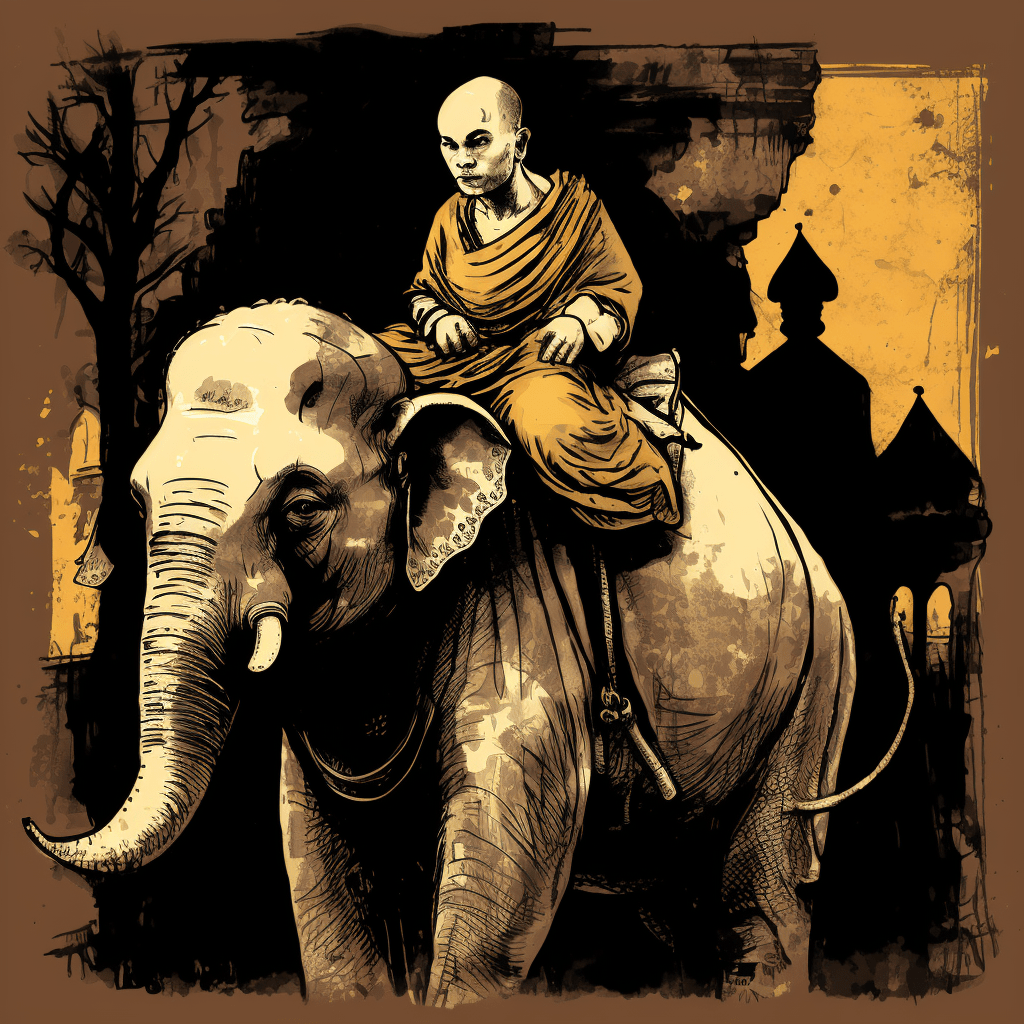
A famous analogy in psychology popularized by Jonathan Haidt describes us in two halves, a rational rider and an emotional elephant.
The rider represents the rational thinker, the analytical planner, the evidence-based decision-maker. The elephant, on the other hand, is an emotional player, full of energy, sympathy and loyalty, who stays put, backs away, or rears up based on feelings and instincts. The elephant is often on automatic pilot.
How we navigate the world atop of our emotional elephant tells us what we think of our own emotions and their role in our decision making as well as the temperance and attitude of the rider mastering their emotions. There are lots of different views on the topic of emotion, varying from always listening to them to stoically holding back all feelings. Like many things in life, there is no one right answer. A common answer a friend can share with you, on the relationship between a rider and its elephant, is that the rider should decide where the two go in life, no matter how the elephant feels. Feelings can change and feelings are not the best predictors of new lands, which is why knowledge and experience are used to navigate the unknown.
We need not be cruel or uncaring to our emotions in totality, but the reverse is death of the rider. Without any emotional control, the rider is no longer in control of their destiny; the rider is at mercy to their emotions. This makes very little difference in times of peace. When times of war strike, chaos shall ensue and the rider must do his best to weather the storm. I pray that we all see sunny days, and on the few rainy ones we are prepared and optimistic. Hold on steady to your emotions and decide between the two of you who is in charge.
 Leadership, Design, Writing