
I started attending Super Smash Bros. tournaments in 2007, the beginning of my senior year of high school. There were so few tournaments that for my first or second tournament I drove 3 hours, across state borders, to play at college campus. I played for less than four hours before driving home alone. It was exhilarating. I instantly fell in love with tournaments. I somehow made it home before midnight and went to school the next day.
I remember even when I was a very casual player, less than one hundred tournaments into my career, I was always complaining about tournament schedules. I started noticing other veterans mentioning the same thing. One thing an experienced player always commented on before a tournament began was how well the organizer ran the event. The reputation of an organizer and their follow through were generally one and the same. Some of it came from the respect of the players and some of it came from the leadership of the organizer.
I’ve written previously about getting ahead of problems and how experience helps us navigate situations both in real time and with precognition. One element of live event organizing is understanding how time plays out long before the end of the event. Most events happen linearly and sequentially, relying on a previous segment to finish. There are rare occasions where there are simultaneous or concurrent processes, but these require additional bandwidth and organization. We can think of an event requiring X amount of work. There are multiple routes to solving X, but the main variables we are interested in are how much man power does the plan require and how much time will it take to execute.
When it came to tournaments and live events, I was able to enforce, predict, and establish times throughout the day, updating players and staff of how the schedule was shaping out. Tournaments, and most events in general, have subsections where we can time split ourselves and forecast our future times. This is incredibly similar to speedrunning, where players optimize their gameplay speed and check their times against themselves or others.
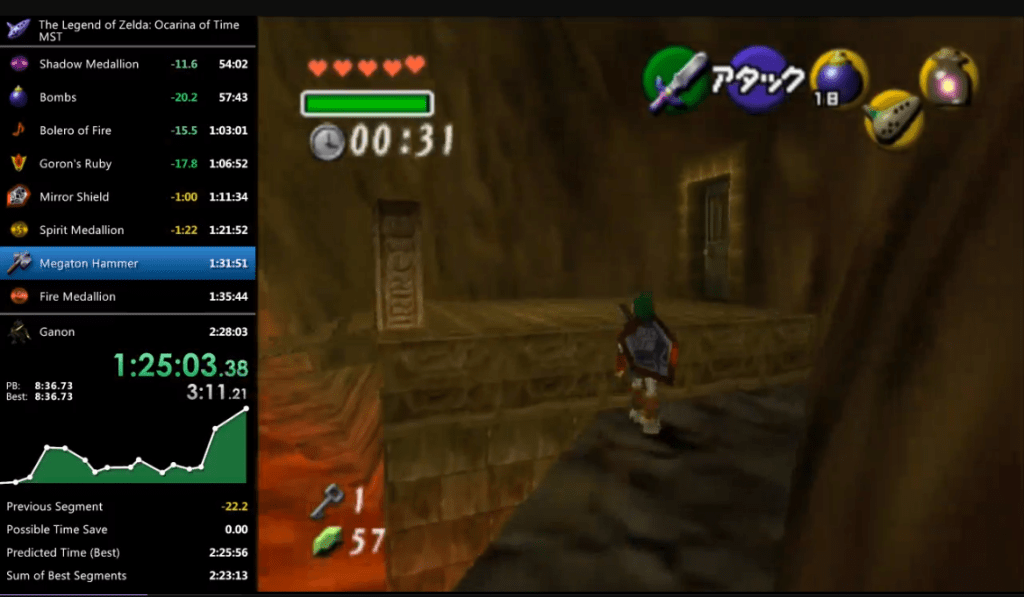
A good speedrunner knows long before the end of their run what their best possible time could be. They know from experience and what the limit of speeds are, so they can make judgements on not only what is possible, but also what is most likely. For this reason, many speedrunners will reset a run long before it is done, if say one particular segment was very poor.
Unfortunately with live events, the reset button is not an option. When it comes to organizers, they are a conductor both like train and like music.
The Railroad Conductor will coordinate the daily activity of the train and train crew, ensuring the timely operation of the train and the safety of all passengers.
The conductor beats time and prepares the musicians in rehearsal, but most importantly the conductor considers every aspect of the music and how to make it as inspiring and incredible as possible. Then they work with the orchestra to make that vision come alive.
With timeliness and with liveliness, event organizers have to adapt and operate in real time, ensuring a smooth and professional experience. For some people, ending on time is the most important aspect, especially if the event lasts a long time or ends late in the evening. For some people, seeing a particular event or outcome is the most important, whether it’s in the hands of the organizer or not, like seeing a fan favorite win or a rare piece of loot. For some, just having the experience go smoothly and finishing as expected is enough.
Because there are so many different kinds of players and fans, there’s no one right answer in how to specifically run an event. However, running an event on schedule will always have its professional edge and at the very least updating players and fans of a changing schedule is a great courtesy. It takes experience to forecast times, but with a little experience an organizer can quickly see the similarities between all events. And even if an event doesn’t end on time, an accurate forecast and a positive attitude can easily save an event. In another post, I’ll share a story where I dropped out of a tournament so I could run said tournament and ensure it would end on time. Oh what I would do just to go home on time!
 Leadership, Design, Writing