
Not every franchise successfully pulls this off, but when a remaster or a revisit of a game does well, fans and investors alike rejoice. There’s numerous reasons why coming back to a game could be a massive failure. It could be the wrong time, as the genre of the game is no longer popular or is being overshadowed by newer and more popular games. It could be a big miss with the fans, with developers being unable to appease or please the fandom while working under constraints of investors or backers. It could be just a money grab, with very little thought placed into visiting a beloved game.
While it’s easy to criticize and point in hindsight to why projects failed, I’d like to do a justice, an obvious one, to why revisits are so celebrated.
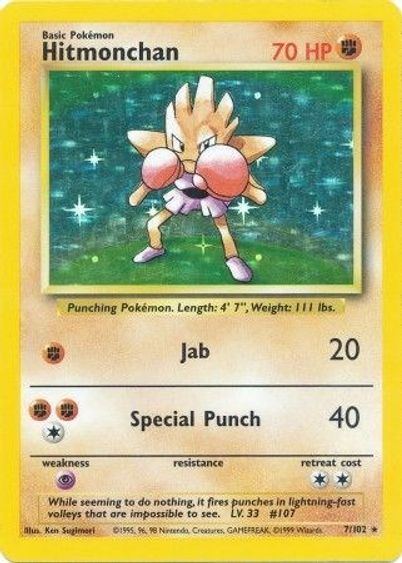
Hitmonchan, an innocuous Pokemon card which was the cornerstone to the first Pokemon card game metagame. As an adult, it’s obvious why this card is so powerful and how it was able to define metas. As a child, I could only see it as a boring Pokemon card with boring flavor. It wasn’t until I was losing to this card and a combination of other basic Pokemon cards did my perception shift. Imagine preteen me, visiting a local Toys R Us, to be destroyed by teenagers who studied card lists and had disposable income.
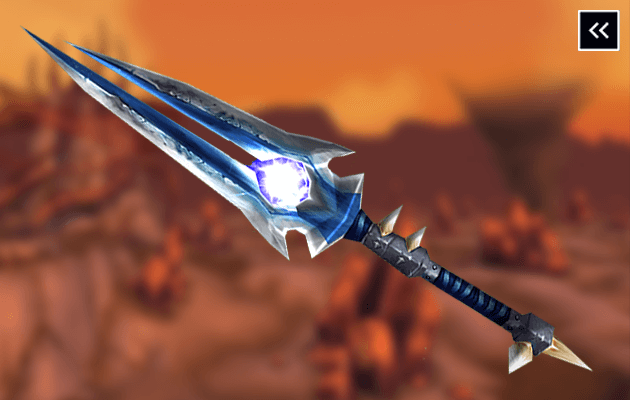
Thunderfury, Blessed Blade of the Windseeker, legendary item crafted in Vanilla World of Warcraft. During its initial release, a lot of mystery surrounded the item, with very few players completing the epic quest involved with crafting the item. As an RPG item, it held the best three qualities an item could posses: it was incredibly unique and rare, it was the most powerful weapon of its kind, and it was aesthetically unique and beautiful. Because it was so rare and it required a 40 player group for just a chance at starting the quest, politics, drama, and luck would all play against anyone’s dreams of obtaining this sword.

Final Fantasy VII, initially released in 1997, was the first 3D Final Fantasy in the series and widely celebrated as one of the best in the series. Fans cite the characters, gameplay, story, and music as genre defining, changing player’s expectations permanently. For many players, this was their first Japanese RPG or first AAA title on their Playstation, while those who did not have a Playstation or did not play RPGs missed out on this title and master piece entirely.
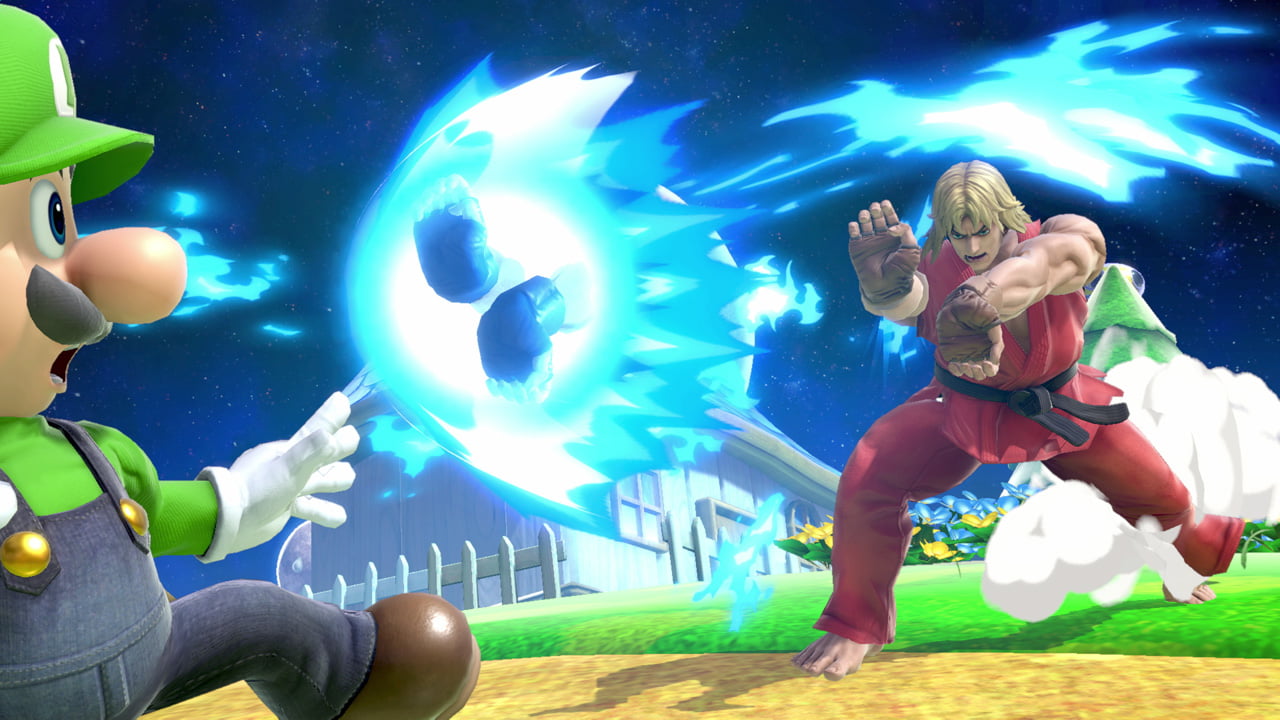
While technically not a revisit, Nintendo is famous for reusing signature characters and has been recently embracing cross-platform interactions with other staple franchises. Connecting with characters over the years through their personality, their gameplay, and their stories is what allows Nintendo and these franchises to continue reusing the same characters in the same stories without them feeling stale. Iconic characters in iconic settings played in predictable ways is what our brain is seeking from stories and games.

Classic games of past do not need remasters or revisits since their base technology never changes, unlike video games. As our hardware changes and updates, our general population expectations may exceed what games of past could handle. Players revisit old games to remaster old metagames and champion strategies, to accomplish goals that were once thought impossible, to experience games and stories they once missed, and to continue living out stories and gameplays of their favorite characters.
Modern games using technology will always face a question of when or should it get remastered. Today, there are two popular systems. One is an everlasting game, with seasonal passes or DLC to continue updating content and inspiring longevity. The other is yearly released updates to the game, changing one variable at a time to placate and innovate. And while there are a dozens of reasons as to why a game could fail when rebooting it, it’s important to focus on the few key ingredients on what makes a game so good that it not only stands the test of time, but it demands a fresh spotlight on it.
 Leadership, Design, Writing